Showing posts with label ECB. Show all posts

Friday, September 10, 2021

The ECB is the Reason We Have the Great Reset


The European Central Bank (ECB) has kept its monetary policy unchanged. However, it did slow down the pace of net asset purchases under its pandemic emergency purchase program. The ECB’s main refinancing operations remain at 0%, on the marginal lending facility at 0.25%, and on the deposit facility at -0.5%. The ECB said that it believes that “favourable [sic] financing conditions can be maintained with a moderately lower pace of net asset purchases under the (PEPP) than in the previous two quarters.”

The junkies think what the central banks have to say is still relevant and are eagerly waiting for word to come down from above to see if their unwinding of pandemic-era stimulus in the face of surging inflation would take place. That seems like reading a nice bedtime story to the kids so they sleep with pleasant dreams. The ECB reiterated that interest rates will remain at their present or lower levels until inflation is seen reaching 2% “well ahead of the end of its projection horizon and durably for the rest of the projection horizon,” and until the ECB determines that inflation will stabilize at 2% over the medium-term.

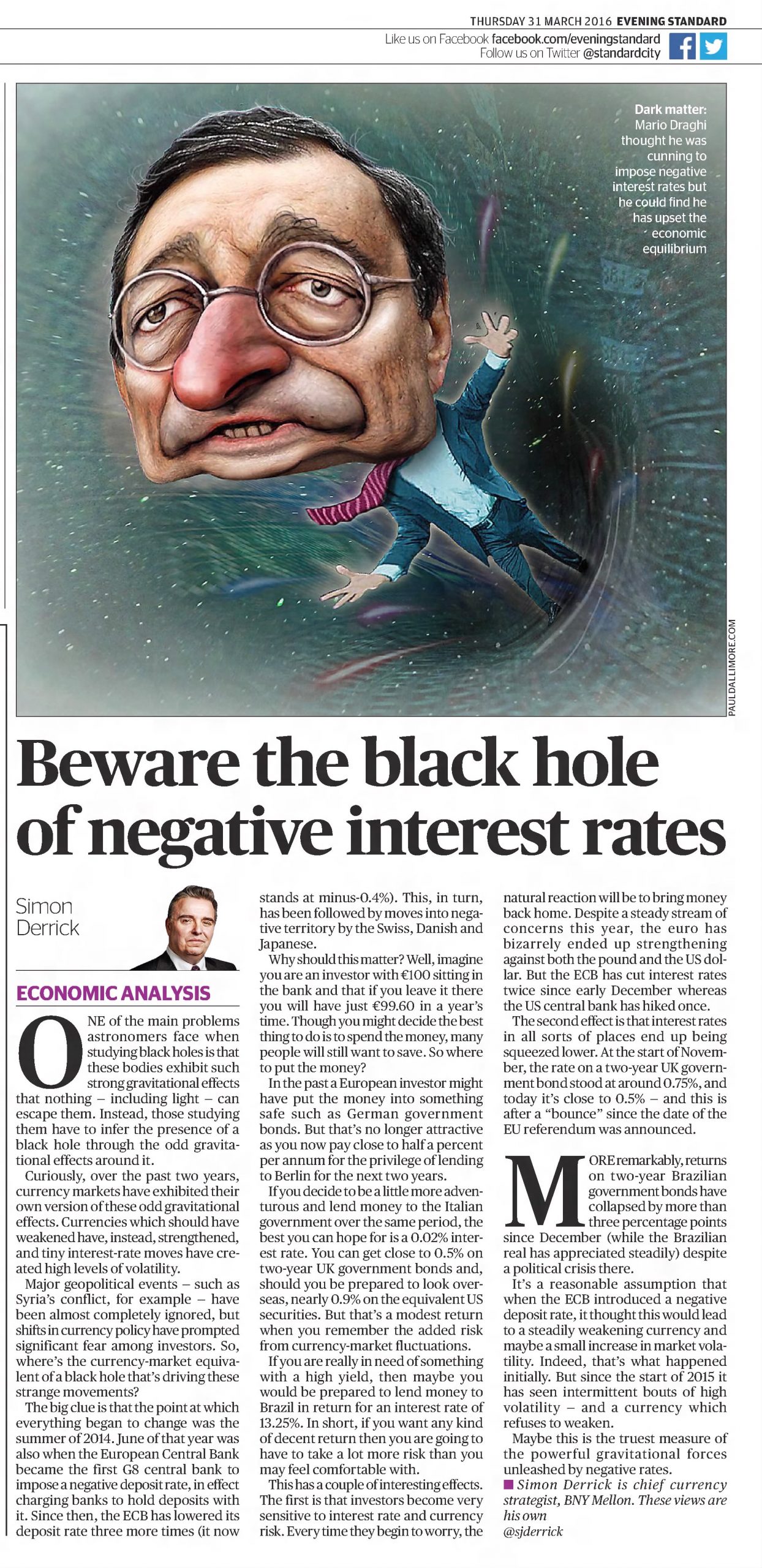
It is really extraordinary to think that there will ever be a return to normal. The ECB has had negative interest rates since 2014. The Federal Reserve warned the ECB that they could get trapped. The warnings were coming in, and even in 2016, the London Evening Standard warned of the black hole of negative interest rates. This entire Great Reset is now due to the fiscal mismanagement of governments and central banks. Those who still think there will be some return to normal finance are no doubt those wearing masks and lining up for booster shots every six months. They can’t wait for the new Pfizer daily pills as well and are ready to listen to Bill Gates and never buy beef again.

Since the ECB moved to negative rates in 2014, here we are approaching 8.6 years, which is coming up in 2022 when everything just goes bang.

Saturday, June 27, 2020

ECB v Fed


QUESTION: Martin,
You mentioned in a recent blog post that the ECB, unlike the FED, can go bankrupt.
Can you explain further?
Not sure where you get the time, energy and resources to research and write all that you do buy it is truly amazing.
Regards,
M
ANSWER: The Federal Reserve does not need permission to create elastic money. It has the authority to expand or contract its balance sheet. However, it cannot simply print money out of thin air. The ECB is the only institution that can authorize the printing of euro banknotes. The Federal Reserve must back the banknotes by purchasing US government bonds. The Fed buys and sells US government bonds to influence the money supply whereas the ECB influences the supply of euros in the market by directly controlling the number of euros available to eligible member banks. This structure was created because of Germany’s obsession with its own hyperinflation of the 1920s.
Each member state retained its central bank and those central banks issue the banknotes — not the ECB. Therefore, the ECB works with the central banks in each EU state to formulate monetary policy to help maintain stable prices and strengthen the euro. The ECB was created by the national central banks of the EU member states transferring their monetary policy function to the ECB, which in effect operates on a supervisory role.
There are four decision-making bodies of the ECB that are mandated to undertake the objectives of the institution. These bodies include the Governing Council, Executive Board, the General Council, and the Supervisory Board.
The Governing Council comprises six members of the Executive Board and Governors of the national central banks of the euro area member states. The Council members meet twice a month at the institution’s offices in Germany. Its primary function is the formulation of monetary policy for the Eurozone area. That means it makes the decisions on monetary objectives, interest rates, and the supply of reserves in the Eurosystem.
The Executive Board comprises the President, Vice-President, and four other executive members appointed by the European Council. The executive members serve for an 8-year non-renewable term. The role of the Executive Board is to implement the monetary policy as defined by the Governing Council and manage the day-to-day operations of the ECB, alongside the Chief Services Officer. Also, the board prepares the Governing Council meetings and exercises power delegated to it by the Governing Council. It holds meetings every Tuesday.
The General Council is a transitional body that carries out responsibilities taken over from the European Monetary Institute (EMI). It comprises the President, Vice-President, and Governors of the national central banks of the EU member states. The body will continue to exist until all EU member states have adopted the euro. As of 2017, only 19 out of the 28 EU member states have taken up the euro as their single currency. This body is charged with fixing the exchange rates of currencies for countries preparing to join the Eurozone.
The Supervisory Board comprises the chair, vice-chair, four ECB representatives, and representatives of national supervisors. The board plans and executes the supervisory function of the ECB. It also proposes draft decisions for the Governing Council through the non-objection procedure.
The ECB was granted a monopoly status on the issuing of banknotes in the Eurozone area. The ECB makes weekly announcements on the amount of money it wishes to supply and the minimum acceptable interest rate. Eligible banks that have provided collateral then place their bids for the ECB funds through an auction mechanism. Once the banks have obtained funds, they use them to advance loans to individuals and businesses all in theory.
The European Central Bank is also responsible for banking supervision in all the EU member states. The ECB carries out this function through the Single Supervisory Mechanism (SSM) that comprises the ECB and competent national authorities in the member countries. Therefore, the ECB has the power to grant and withdraw banking licenses, conduct supervisory reviews, and set higher capital requirements to counter financial risks. The ECB directly supervises 124 significant banks that hold 82% of the banking assets in the Euro area.
The tensions within Europe have never abated between members. The first President of the Bank was Wim Duisenberg, who was the former president of the Dutch central bank. The French objected and demanded that the ECB should be headed by a Frenchman, Jean-Claude Trichet, because the ECB was to be located in Germany. A gentleman’s agreement was finally reached whereby Duisenberg would step down before the end of his mandate and Trichet would become the head of the ECB in November 2003. He was replaced by an Italian, Mario Draghi, who became the head of the ECB between 2011-2019. Now we have Christine Lagarde, who is French, taking over the ECB from Draghi.

AUTHORIZATION

The primary objective of the European Central Bank was laid out in Article 127(1) of the Treaty on the Functioning of the European Union. That stated its authority was to maintain price stability within the Eurozone which is rather vague. The Governing Council in October 1998 took it upon themselves to define “price stability” as meaning inflation of under 2% on “a year-on-year increase in the Harmonised Index of Consumer Prices (HICP) for the euro area of below 2%.” Therefore, the ECB was created differently from that of the Federal Reserve System which was intended to be simply an independent system where the banks were shareholders because that was a contribution to create the Fed outside of taxpayer money. Hence, the ECB has only one primary objective and it was envisioned as a division of the government. The “price stability” has never been defined in statutory law which leaves a very wide view of interpretation.
The Governing Council sought to confirm this definition of “price stability” in May 2003. They clarified that “in the pursuit of price stability, it aims to maintain inflation rates below, but close to, 2% over the medium term.” Hence, all such lending to credit institutions had to be collateralized as required by Article 18 of the Statute of the ESCB. This so-called “clarification” is by no means a defined law.  Therefore, this vague directive of maintaining “price stability” is further complicated because, under the Treaty, it also directs that “the ESCB shall support the general economic policies in the Union with a view to contributing to the achievement of the objectives of the Union.” This leaves the door wide open for the ECB under Legarde to suddenly declare that climate change must be a policy of the ECB. This clearly makes the ECB an arm of the EU Commission and not independent as is the case with the Federal Reserve.
Since November 4, 2014, the ECB has been responsible for specific tasks concerning policies relating to the prudential supervision of credit institutions within the framework of the Single Supervisory Mechanism. As a banking supervisor, the ECB also has an advisory role in assessing the resolution plans of credit institutions.

European Parliament & ECB

The ECB President reports to the European Parliament on monetary issues in a quarterly Monetary Dialogue. The ECB also prepares an annual report on monetary policy which is presented before Parliament. Parliament adopts a resolution on this annual report. The new supervisory responsibilities of the ECB are matched with additional accountability requirements as laid down in the SSM Regulation. The practical modalities are governed by an Interinstitutional Agreement (IIA) between Parliament and the ECB. The accountability arrangements include the appearance of the Chair of the Supervisory Board before the competent committee; answering questions asked by Parliament, and confidential oral discussions with the Chair and Vice-Chair of the competent committee upon request. In addition, the ECB prepares an annual supervisory report, which is presented to Parliament by the Chair of the Supervisory Board.

CONCLUSION

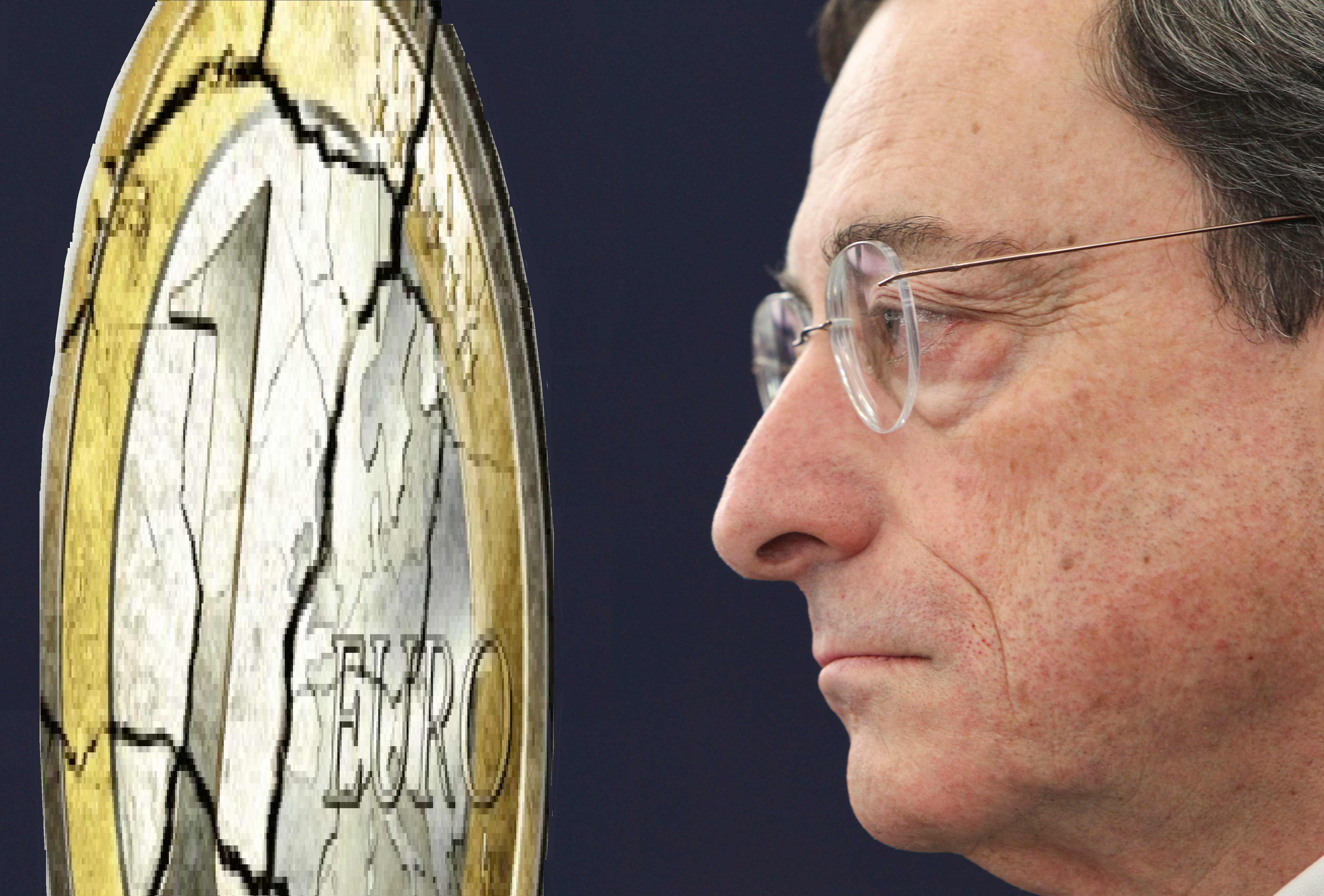
The ECB is trapped. It cannot raise rates to raise money and it has destroyed its bond market. The only way out is to default on all debt and they will do that by declaring it to be now a perpetual debt that only pays interest like an annuity. This will allow them to escape the formal default which is inevitable.
Friday, March 13, 2020

Money printing - Fed can issue notes only backed by federal bonds


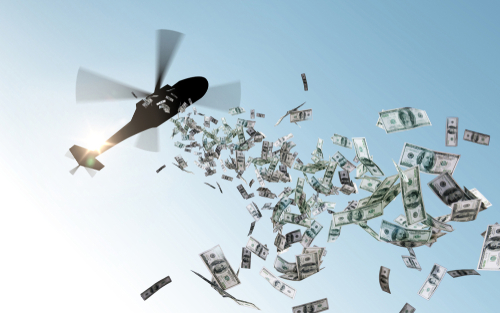
The Fed & Helicopter Money

QUESTION: You said that the Fed does not print money out of thin air on its own. The goldbugs say you are wrong. I suspect that they are wrong not you. You seem to have a much deeper understanding of money than anyone else. Would you clarify this issue?
Thank you very much
PHK
ANSWER: When Congress created the Federal Reserve, a completely new currency came into existence. There were two types of currency issued under the Federal Reserve. 
1. The main system currency was simply known as the Federal Reserve notes. 
2. Then there was the Federal Reserve Bank notes that were issued by the independent branches. The Federal Reserve Bank notes are inscribed “National Currency.” 
The first series to be issued by the indeed the jewel banks of the Federal Reserve was dated 1915 and consisted only of $5, $10 and $20 denominations. They were only issued by the Atlanta, Chicago, Kansas City, Dallas, and San Francisco. The obligation of this issue was to pay the bearer on demand only by that specific Federal Reserve branch. The 1915 series stated it was “secured by United States bonds deposited with the treasurer of the United States of America.” The later issue of 1918 stated, “secured by the United States bonds or the United States certificate of indebtedness or United States one year gold notes deposited with the treasury of the United States of America.”

The Federal Reserve notes of 1914 were issued in all denominations from $5-$10,000. They were issued by the United States to the 12 Federal Reserve banks and threw them to the member banks and to the public. The notes were not issued by the banks themselves as were the Federal Reserve Bank notes and the obligation to pay the bearer is borne by the government and not by the banks. Hence, these notes were not secured by the United States bonds or other securities. Therefore the Federal Reserve notes were not secured by any certified means of backing. The Federal Reserve notes simply states, “United States of America will paid to the bearer on demand.”
The difference was substantial. The Federal Reserve Note was directed to be issued to create money which was unbacked even by bonds. This was to create liquidity because people were hoarding money uncertain about the future. The currency actually issued by the Federal Reserve Banks was backed by government bonds which was a different structure all together. They seem to confuse the authority to create elastic money where they can issue money to buy government bonds injecting liquidity which is not printing money out of thin air but on an elastic basis which is electronic, not printed. The image of the Fed creating helicopter money is not correct.
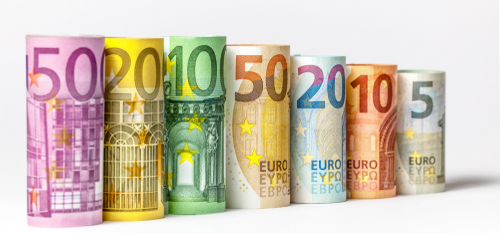
The ECB has that authority because it cannot back the currency with federal bonds that do not exist. The ECB has the power to create money without backing whereas the Fed can issue notes only backed by federal bonds. The euros are actually printed by each of the member states and not by the ECB directly. Each note has a code stating which nation state issued the currency

Friday, December 20, 2019

The ECB & its Green Agenda


QUESTION: Marty, what do you think about Legarde claiming the top priority of the ECB is climate protection?
DK

ANSWER: The proposition that the primary objective of the ECB should be climate protection is highly questionable even from a legal perspective. The European Treaties created the ECB with the primary function to ensure price stability. Interestingly, the statutory authority also states that the ECB must support the general economic policy of the European Union without prejudice to the objective of price stability. There is nothing legally in the authorization of the ECB to proclaim it will listen now to Al Gore and Jennifer Morgan of Greenpeace who are both manipulating this 16-year-old “person of the year.”
I do not see anything in the authorization of the ECB where it has the legal right or even the obligation to defend the climate. This seems to be a personal agenda, for Greenpeace succeeded in getting into Davos and influenced Europeans who have gone off the deep end. For the ECB to put climate protection as one of the central themes of EU policy is clearly without any legal authority no less precedent. Climate change is not the role of a central bank.
Supporting “green bonds” has been the worst possible investment. We have institutions asking if we could create a portfolio of green investments that do not lose money just so they can claim they are “investing” in green. Any venture into “green” investment is counter to the ECB directive to provide price stability. The ECB must not compromise the objective of price stability, but it is an impossible task to support a green agenda. It seems that the ECB is now interpreting that if the European Commission imposes strict climate policies which will raise the cost of everything and wipe out the German car industry by virtually outlawing the combustion engine. The ECB has considerable political freedom, and power, to enforce a green agenda upon the EU.
This certainly seems to be an agenda that will only further undermine the European economy going into 2032 and increase the drive for separatism.

Monday, September 9, 2019

USA had TARP, In Europe, the design of the euro was to deny creating a national European debt, therefore there could be no bailout


EU Parliament - How they Protect the Bankers


A number of people have asked me to comment on Bloom’s speech on the floor of the European Parliament. He is incorrect in attributing the insolvency of the European banks to fractional banking. They have blown themselves up because of derivative exposure, not actual lending.
The US banks survived and have prospered BECAUSE of TARP. The US government bought the toxic financial waste they created so the bankers got away with it again. In Europe, the design of the euro was to deny creating a national European debt, therefore there could be no bailout because that would mean the money would flow from one country to the another to bail out their banks. Hence, European banks still have the tonic financial waste on their books from 2007.
The central banks are ARTIFICIALLY manipulating interest rates down to try to save the banks, but this Quantitative Easing has not only failed, it has set the stage for the next financial disaster — the collapse of government pensions and private pension funds. These funds are regulated and it is mandated that they have government debt for that is “risk free,” so they claim.
The bankers sell the government debt so the politicians cannot let the bankers fail for they also fund their elections. This entire mess is not going to be held off much longer.

Thursday, October 5, 2017

ECB v the Federal Reserve – Different Animals Altogether


QUESTION: Do you you really think Trump would let the Central Banks Default? He said we would write off Puerto Rico's debt maybe he plans to write everything off can he do that? If this really did happen wouldn’t the dollar be worthless?
S
ANSWER: It seems as though far too many people ASSUME that all central banks were createdEQUAL. Sorry – that is just not the case. These people who do not really know what they are talking about assume that just because the Fed has the power to create elastic money, that therefore the ECB can do the same thing. SORRY – WRONG!!!!
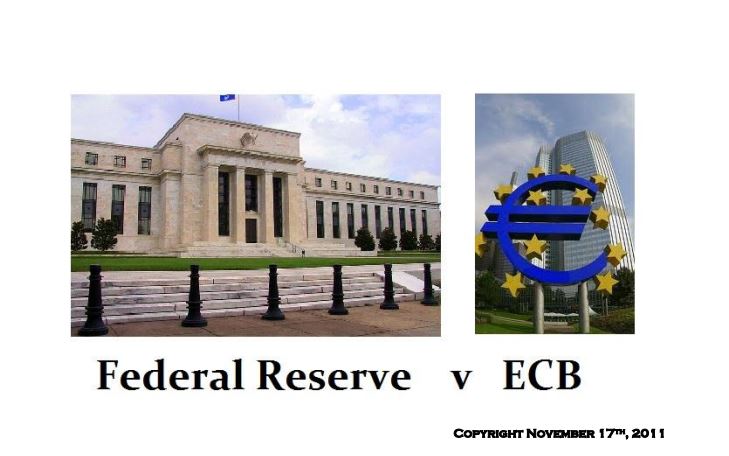
There is a substantial difference between the Federal Reserve and the European Central Bank (ECB).
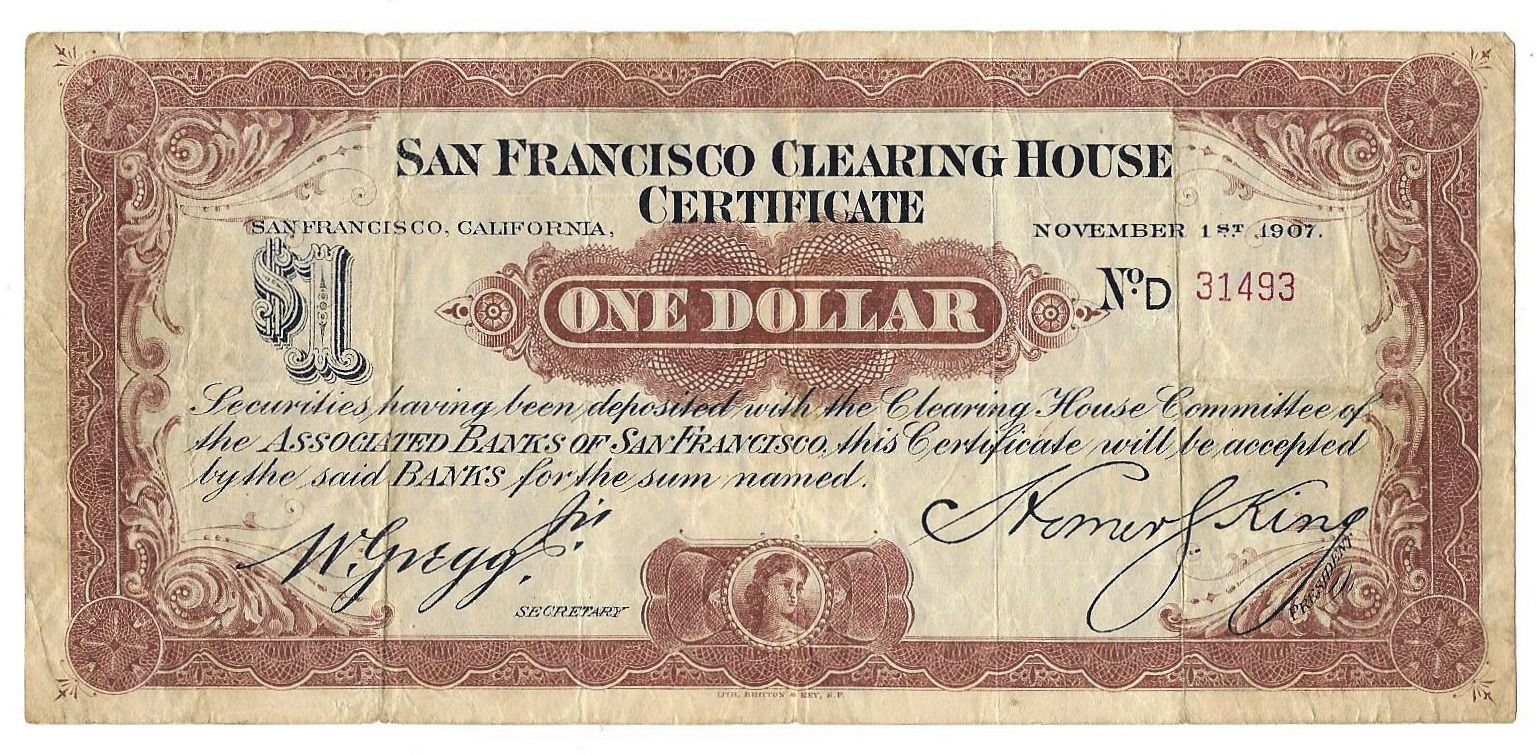
The accounting at the Fed allows for it to CREATE money as needed. Now the fiat crowd will argue that the Fed can just create money in a very ELASTIC money supply. This is true and it was intended from the very outset that when economic declines appeared, the leverage within the system would implode and thus to ease that contraction in the supply of money. Hence, the shortage of money resulted in defaults and assets decline in value relative to the contraction in money supply. Therefore, the Fed was created with the power to create ELASTIC money based upon the system of Clearing House Certificates that had pre-existed during the 19th century. The Clearing House  would issue its own money and then after the crisis, that money was retired – hence the term ELASTIC.
So how does this contrast with the ECB? Here in lies the problem. The ECB is NOT authorized to create
an ELASTIC MONEY SUPPLY. Germany would never allow that. Consequently, the ECB cannot continue to just buy-in sovereign debt of member states as the market forces come down upon them. The ECB, unlike the Fed, will run out of money and then there will be a very public crisis whereby the ECB will have to be recapitalized. I wrote about this before in Federal Reserve v ECB.
I warned back then that “Something will have to give in Europe.” The ECB was granted a ceiling to buy in government bonds. It cannot just print money with no end in sight. It must get approval, which the Fed does not require from Congress. The two are completely different animals.
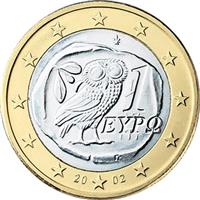
On top of this, each member state retained its own central bank. Each member bank issues euros in their domestic economies. You can collect euro coins from each central bank – the ECB does not issue them.
Then the reserves of the European banking system had to be politically correct and the reserves were composed of all member bonds. Why? Germany opposed a single European debt issue.

Now, the Fed bought in $4 trillion against $20 trillion and the debt was only federal. The ECB bought the worst debt and now owns 40% of the total debt of the Eurozone members. Why is the ECB in danger of a default?
If there is a disagreement in Brussels, then the ECB runs out of cash. As interest rates rise, the value of its balance sheet will collapse. The ECB cannot sell the debt back to the market for there is no bid. To try to support the debt market, Brussels made it illegal to short government debt. Hence, there is no free market in European sovereign debt. If the ECB bought 40% of all debt, who is going to buy it when they stop?
This is a completely different perspective v the Federal Reserve which will just let its US federal debt holdings mature and expire. They too cannot sell the debt or interest rates would explode.
Welcome to the reality of the crisis. NOT all central banks were created equal. Those who paint them all with the same brush know nothing about what they are talking about. The ECB claims it cannot go bankrupt because it will just issue more money. The fact that they have even stated that demonstrates there is a huge problem. That depends upon one thing – approval from the politicians to issue more money.
I meet with central banks directly! This is comments about a field I only read about in the newspapers. I am not even sure the newspapers ever reported the actual differences between the central banks.
Governments are NOT a single entity. Central Banks are far too often on the opposite side of the table with the Political side of government. It is far more complicated than most people would ever guess.

Tuesday, April 25, 2017

New European Monetary Fund to replace the IMF

Does Schäuble want Draghi to Exit the Stage Once & For All?

Draghi Schaublehas expressed
Federal Minister of Finance Wolfgang Schäuble of Germany is starting to show signs of rebellion against the elite in Brussels. With the event of BREXIT, the EU is more concerned about trying to punish Britain than they are is reflecting upon what is going so terribly wrong. They will throw their support behind Macron in France fearing that a Le Pen win may be the end of Brussels. Consequently, the EU Commission is trying to punish Britain, is actually dividing Europe once again. There will be the EU membership, and then there will be the Eurozone within limited to those countries who surrender their sovereignty to Brussels relinquishing their currency, but not their debt.
Schäuble is clearly attempting to save the Eurozone and make it operational at the same time to protect German exports within Europe. The driving force behin the Euro was to eliminate foreign exchange risk so German manufacturers could sell to all of Europe on a regular basis without currency fluctuation disturbing their sales.
Yet Schäuble is actually looking at reducing the power of the EU for reading between the lines, he has no confidence in the abilities of the EU Commission to manage Europe. Obviously, BREXIT is restructuring the EU only insofar as they seek to punish Britain rather than reform the problems that caused it. That means the Euro zone will be restructured as a block within the EU leaving the institutions, such as the ECB, applicable to the EU. The rules within the Eurozone are by no means clearly defined. This is how Markel opened the gates to refugees without ever going to a vote first in the EU. Thus, the unilateral decisions of Germany have then been applied to all of Europe without any democratic process whatsoever.
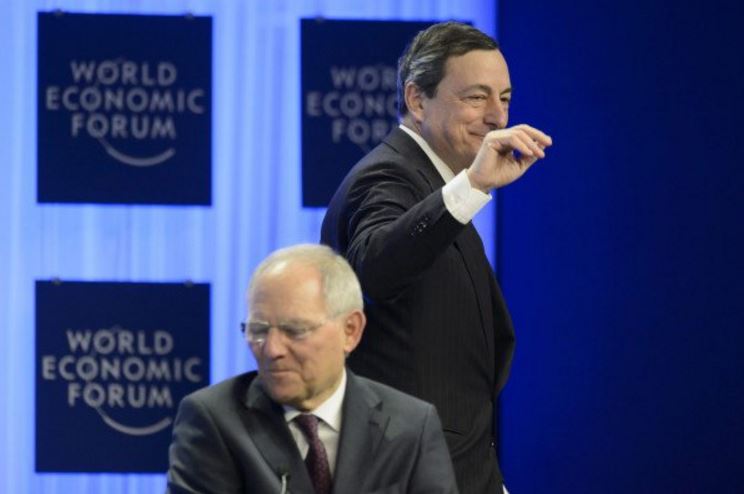
Schäuble is look at the distinction between the EU and the Eurozone and thus reducing the power of the EU Commission to save the Eurozone – the second Europe within Europe, of which Britain was never a member. Schäuble attacked the ECB and Mario Draghi saying: “The ultralock money policy that exists in many regions is not helpful.”  Schäuble said this opening on his trip to Washington. The ECB, Schäuble argues, is creating risks such as asset price bubbles with its negative interest rate policy. This is the clash of philosophies with Schäuble’s view on AUSTERITY.
Schäuble demanded a change of direction from Mario Draghi. He warned that Draghi was increasing the risk of creating a whole new crisis rather than lessen it. The Federal Reserve reverse course right after 2015.75 on the ECM that targeted October 1st, 2015 with the first rate hike in December 2015. Schäuble remarked that it “would not be a bad idea if the European Central Bank and other central banks followed” the course of the Fed. Schäuble has clashed with Draghi who still considers his stimulus quantitative easing policy of the ECB still necessary. Draghi said on this trip to Washington that a “very significant amount of monetary easing is still needed.”
Schäuble also has proposed that the basic structure of the Eurozone in the form of budgetary policy must be change. Schäuble remains rightly concerned what happens when Draghi changes course and raises rates. Schäuble is deeply concerned that national debts will then explode with higher interest rates. For this reason, Schäuble wants the euro rescue umbrella ESM in the near future converted to a European Monetary Fund. Schäuble sees this as a European version of the International Monetary Fund (IMF). If a new aid program for a crisis country were to run without the IMF because the IMF has disagreed with the draconian measures imposed upon Greece. Schäuble wants to replace the to impose austerity. Apparently, Schäuble has also convinced Chancellor Angela Merkel of this proposal since the IMF disagrees with the austerity ideas of Schäuble.
This new European Monetary Fund to replace the IMF, which is a member of the Troika, will then be given the task of budgetary monitoring of Eurozeone countries. Therefore, we will have the EU, but a separate system within the EU for the Eurozone all based upon extending austerity. This is obviously a disempowerment of the EU Commission.
Greece is still an unsolved problem – and Schäuble also sees this. Greece, Schäuble said, should exit the Eurozone. Schäuble also sees a batter partnership with Russia and an emancipation from the USA. This was really based upon German manufacture having a new market to sell into given the rise of Donald Trump. Then Schäuble wanted a nuclear Europe to stand against America and Russia. Schäuble’s view is that the core of Europe is Germany, France, Belgium, Luxembourg and the Netherlands. It never included Britain. The Franco-German axis was to become the economic engine of the future. To Schäuble, the core is simply the Euro for that evens the playing field for Germany to sell products into Europe. He has embraced the Euro, but never accepting a federal debt for Europe. This is why he has never seen Italy, Spain or Greece as the core of the EU – just vassal states to sell products to.

Wednesday, December 2, 2015

The FED v ECB


Bias-Prejudice
COMMENT: If the Fed is so smart and understands the problem with low/negative interest rates, then why didn’t it hike rates in September?  Better yet, why didn’t they raise rates YEARS ago?  The Fed has kept rates near zero for seven years but now suddenly realizes that this is a problem?
I am surprised that you think so highly of them.  The Fed consists of a bunch of academics with no real-world experience, no different than the ECB.
Fed v ECB
Draghi-EuroREPLY: Your bias and prejudice blind you. The ECB is run by Mario Draghi who is ex-Goldman Sachs. Mario Draghi faces a currency that is collapsing and a power structure that is fundamentally flawed. This is entirely different from the problems facing the Fed. Europe is in deep recession that is intensely deflationary. That is not the case yet in the USA.
bernankeHopes
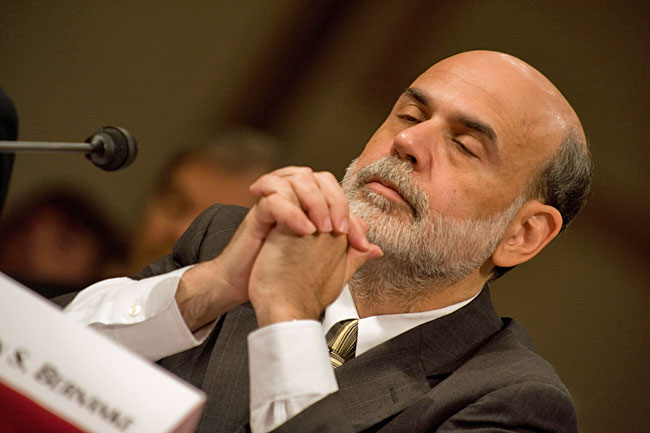
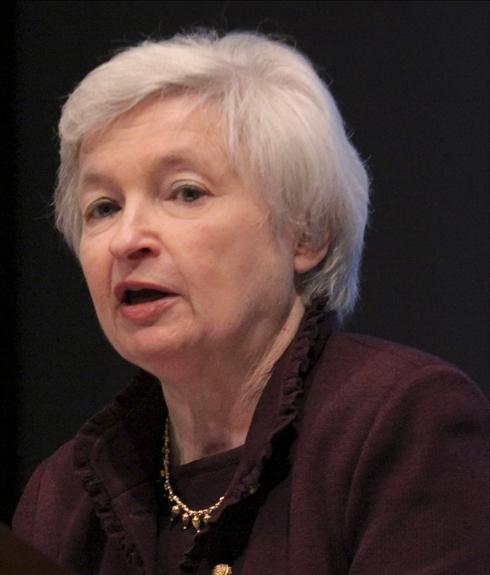
yellen-JanetYellen has inherited a nightmare. It was Ben Bernanke who made the mess we are in today. He lowered rates, bought in long-term bonds the Fed cannot now sell and must wait for them to simply mature. Yellen is trapped for she cannot reverse QE and sell the bonds Bernanke bought and she is facing a meltdown in pension funds because rates are too low for too long. Yellen has no escape. You are also blind to how politics functions and all you are doing is listening to the bullshit that is spun by pretend analysts who know nothing about what really goes on behind the curtain.
Lagarde-Christine-imfThe mere fact that the IMF came out publicly to ask the Fed not to raise rates in June was a political maneuver to counteract Yellen. Things of this nature are discussed behind the curtain – never in front. The IMF turned to the press to STOP Yellen because she would have raised rates back in June. It was  Ben Bernanke who listened to the bankers and created insanity.
Fed Excess Re3s 2015
It is clear that Ben Bernanke lacked any experience as an academic to run the Fed. He became a professor at Harvard after graduating. If you have no real world experience, you will never understand reality. Book smart does not cut it in finance.
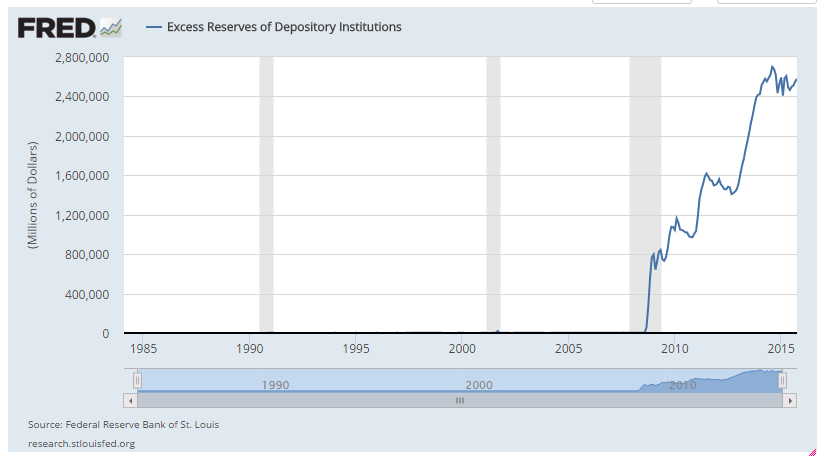
Bernanke bought in 30 year bonds to help reduce the competition with mortgages and to inject cash into the system from a very book perspective looking at the economy in theory, not in reality.. The bankers then complained they needed excess reserve facility to earn money if they had no more bonds. Creating this facility defeated the very purpose of QE and ensured that there would be no inflation for the banks did not lend the money out. The money created did not stimulate for two reasons. First, the Chinese sold their long-term debt holdings and reduced their maturity. Then the excess reserves allowed banks to park money rather than lend it. Dropping rates to virtually zero and paying the banks 0.25% defeated everything intended to restart liquidity and inflation.
Hence, the Fed is in danger of losing its sovereignty allowing itself to delay its domestic policy objectives for international concerns. Your bias and prejudice prevent you from even seeing what the crisis is all about..
 BTW – that highway bill has emerged from a House-Senate conference committee that will pay for the roads by reducing the 6 percent annual dividend paid to the banks on Fed stock. The Fed should now eliminate the excess reserve facility and stop the welfare for the banks paying them for money the Fed does not even use.