Showing posts with label GBP. Show all posts

Monday, September 26, 2022

The British Pound & the FX Crisis


REPLY: The problem with most people forecasting is they do it as “I think” and then try to pound their chest as if their reasoning is better than someone else. People try to criticize me when they disagree with what they assume is my personal “reasoning” when in fact I have said many times, Socrates has taught me, as well as all my clients worldwide.

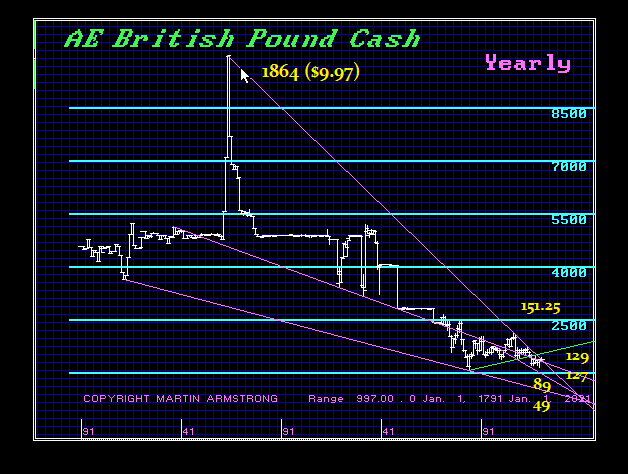
You cannot forecast such things from a personal opinion perspective. It also requires centuries of data. Most people have no idea that the British Pound had ever reached $9.97 in 1864. The collapse of the British pound itself still going into 2026/2027. It’s like the gods are selecting the worst possible world leaders in human history.

Once the pound broke the uptrend line, even technically it was in trouble. Then the support was at 129 & 127. When that gave way, the free-fall began. Technically, the real support begins at the 89 level. This is not over. We will not see a straight decline into 2026/2027, but that is where this is headed. The ideal support will be at the 72 to 76 level by then. Breaking the 1985 low of $1.03 will then point to the 89 area.

Keep in mind, that all roads lead to the dollar because of the geopolitical mess world leaders have created in Ukraine, and even in Taiwan. They either want war or are living a dream and expect that Russia and China are afraid of the West and somehow they are all-powerful. There are no peacemakers anywhere! People who try to argue against me with their personal reasoning are fools. This is not me and my personal opinion. Nobody has ever beaten Socrates – and that includes me.

Schwab’s NWO will fail as did Marx. However, these people “think” that they can hide their sovereign default with war and win against both China and Russia to create this global one-world economy. There is no way this will work and the climate zealots are insane. They think that they can end fossil fuels and then come up with alternatives. They know damn well that what they are doing will cause the death of millions worldwide. They also want to reduce the population.

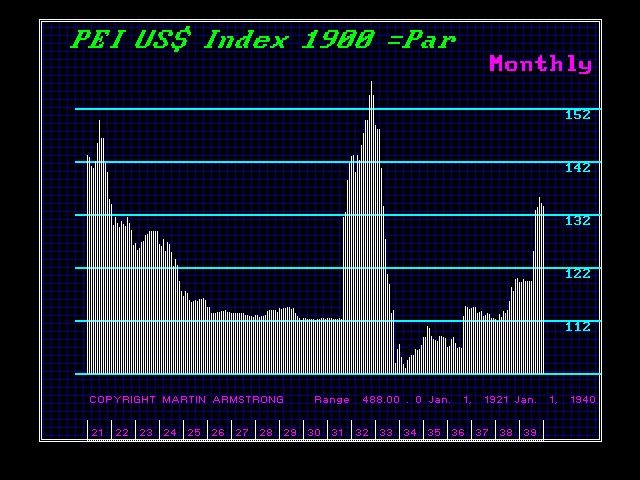
In the process, the rise in the dollar will kill US exports and start the economic decline in the USA as the rise in the dollar also did during the Great Depression. This will create deflation and the rising interest rates may make some people think that the Fed is achieving its goal, but we have also shortages which are the opposite of the Great Depression.

It was the sharp rise in the dollar that led to Protectionism because the politicians did not understand what was taking place. This rise in the dollar was also the reason Roosevelt confiscated gold and raise its value from $20 to $35 to devalue the dollar.

Thereafter, the US had a two-tier monetary system. Gold for international transactions and silver domestically precisely as what took place back in Florence under the Medicis.


Thursday, January 30, 2020

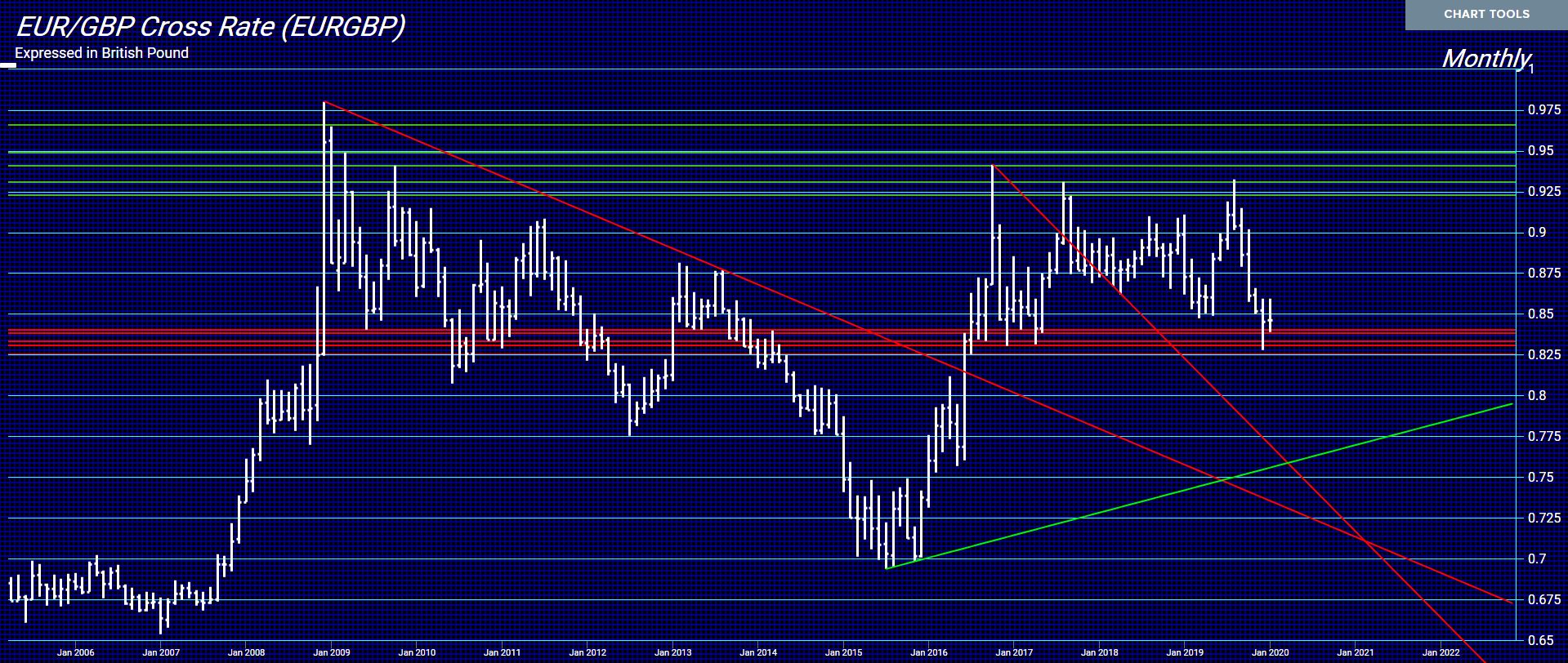
The Euro v Pound - The critical level will still remain at the 8250 level.


Despite all the yelling and threats on top of forecasts that Britain will fall apart without the EU, the markets do not reflect such a doomsday outlook. We do see 2021 and 2023 as important targets for turning points. The critical level will still remain at the 8250 level. If that is breached, then the political crisis in the EU will begin. The departure of Britain will leave a major hole in the budget of the EU which wants to fund its own army. As pressure rises on other members to chip in more money and raise taxes on their citizens even further, the European Project will remain a serious threat to the entire world economy.

Sunday, October 21, 2018

The risk that the British pound will no longer exit arrives in 2029.

The End of Britain with 2nd Referendum on BREXIT?

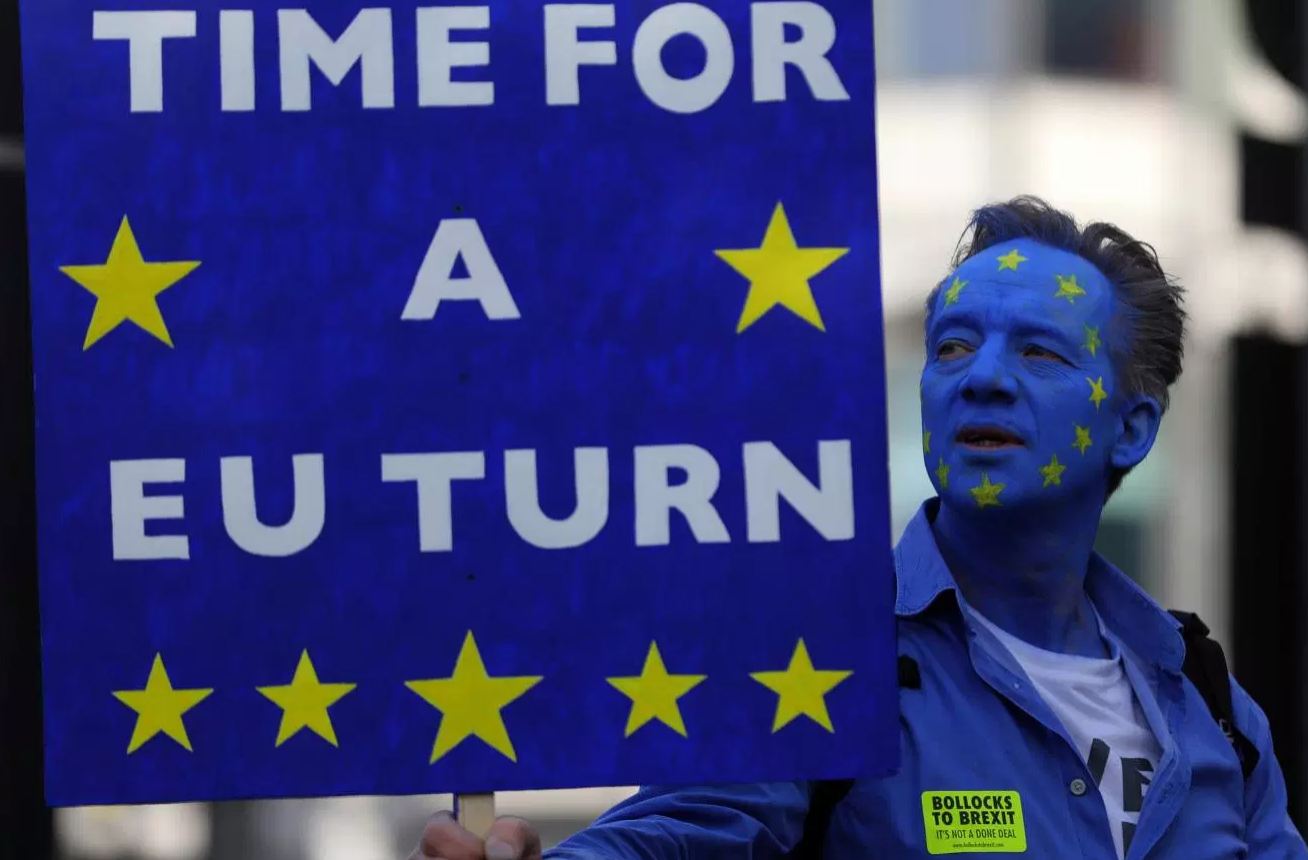
As many as 670,000 people protested in London to call for a second Brexit referendum. Our computer is showing that a second referendum will vote to remain but this is most likely because they will rig the vote. This is in conflict with our economic model which shows that BREXIT should still win. Keep in mind that we have crossed the Rubicon in politics here in 2018. The chances of any election actually being honest and fair is highly unlikely.


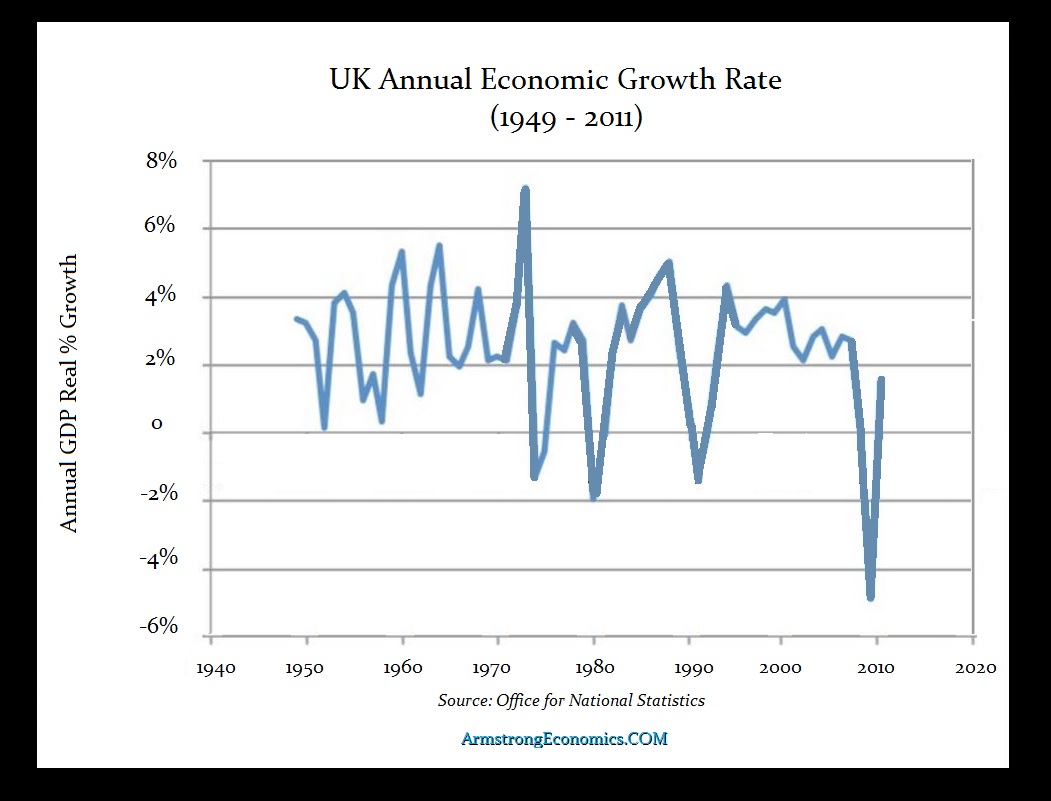
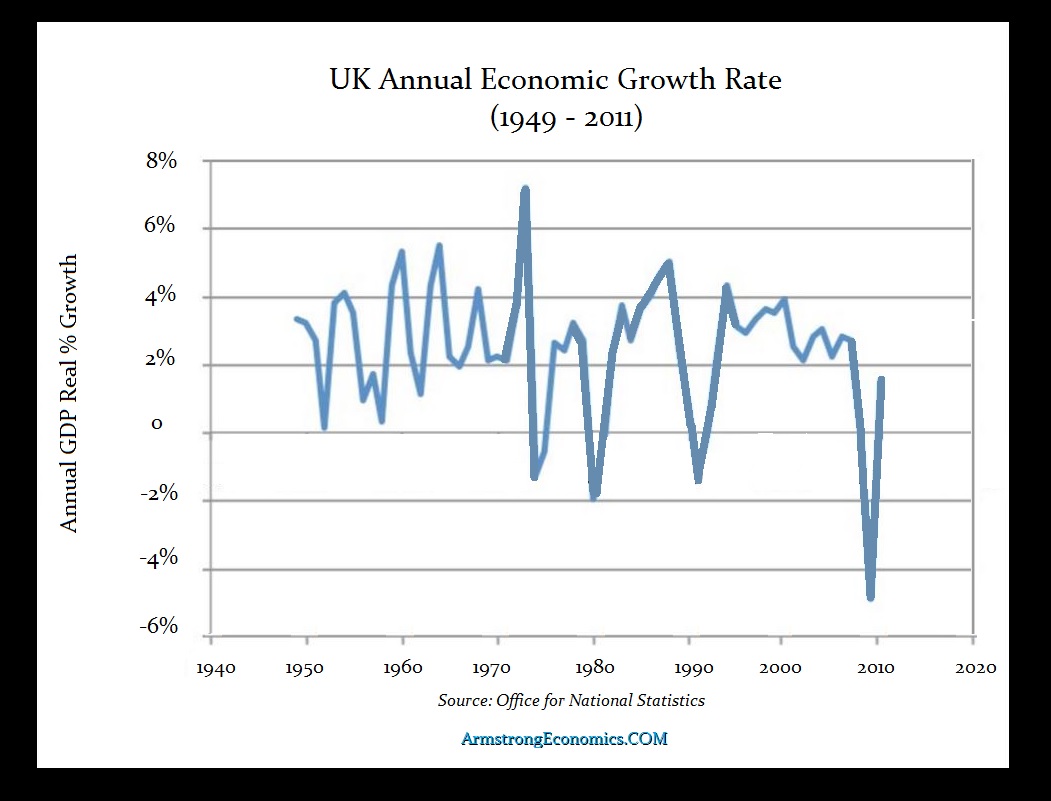
Of course, these people are just brainwashed. They are completely ignorant of the fact that remaining in the EU will be the death of Britain. They listen to the like of Tony Blair and are really too stupid to understand what they are protesting for. The economic growth of Britain has steadily declined ever since joining the EU. We have provided this chart to the British press and not a single person, even politicians, has made this chart public. But worse still, Britain is resented in the EU because without Britain Europe would have been lost both to Hitler as well as Napoleon.
All the history aside, any trade deal can only be subjected to a veto of 28 member states. Britain cannot reach a trade deal on its own terms with anyone for they can be stopped by the raising of just one hand. Britain will also see its financial market destroyed for Brussels was to be able to outlaw short-selling to protect the Euro by decree.
On top of that, Britain loses just about every court ruling by the European Court. And as for migrants, the number one name in Britain among newborns has been Mohamed.


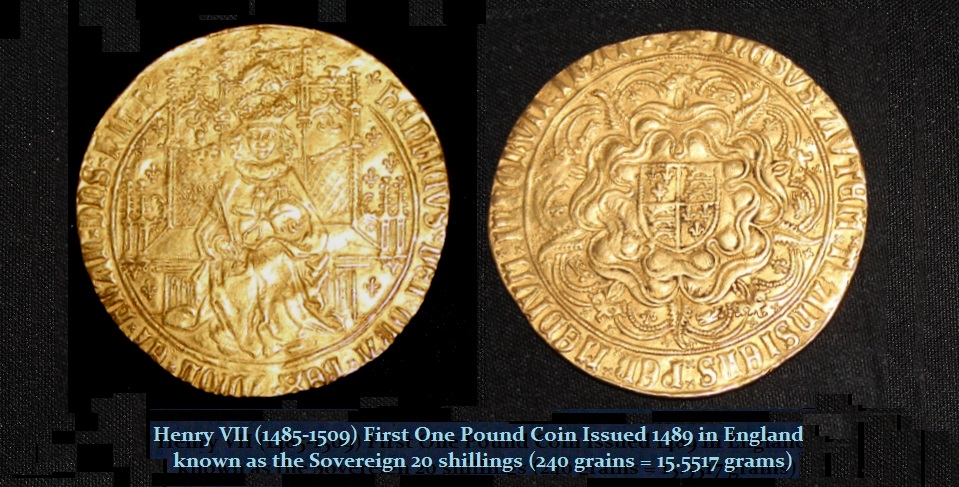
The British pound had really been just a unit-of-account prior to 1489. It was literally one pound of “sterling” silver .925 fine. The first one-pound coin appeared in gold and was issued in 1489 by Henry VII. The risk that the British pound will no longer exit arrives in 2029.

Friday, October 13, 2017

A hard BREXIT would hit especially the German economy

The Political Turf War in Europe and why Britain is Considering Joining NAFTA


QUESTION: Marty; There is talk that Britain will join NAFTA rather than the EU. Does that make sense? What do you think?
ANSWER: The EU is in a death spiral. Every law they pass is to preserve their own power – not for the good of the people or Europe. Once again, the government solution always runs counter-trend to the Free Markets setting the stage for the next crisis. The EU banking rules allow them to just seize everything and shareholders get zero. This is what they did when Spain’s Banco Santander bought rival Banco Popular for €1. The bank which was valued in the collapse at €1.6 billion yet it was sold for €1. Now, banks are finding it extremely hard to raise new share capital. That will only result in more bank seizures. Hello! It would be nice to have someone in government with common sense.
Britain should run away from the EU and slam the door shut and then nailed it to be sure. The British should abandon the EU altogether and undeniably join the NAFTA trade agreement. If they do not, Britain will find itself being dragged down with the sinking ship.
A free trade agreement with the USA would be a slap in the face for the EU and even that will never cause the EU to look in the mirror. Like Hillary, they will blame everyone other than themselves.
The government data on British GDP clearly demonstrates that Britain has NOT benefited from joining the EU because of the secret agenda to federalize Europe to eliminate European War. This theory of one government in Europe, The United States of Europe, will end a possible war is just absurd.

Video Player
00:00
07:08

This narrative that the entire purpose of the federalization of the EU is to stop any war was stated bluntly by Hollande in the European Parliament. You cannot get more one-world government than this theory. But this spills over into economic power and the surrender of all sovereignty to Brussels.

Margaret Thatchers Burges Speech was spot on about the European Project. It was clear behind the curtain back on September 21, 1988, that this was all about the federalization of Europe and the surrender of national identity. The Guardian ran the story: Thatcher sets face against united Europe. Let me make this very clear. Maggie was thrown out of office by a coup orchestrated by her own cabinet. They were eager to surrender sovereignty to Europe and bought into the whole idea of the United States of Europe.
Video Player
00:00
00:32
The new government headed by John Major took the Pound into the Exchange Rate Mechanism (ERM) the same month that German unification began. The monetary policies of Germany were starkly different from Britain. I was called when the attack on the Pound unfolded and was asked what our model said about the Pound because they knew I was a friend of Thatcher. I relayed its analysis that the Pound had to be devalued. I was told that was impossible that John Major had said even the week before the Pound would be maintained in the ERM. I then said that the Pound must be suspended if not officially devalued. The pressure was intense. I explained that a fixed rate is a GUARANTEED trade. I can bet billions and if wrong, nothing happens and I get my money back. That finally made the point.
Black Wednesday, September 16th, 1992, was when the UK Conservative government that had thrown Thatcher out of power to take the Pound into the coming Euro was forced to withdraw from the ERM. While everyone blamed George Soros for making over US$1 billion from this GUARANTEED trade, the truth of the matter this is the only thing that SAVED Britain. Britain was headed into the Euro and the elite Conservatives would not listen to Margaret Thatcher.
Now that BREXIT is in play, the British should be on their hands and knees and be kissing their ground that they are not connected to continental Europe. There are many national and regional sensitivities that must be taken into account when it comes to trade. The British want to conclude agreements with India, Turkey, and China, that are not on the same page with the EU.
The government in London is targeting a free trade agreement following the BREXIT to limit disadvantages that people think exist for the domestic economy after the EU exit 2019. The EU is more interested in punishing Britain as an example of other member states that they better not leave the EU or else. This is all about punishment – not economics.
The British government is under pressure, as the EU will only negotiate the free trade agreement in London if the BREXIT divorce talks have made sufficient progress. Donald Tusk has been playing hard-ball to punish Britain and actually said the EU was negotiating in good faith without any evidence whatsoever to prove that statement. He said in turn: “We hear from London that the UK government is preparing a ‘no deal’ scenario. I would like to say very clearly that the EU is not working on such a scenario. “
There has been little tangible results in trying to negotiate with the EU. British Prime Minister Theresa May is expecting the conclusion of the BREXIT talks only before the departure from the EU in March 2019. Clearly, the British government is also preparing for a situation where no agreement is reached with the EU on exit and contingency plans are being put into place for this likelihood. Keep in mind that the EU will NOT make easy for they fear other states will take the same option.
This is a matter of pride for the EU. A hard BREXIT would hit especially the German economy. The representatives of the German economy are already nervous because of the slow negotiations. The German Federation of German Industries (BDI) has already warned the government that German companies had to “take precautionary measures for a very hard departure.” The Association of German Machinery and Plant Engineering (VDMA) said: “A tough Brexit is a conceivable but not acceptable scenario for the economy.”
Why is German industry getting nervous with its politicians seeking revenge? Britain is the world’s fourth-largest international market with an export volume of €7.4 billion euros last year for German products. Conversely, the Britain delivered 2016 machinery construction products worth €2.4 billion to Germany.
The problem is purely political and has become a turf war and pressure builds against the dreams of the centralized federalization of Europe.

Sunday, March 26, 2017

Artificially set the Ruble’s value too high against the dollar reflecting past glories,

The Financial Crisis 1992-1993


Major John
QUESTION: Marty, it is well known here in Britain that you advised Thatcher of course, but it was John Major you advised and even wrote what he said during the pound crisis during the Soros attack. Would you ever like to comment on that in public about what really happened during that crisis. The press will never report anything you say. There are those of us who would like to hear from the source.
Thank you for what you do.
PJ
British Pound Sept 1992 Soros
ANSWER: For those who do not know, Sir John Major was the Prime Minister of Britain 1990-1997. One of the biggest BS stories is how they blame or credit such events to one person. Each of these market “manipulations” or attacks, are typically characterized with one member of “the Club” taking the front position. In this case it was George Soros. He was given the personal face of that event that broke the pound. It was by no means just Soros. He did not get that trade correct out of thin air. Everyone in the trading community saw it coming. It was similar to the Greek crisis in 2010. Once one member is in trouble, traders look around ans see who is next.
PlazaAccord-1
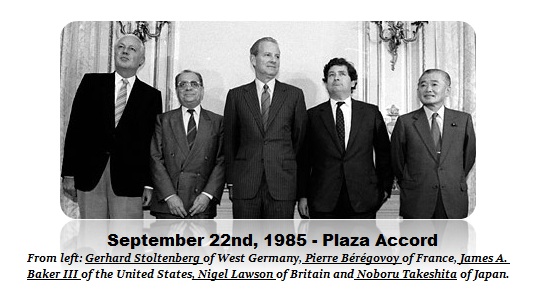
The 1992/1993 collapse of the European Exchange Rate Mechanism (ERM) was a system introduced by the European Economic Community on March 13th, 1979, to which Thatcher was against. It was part of the European Monetary System (EMS), intended to reduce exchange rate variability and achieve monetary stability in Europe in the aftermath of the collapse of Bretton Woods in 1971. Only after the Plaza Accord in 1985, did the EMS prepare for Economic and Monetary Union of Europe which gave birth to the introduction of a single currency, the euro, which took place on January 1st, 1999. The collapse of Bretton Woods, the ERM, and the coming Euro all have the same flawed understanding of economics. Government think they can by law or regulation nullify their own failures. All three systems could never survive under the socialistic/military establishment for the politicians do whatever they want to sustain power, not to manage the economy in any meaningful manner.
china-100-yuanClearly, the tension within the ERM began to build up from mid-July 1992, concentrating initially on the Italian lira, then on sterling and then on a variety of other currencies. However, what was also overlooked was the fact that July 1992 was also when the Russian Ruble began trading for the first time. Meanwhile, the Bank of China required foreign visitors to China to conduct transactions with Foreign Exchange Certificates that were issued by the Bank of China between 1979 and 1994. Effectively, this was a two-tier monetary system – domestic v international. Following the ERM Crisis, this two-tier system was abolished, and all transactions now occur in Renminbi. The entire global foreign exchange system was changing. The biggest mistake people make looking at the British pound crisis of 1992, has been to look at it through a myopic perspective of isolation.
The pressure on the Finnish Markka was so strong that it abandoned its peg with the ECU. Italy raised its interest rates, but still the lira weakened repeatedly. The Bundesbank did not cut its interest rates enough fearing inflation and speculation would continue. It was on September 13th, 1992 when the Italian decision to devalue Italian Lira by 7% took place (other currencies revalue of 3.5%: Lira devalues 3.5%). The pressures on lira led traders to look around and saw that the British pound was also overvalued relative to Germany. Hence, sterling became the next target just as did Portugal after Greece in 2010.  It was Black Wednesday, September 16th, 1992, when the British Conservative government of John Major was forced to withdraw the pound sterling from the European Exchange Rate Mechanism (ERM) after it was unable to keep the pound above its agreed lower limit in the ERM. Yes, I was being called during this crisis. The first call from Britain asked me what our model was forecasting. I warned that the pound had to be devalued and that the ERM was collapsing exactly as did Bretton Woods. I was told John Major could not devalue the pound for that was his campaign promise. I thought about the crisis and called back. I wrote down the words to say that he would allow the pound to seek its own level. This was slightly different from a devaluation which would have still been a fixed exchange rate peg. Allowing the pound to float would let the market make the decision, rather than the politicians.
The day after the British crisis ended with effectively withdrawing from ERM, it in turn flipped the pressure back upon Italy. Thus, the following day, the 17th of September 1992, Italy also withdrew from ERM. Once again, attempts to politically fix currencies produced a total and utter failure as was the case with Bretton Woods and of course the more recent Swiss Peg collapse. We will see the same end result with the Euro.
Deutsche Mark Sept 1992-MThe Deutsche mark was sent to significant highs even against the dollar in September 1992. The foreign exchange markets remained disturbed for the rest of that year, with a renewed outbreak of speculative pressures leading to the abandonment of Sweden’s peg to the ECU, devaluation of both the Portuguese escudo and the Spanish peseta in November 1992 and the abandonment of Norway’s ECU-peg in December 1992. By January 1993, Ireland witnessed economic pressure due to the sterling devaluation by the UK, and this then compelled Ireland to finally devalue by 10%. Germany finally reduced its interest rates in February, March and April of 1993, trying to ease the economic pressure within the currencies that had not yet been realigned. The entire crisis of 1992-1994 was a prelude to the ultimate crisis that would hit the euro for similar reasons and Germany’s fear of inflation that would impose austerity on the rest of Europe. It was Germany’s high interest rates in 1992/1993 that broke the back of the ERM.
Indeed, then France presented a problem for the politicians that made clear of their commitment to the ‘franc fort’ policy, that was keeping the franc at its existing parity. France also wanted lower interest rates to relieve the recession, and it appeared willing to challenge the German economic authorities publicly, who were concerned about inflation, so they kept interest rates high out of austerity. On June 18th, the French money market intervention rate was pushed below the German rates. This was received with skepticism in the markets. Consequently, speculative pressures within the ERM continued to build. This time, those pressures turned against the French franc during July 1993. The Banque de France was forced to raise its interest rate to prevent the franc from falling through its ERM lower band. However, the Bundesbank did not lower its discount rate, and massive sales of the French franc, Belgian franc, Danish krone, Spanish peseta and Portuguese escudo took place in response. Once again, Germany’s obsession with the Hyperinflation of the 1920s dictates their response. Today, we have seen the price of German austerity upon the entire economic condition of Europe. While the ERM broke, today there is a full federalized government in Brussels attempting to maintain austerity and the same philosophies that broke the ERM during the 1992/1993 Crisis.
At this point in time, the ERM was in total crisis within Europe. One would think they learned from Bretton Woods, but politicians are blinded by their self-interest, which always comes before that of the people or country. Massive intervention was necessary to keep these currencies just above their ERM floor. On the 2nd of August 1993, the EC monetary officials and finance ministers finally agreed that the ERM bands should be widened from 2.25% to 15% (except for the Dutch-German one). With the wider bands, the system would be less vulnerable to speculation.
At the core of all of this was German’s complete misunderstanding of the Hyperinflation and their attempt to impose austerity upon all of Europe, which is deflationary and anti-economic growth.
Thailand Share-Y 3-22-2017
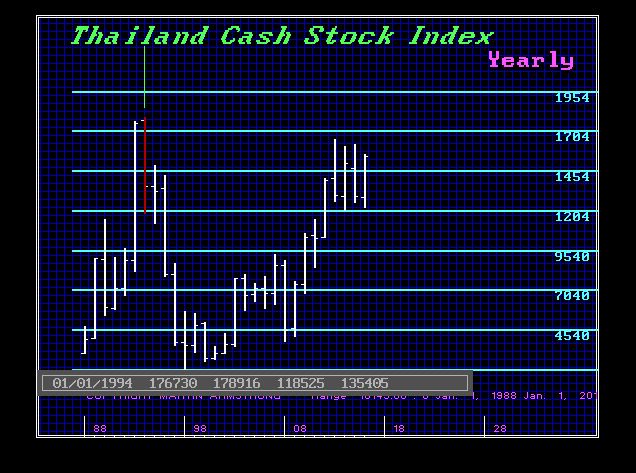
The ERM Crisis of 1992/1993, made George Soros famous, yes, but it awakened international hedge fund traders to the currencies markets. Traders then turned to the peripheral markets – Russia next and then South East Asia, which saw its share market peak in January 1994 and bottom in September 1998 (56 months).
Russia Ruble-Y 3-22-2017It was on October 11th, 1994, when the ruble tumbled in the Moscow interbank market by over 20% against the U.S. dollar. “Black Tuesday” became the first currency crisis in post-communist Russia also caused by politicians. From July 1992, when the ruble first could be legally exchanged for United States dollars, to October 1995, the rate of exchange between the ruble and the dollar declined from 144 rubles per US$1 to around 5,000 per US$1. It was the float of the Ruble in July 1992 that started the shift in global capital flows and currency markets. Politicians, for pride, artificially set the Ruble’s value too high against the dollar reflecting past glories, which was the exact same mistake of the British entering the ERM. Rapid changes in the nominal rate of the Russian economy reflected the overall macroeconomic instability. After the ERM crisis, traders then turned to emerging markets targeting Russia. This was the Black Tuesday with a 27% collapse in the ruble’s value against the dollar. Eventually, in July 1995, the Russian Central Bank announced its intention to maintain the ruble within a band of 4,300 to 4,900 per US$1 through October 1995. They later extended the period to June 1996. They attempted a “crawling band” exchange rate which they introduced to allow the ruble to depreciate gradually through the end of 1996, This led to a further collapse from 5,000 to 6,100.
ft-1998After the Russian introduction of the “crawling band”, traders turned their attention to the emerging market in Southeast Asia with more concerted force. This eventually manifested in the 1997 Asian Currency Crisis. Then traders turned back to Russia. I have stated many times how I was invited to the IMF dinner put on by Edmond Safra in Washington. I was being pitched then to join “the Club” and buy into Russia for they had the IMF in their pocket. The IMF would continue to guarantee Russian debt so you could buy debt and earn 5 times the amount of interest otherwise. The IMF would eliminate the risk. I said “No way, my computer warned Russia would collapse.”
Ruble 1998 - DOf course, this eventually led to the collapse in 1998, which in turn set in motion the Lehman and Bear Stearns collapse thanks to Long Term Capital Management collapse who lost on the Russian bond market.
It was all set in motion by politicians trying to fix currencies that they cannot fix.