Monday, June 17, 2019

The Rise in Agriculture for the Next ECM


The Fall Army Worm (FAW; Spodoptera frugiperda) is a crop-eating pest that was first detected in China back in January 2019. It has now spread across China’s southern border and currently impacts about 8,500 hectares (127,000 mu) of grain production in Yunnan, Guangxi, Guangdong, Guizhou, Hunan, and Hainan provinces. Officially, Chinese authorities have employed an emergency action plan to monitor and respond to the pest. FAW has no natural predators in China and its presence may result in lower production and crop quality of corn, rice, wheat, sorghum, sugarcane, cotton, soybean, and peanuts among other cash crops. Experts warn that there is a high probability that the pest will spread across all of China’s grain production area within the next 12 months.
This is obviously a contributing factor to what the computer is projecting for agriculture. Keep in mind that the patterns the computer identifies come from the price movements. We have wheat prices back to 1259. Clearly, the projections it makes are all inclusive of weather and disease, for everything unfolds in a cycle

Saturday, June 15, 2019

Interest Rate & Currency Pegs


QUESTION: Martin,
I went over three blogs this morning (both public and private); they are The FED Between a Rock & a Hard Place, Manipulating interest rates & Public vs Private Interest Rates. A common theme of the FED possibly pegging interest rates and inflation. My question is: If the FED is induced to peg rates at artificially low levels and the traditional method of combating inflation is raising rates, something must give, so are metals and commodities getting ready for “prime time?”
CF
ANSWER: Behind the curtain the system of pegging rates, as I have stated, is viewed substantially differently than QE. The rates on the U.S. debt will be pegged, but not the Fed funds rates. They will be able to raise rates to the marketplace, but the bonds will be “pegged” like the Swiss attempted to “peg” the franc/euro.
This is a hybrid interest rate system that would eventually collapse as all pegs do. But it will allow, initially, for a bifurcation of rates.
They REALLY REALLY REALLY REALLY REALLY do not want me to talk about this publicly.
This is feeding into what we see coming for the next wave. They realize QE has failed. They cannot allow rates to rise as it would blow out the budgets.
This is not a long-term solution. The interest rate peg collapsed in 1951 due to Korean War inflation.

Governments have often resorted to forced loans .

Forced Loans People Ignore Until it’s TOO LATE

QUESTION: With the private vs public debt and interest rate discussion, nobody is mentioning things like government legislation to forcing people to buy government debt. For example 401’s, IRA’s… must have or be in government debt.
Your thoughts?
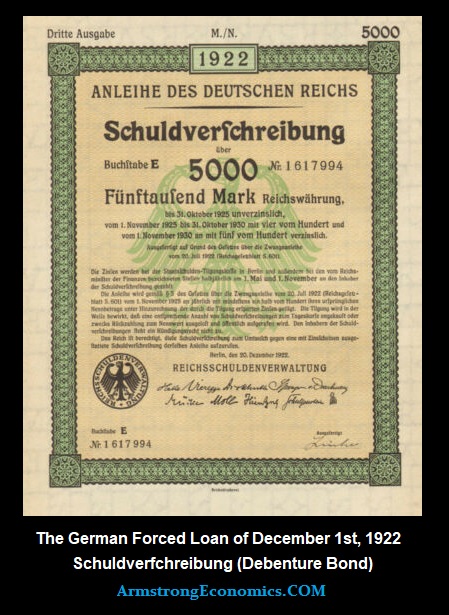
ANSWER: Governments have often resorted to forced loans. When Italy was in trouble, they took 90-day paper and converted it to 10-year paper. Most people are clueless about the German hyperinflation. They assume it was due to the government printing money. The spark was December 1922 when the government confiscated 10% of everyone’s property and handed them bonds as a forced loan. Confidence completely collapsed at that moment.
This is all part of the process of the decline in confidence in the government. This is why the system is unsustainable. We will be heading into a great monetary crisis very soon.

Thursday, June 6, 2019

2 tier currency


The International Unit of Account

QUESTION: I only recently learned of your material and am still digesting it. I appreciate that you encourage critical thinking. I hope you find my questions of the same spirit.
In your recent article “Are Two-Tier Monetary Systems a Possible Tool?”, you illustrated how South Africa’s experience could provide an example for nations wanting to untangle their domestic currency from global obligations (i.e., US dollar, presumably others too).
Would you mind elaborating on this concept in relation to the following questions?
My questions:
1) For this 2-tier approach to work, must every nation have a 2-tier money system, or would it suffice to have only the major players do so (i.e., USA, EU, etc)?
2) If every nation had a 2-tier money system, then how would that compare and contrast to a “global SDR” or some other global, non-national currency acting the reserve currency?
I suppose what I am really asking is: Imagine a collection of nations and each nation has a 2-tier system. The nations agree to use each other’s “external” tier when dealing with each other and keep the “internal” tier for solely domestic purposes. Instead, now imagine that same collection of nations decided they would each use a global, non-national currency (SDR or otherwise) as the global reserve currency.
What similarities and differences would these 2 different approaches yield? Are there certain conditions where 1 approach would be desirable over the other approach?
I find this subject both intriguing and very relevant, so I would like to hear your insight.
Thank you for the new (to me) material.
C
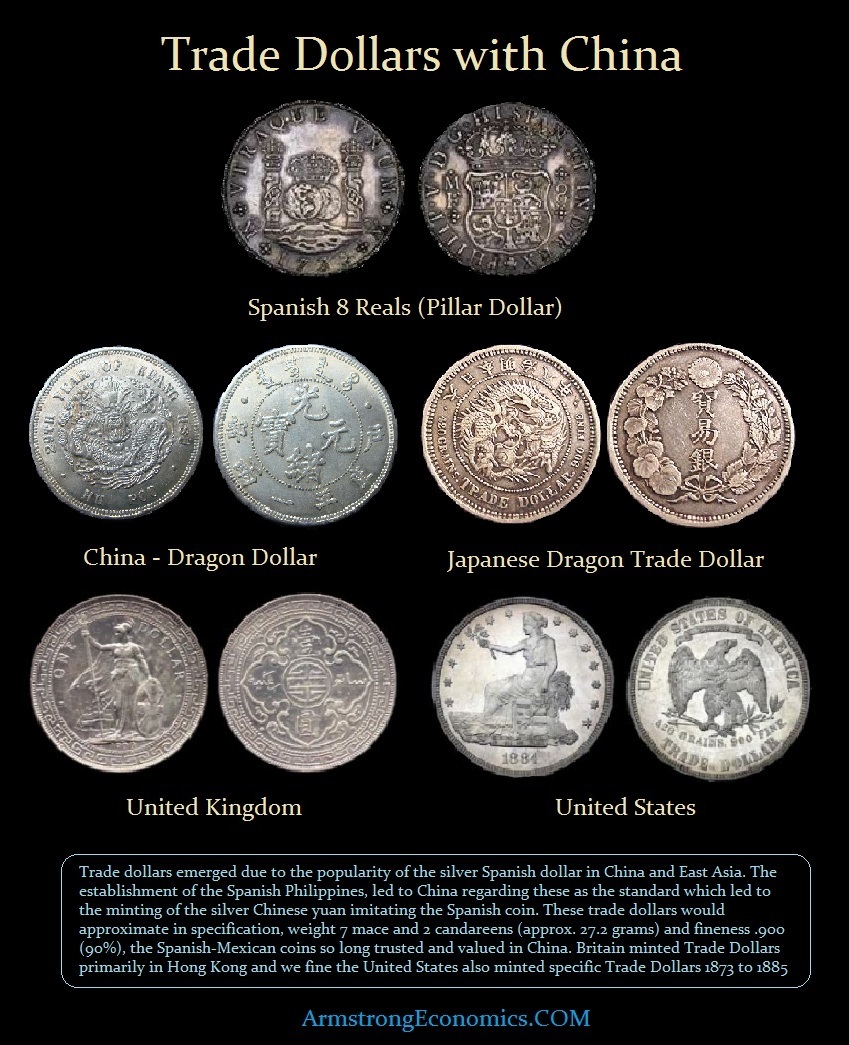
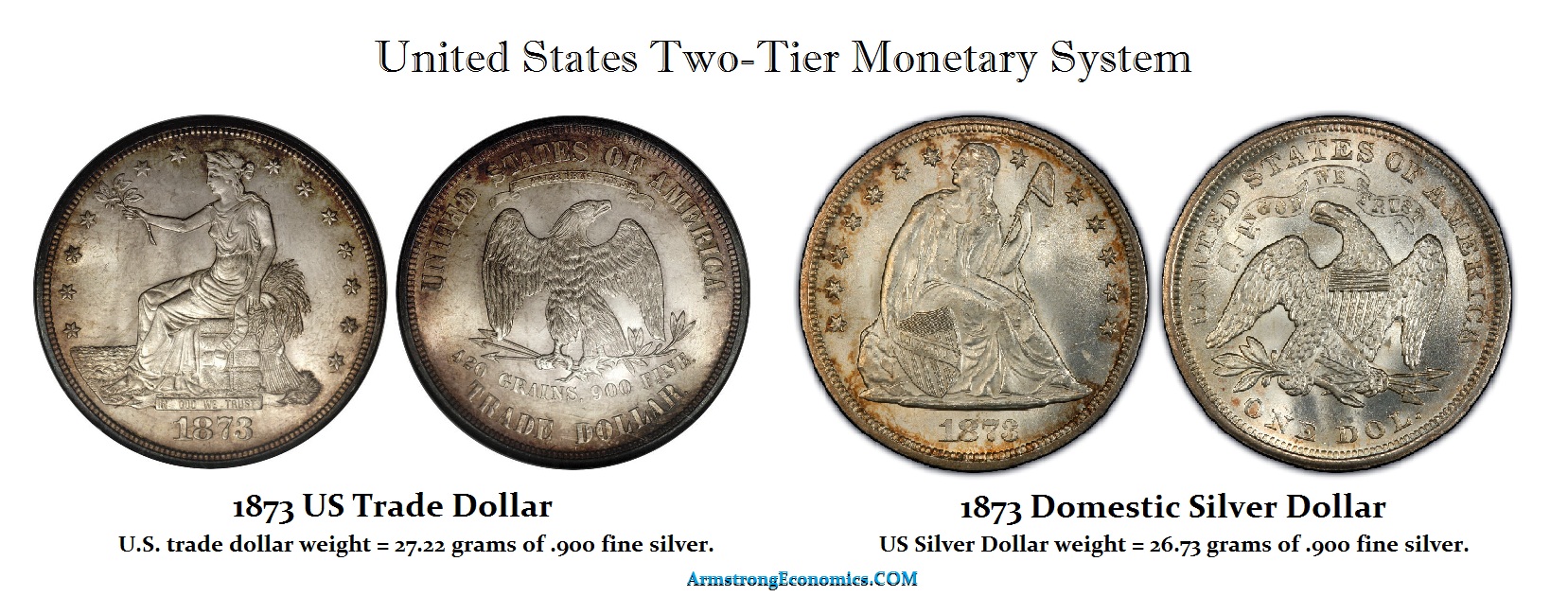
ANSWER: During the 19th century, it was common to issue a “trade dollar” with China who used the silver standard initially by using the Spanish 8 reals known also as pillar dollars. The US issued trade silver dollars and domestic silver dollars of different weight. All of these nations were issuing a two-tier currency to facilitate trade with China.
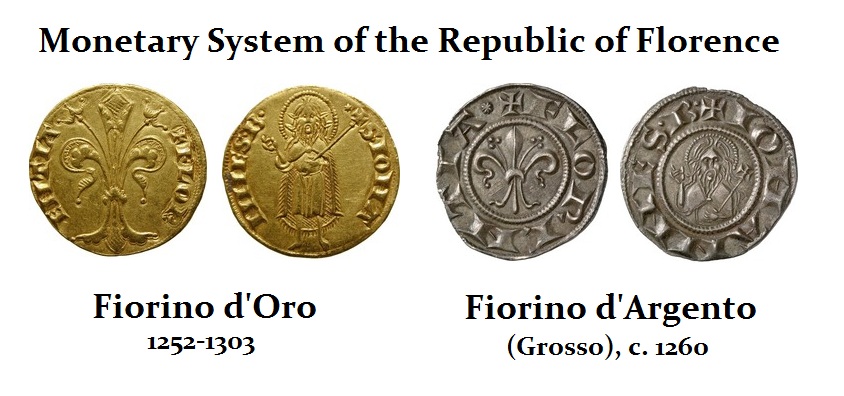
During the 14th century, there was also a two-tier monetary system. Florence used the gold florin for trade, but domestically, wages and commerce took place in silver. Companies were required to keep two sets of books by regulation.
A two-tier system can be used to isolate foreign capital inflows. Switzerland was suffering and that eventually broke the peg. The foreign capital was not looking to buy assets in Switzerland, they were just converting euro to Swiss and parking the money. Therefore, a two-tier system would have allowed the flow of capital to concentrate in what we would call the Financial Swiss Franc (FSF). This peg would have not been necessary and they could have even imposed negative interest rates or zero rates to deposits in the FSF. Any trade for produces could have then been delegated to the Swiss franc and the peg would not have been necessary.
We would not need a system where everyone had a two-tier currency and traded against each other. The new International Unit of Account (IUA) would be a basket of currencies and your local currency would then trade against that. You would need to allow contracts and debts to be contracted in this IUA freely, as takes place today in US dollars. This would by no means eliminate FOREX risk.
Insofar as a global SDR, the problem would be the calculation and then the IMF has been notorious for corruption. Would some nations put pressure to alter the formula because of a financial crisis?
I would say that the formula must be fixed and based on the total percentage of international trade a given nation wields. It should be subject to revision only once every 5 or 10 years at fixed terms.
The primary reason I would design the system in this manner is that the Federal Reserve has already become the central bank of the world. The Fed has lost the ability to manage its own economy because the IMF and others lobby it not to raise rates because that would adversely impact their currencies. There should be an IUA so that a central bank can manage its own economy without impacting others because they will be prohibited from issuing debt (public or private) in a foreign currency — only in an IUA. There would be no sovereign debt issued by the agency controlling the formula. The reserves of central banks would then be only in IUA terms.
Already, capital flows globally when it sees opportunity, and in this manner, it acts as an arbitrage tool. If real estate looks cheap in one country, the capital will flow in. Australia, New Zealand, and particularly Vancouver are fighting this trend. There will be a natural cycle to it and there is no need for changing laws to try to stop it. The Japanese were big buyers during the 1980s, even buying Rockefeller Plaza in New York. As their economy turned down, they resold it and exited.

Friday, May 31, 2019

Cycle of War & Religion -2021/2022


QUESTION:
Hello Martin,
on Sept 12th 2013 you wrote about the ‘Return of the crusades’. Now, 6 years later, with the massive migrant crisis still ongoing, a lot of people consider leaving Western Europe bc Sharia law is looming everywhere. Mohammed takes the first place for baby names in many countries, sharia law spreads, kindergartens don’t serve pork anymore, Easter festivities in school get canceled bc of Ramadan, rapists and even murderers don’t go to jail bc neither the executive nor the judicative has capacities anymore to even open a trial and so on. At the moment, it looks as if Western Europe will become a caliphate within the next decade or two. With Migrants still flooding the continent and the birth jihad, it seems Europeans/Christians will vanish in the foreseeable future. I would like to know what Socrates has to say about this… will there be a counterstrike? Or a religious war? Right-wing parties rise everywhere, so the Europeans ARE fed up. But is there even enough TIME to turn things around…?
What do the cycles say?
Thx and cheers,
P
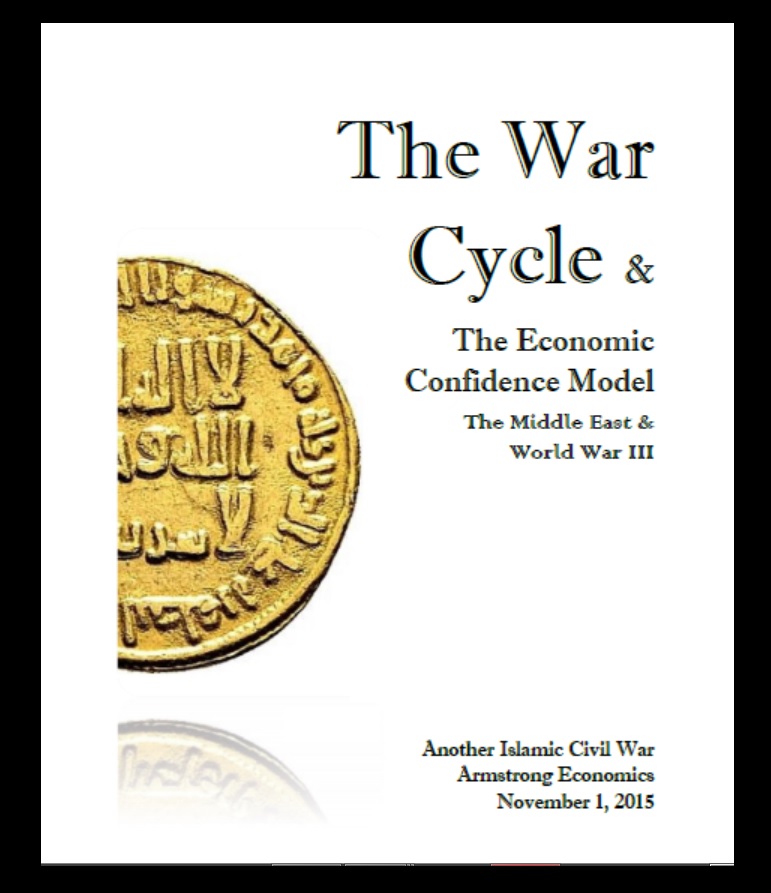
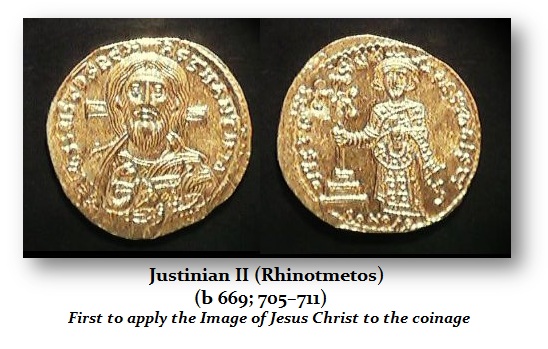
ANSWER: Unfortunately, the cycle of religious tension is also due in 2021/2022. The first recorded persecution of Christians took place under Emperor Nero who blamed them for setting the great fire in Rome. The base cycle on a major shift in religion turned up in 1990, which was 224 cycles of 8.6 from 64 AD. Add pi, 31.4 years, and we arrive at 2021/2022. Nevertheless, there was also rising tension with Islam itself. This I laid out in the 2015 Cycle of War report. When the economy turns down, that is when tensions rise. There was the religious war in Christianity known as the Byzantine Iconoclasm, which existed between about 726 and 787 AD. The peak before the war came 72 cycles of 8.6 from the Nero persecution of 64 AD. Then 96 cycles later we come to Martin Luther in 1517 when he posted 95 theses on the church door in the university town of Wittenberg. Cyclically right on time, in 1534 King Henry VIII declared himself to be supreme head of the Church of England. This resulted in a schism with the Papacy and began the events known as the English Reformation.
It appears we are building toward 2021/2022 when things are going to begin to get heated on a religious basis.

What were Roman Taxes v Modern Taxes?


QUESTION: You do a lot of comparison to the Roman Empire. What was the size of the government relative to GDP? Can you estimate that?
GY
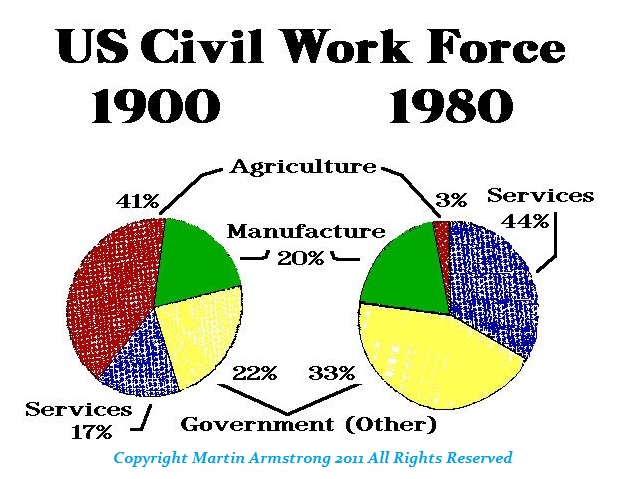
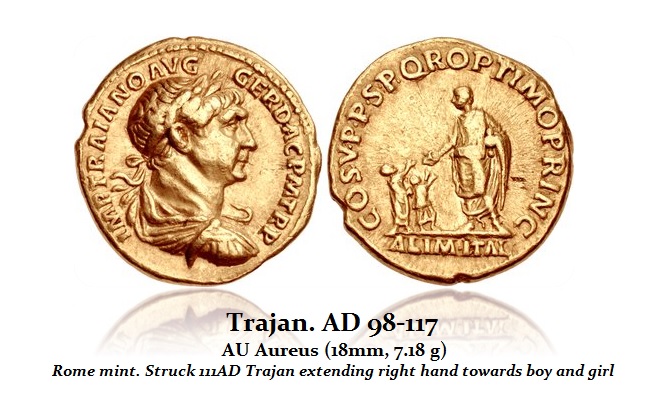
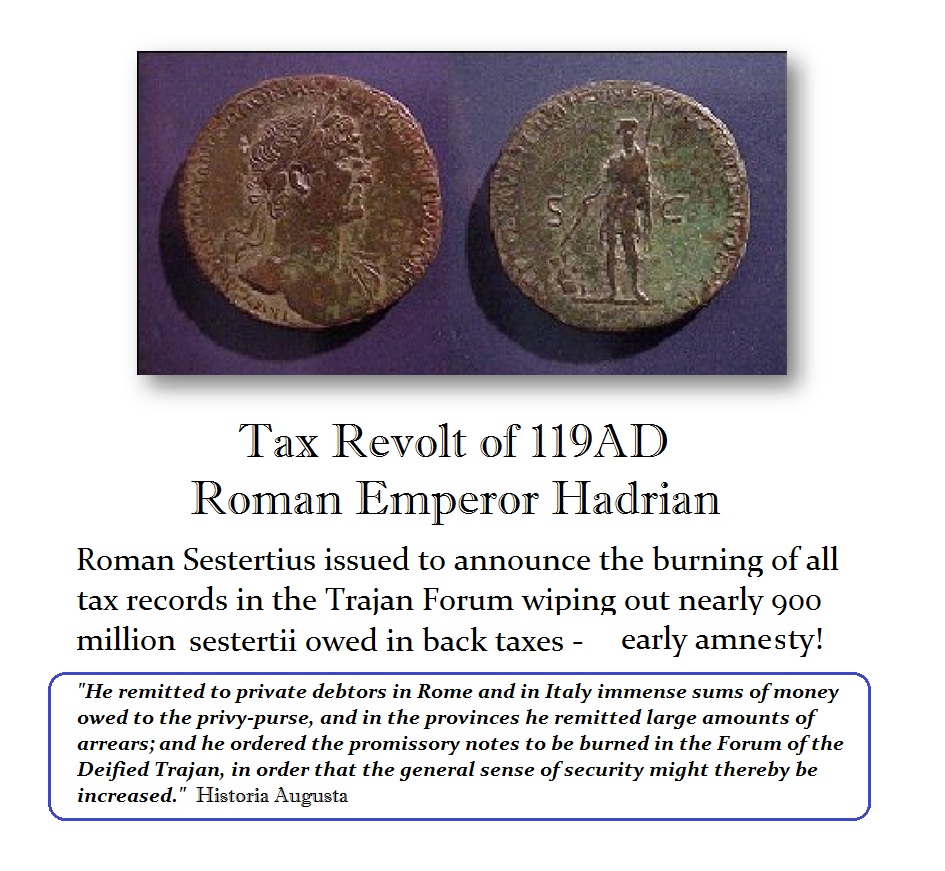
ANSWER: The Roman economy was more like the USA during the mid-19th century in that it was pre-industrial. About 80% of its inhabitants worked in agriculture, which was about where we were in 1840. There was no social agenda of trying to redistribute wealth from one class to the other. Still, there were social programs. But the socialistic agenda that was adopted by modern governments has sought not merely to redistribute wealth among the classes, but it has justified bigger government on a grand scale never before witnessed in history. The tax rate in the ancient Roman Empire was about 5% with some paying as little as 2%. The actual cost of government during the Roman Empire was minimal compared to the modern standard. The Roman Emperor Trajan (98-117 AD) formalized the alimenta, which was a welfare program that helped orphans and poor children throughout Italy. It provided general funds as well as food and subsidized education. The program was supported initially out of Dacian War booty, and then later by a combination of estate taxes and philanthropy. So there were programs to take care of people who needed help.
Virtually all the taxes and rents raised by the imperial government were spent on the military, which came out to be about 80% of the imperial budget in 150 AD. This military spending constituted about 2.5% of the empire’s GDP. Obviously, we do not really see separatists movement until the mid-3rd century when Valerian I (253-260 AD) was captured by the Persians. With the cost of the military coming in about 2.5%, this explains the lack of tax rebellions. The tax enforcement was nowhere near as intrusive as we see today. The US military budget comes in about 4% or twice that of the Roman Empire. The Roman Empire lasted far longer than any modern state for it seems to have been much more tolerable of a burden, whereas the U.S. military budget will be around 20% at times of total expenditure.
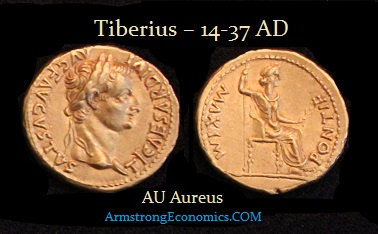
The primary purpose of my investigation into the monetary system of the world is very simple. The political unrest ONLY rises when there is economic tension. Turn the economy down and you will get historically civil unrest. Additionally, it is interesting to see what policies produce the best and worst results. Augustus (27-14 AD) created a real land boom as he issued a tremendous amount of coinage creating a booming economy. He was followed by Tiberius (14-37 AD) who imposed austerity and issued very little coinage by comparison. That resulted in an economic depression in 33 AD and this was in part reflected in the Jewish rebellions over taxes. Remember the story that Jesus asks whose picture is on the coin and he replies to give to Caesar what is Caesar’s? So we can see the impact of austerity throughout history to extract the best policies under which we should live to promote like Rome – Pax Romanum

Monday, May 27, 2019

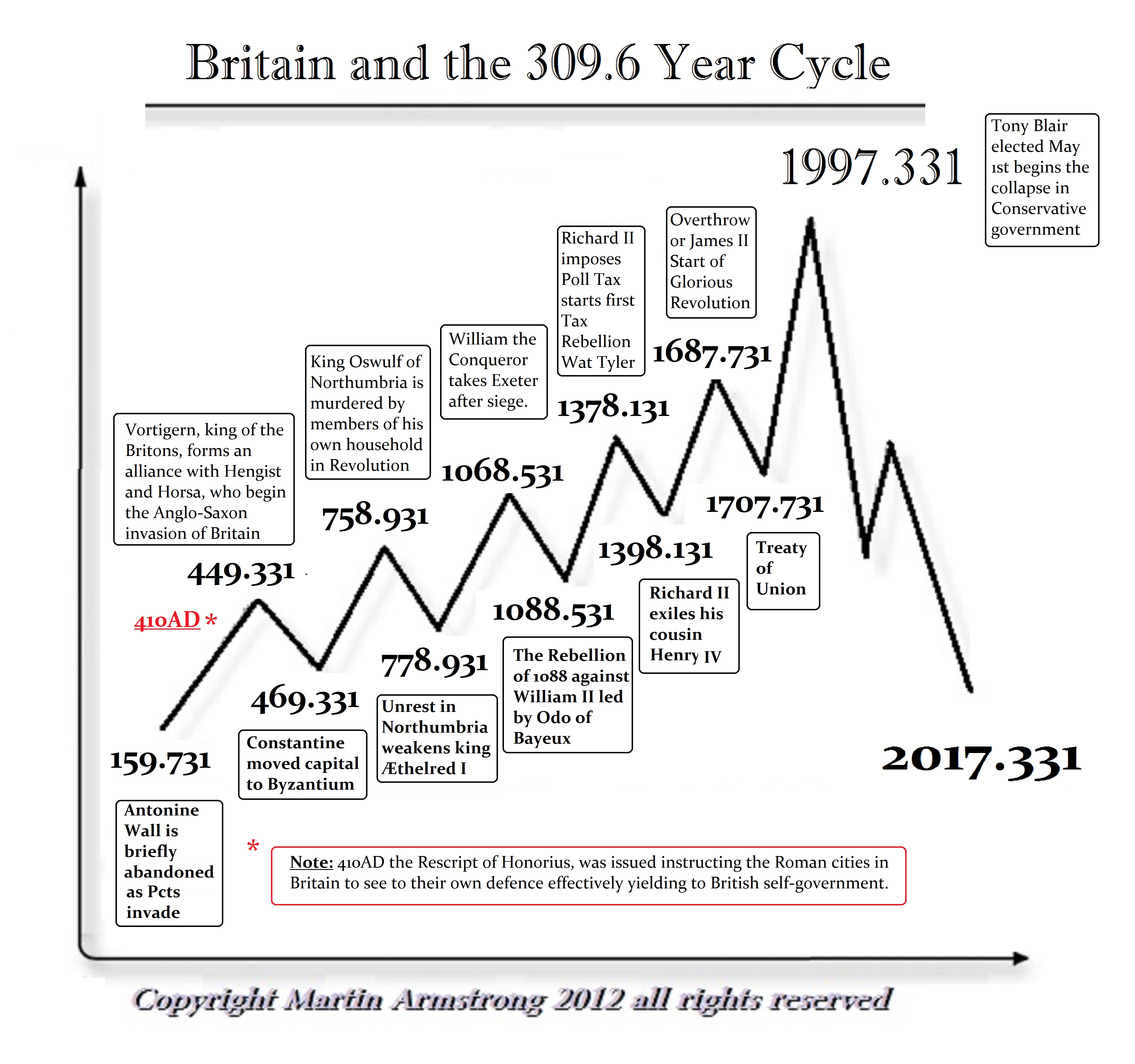
The Demise of the British Conservative Party?


The term “Conservative” was suggested as a title for the party by a magazine article by J. Wilson Croker in the Quarterly Review in 1830. The name immediately caught on and was officially adopted under the aegis of Sir Robert Peel around 1834. However, it really began to take shape in 1812 when the name “Tory” was commonly used for a new party according to historian Robert Blake. Blake stated that Pitt’s successors after 1812 “were not in any sense standard-bearer’s of true Toryism”. Nevertheless, it was 1834 when the name “Conservative Party” was adopted and it replaced Tory as the dominant name by 1845.

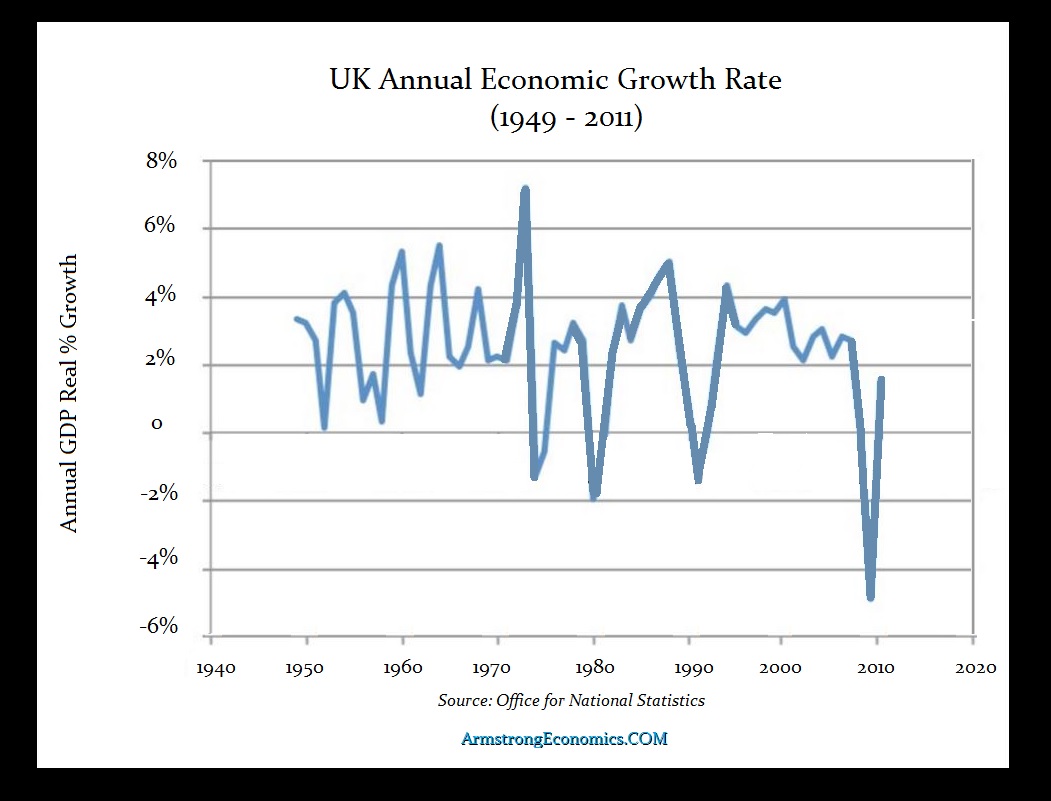
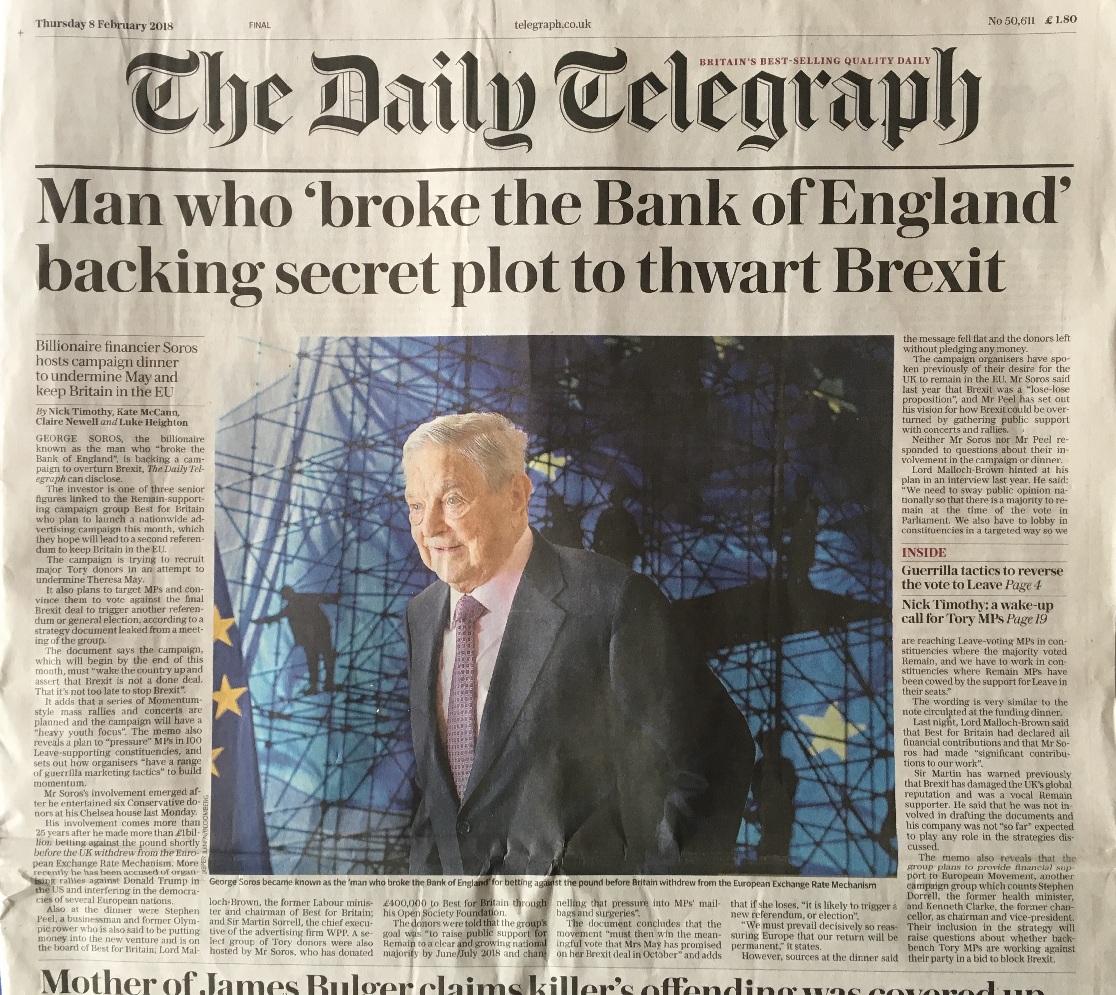
There is no question that Britain has witnessed its economy decline every since joining the Eu back in 1973. The coup against Margaret Thatcher and the desire to even surrender the pound was only halted by the free markets during the ERM Crisis of 1992-1993. Had it not been for that crisis which actually made George Soros famous, the British pound would no longer exist for they would have been in the Eurozone.
Ironically, it has been Soros who has been opposing BREXIT and trying to fund the remain segment and advocates the surrender of the pound. The Telegraph reported that Soros “is one of three senior figures linked to the Remain-supporting campaign group Best for Britain who plan to launch a nationwide advertising campaign this month, which they hope will lead to a second referendum to keep Britain in the EU.” Soros has been backing the idea of one-world government in the EU.
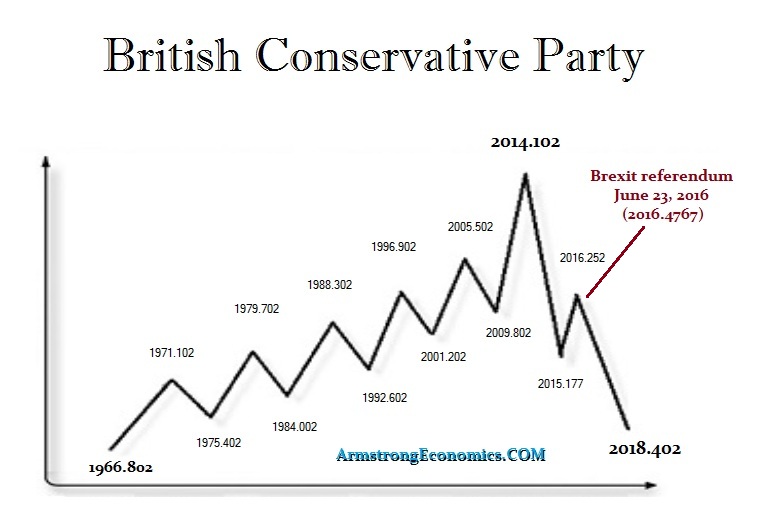
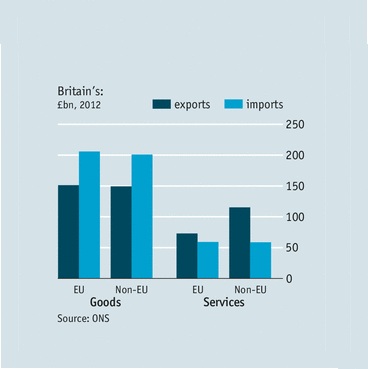
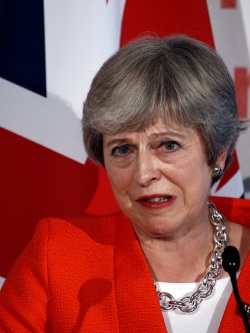
The 224-Year Cycle of Political Change warns that by 2036, we may no longer see the Conservative Party. Theresa May never wanted to leave the EU – she was personally against it. All of the trade data proved beyond a shadow of a doubt that there was no tremendous advantage to being in the EU.
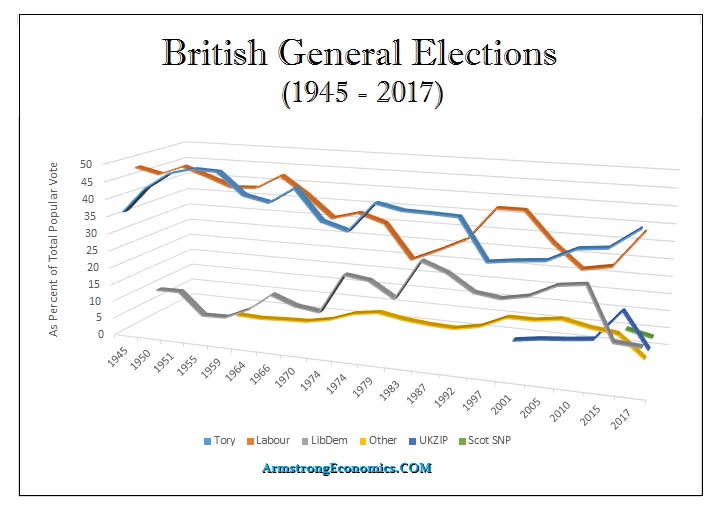
What has been very clear is that Teresa May has really undermined the Conservative Party with its support falling below 10% in the EU elections. May’s defeat has been brought about by Brussels’ refusal to negotiate and thus May and just accepted that position and constantly tried to get Britain to surrender its sovereignty in the process. The Conservatives are on course for their lowest ever share of the vote in a nationwide ballot and many fear that they could even slip into fifth place behind the Greens. Remember one thing. Like plays and fashion which begin in London and then migrate to the USA, the same is true of politics. This is a warning to American political parties. Trump was elected NOT as a fluke, but as a vote against the establishment. We are witnessing the very same trend in Britain