Showing posts with label Technical Trading. Show all posts

Friday, July 3, 2020

Trading is the Only School to Learn Real Economics


QUESTION: I noticed that all the economists who are not academics are the people who actually discovered something. The academics always advocate for manipulating society like Keynes and Marx. Why is that?
PD
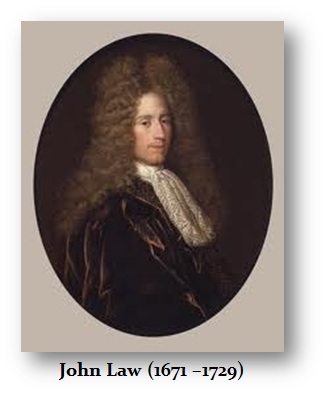
ANSWER: If you look at the first analyst to establish supply and demand, it was John Law. Even Adam Smith used his examples in “Wealth of Nations.” Adam Smith actually investigated his work to come up with his invisible hand. There was David Ricardo, who also made a fortune as a trader. Those are the three greats and NONE of them has a formal economics degree, which was first taught as a separate course in 1902 at Cambridge.
Those of us who come from the real world of trading, do not have the luxury to come up with Utopian theories that sound nice. Unless you have traded, you will never understand that the market is always right. If you do not listen to the market, you will lose everything.

Wednesday, January 8, 2020

Knowledge is gained ONLY from making mistakes and surviving our own decisions


The Pursuit of Knowledge

QUESTION: Hello Marty,
I am fascinated by Socrates as it has opened my mind to patterns in my own nature and the flow in life.
I’m fact, your economic models have open my awareness of the cycles in my life. As I have experienced support, resistance, reversals, phase transition and slingshots out of expanded consciousness. It really is amazing to see this in myself, others, societies and cultures.
Which leads to my question, have you ever been asked to apply and integrate your research with the research of Clare W Grave, specifically his Spiral Dynamics models of human and societal consciousness?
Your economic models are far superiority anything I have ever seen. Same goes for Spiral Dynamics for understanding why and how humans behavior manifests and emerges.
Like you I’m interested in advancing the world to a more sustainable future less driven by self interest and more driven by system’s thinking grounded in unbiased research that lets the data tell the story, rather than setting out to to confirm own perspectives and bias.
I believe your work will be recognized on a much more grand scale by future generations. You definitely are someone who exhibits the characteristics of Stage Yellow & Stage Turquoise thinker. You are rare and are ahead of your time.
Thank you for your work.
MLK
ANSWER: Clare W. Grave’s work in psychology concluded that the mature human being transitions from a current level of cultural existence based on current life conditions to a more complex level in response to (or to cope with) changes in existential reality. Graves’s model demonstrates the dual nature of human social emergence with state changes between communal/collective value systems (sacrifice self) and individualistic (express self) value systems.
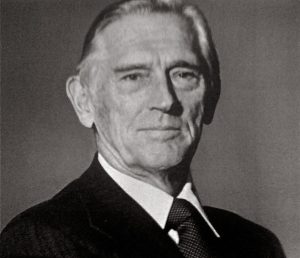
I have not sought to integrate my work into his. You must understand that there are a few of us who have learned how humans behave through trading markets. I never considered that what I was writing or doing had any validity or significance in psychology or economics for that matter. It was during the early 1980s when many people began to take notice of what I was doing because I emerged as the leading analyst in foreign exchange in a new world of floating exchange rates.
I was contacted by the Military University known as the Citadel. I was asked for permission to teach the Economic Confidence Model as the key to understanding the economy and war. They told me I was the modern Hegel, which was perhaps the first time I was being compared to any philosopher. Hegelianism is the main philosophy of G. W. F. Hegel (1770–1831) who was also a major influence of Karl Marx and revolutionary movements during the 19th century. Hegel’s philosophy has been summed up by the dictum that “the rational alone is real,” which means that all reality is capable of being expressed in rational categories. His goal was to reduce reality to a more synthetic unity within the system of absolute idealism.
I was then rather shocked when a rather famous central banker called and wanted to meet with me back in the early 1980s. John Exter (1910–2006) was an American economist, member of the Board of Governors of the United States Federal Reserve System, and founder of the Central Bank of Sri Lanka. I still have the tape from our meeting which we recorded. He was the first central banker who actually came to my office (Part I of three).
Audio Player

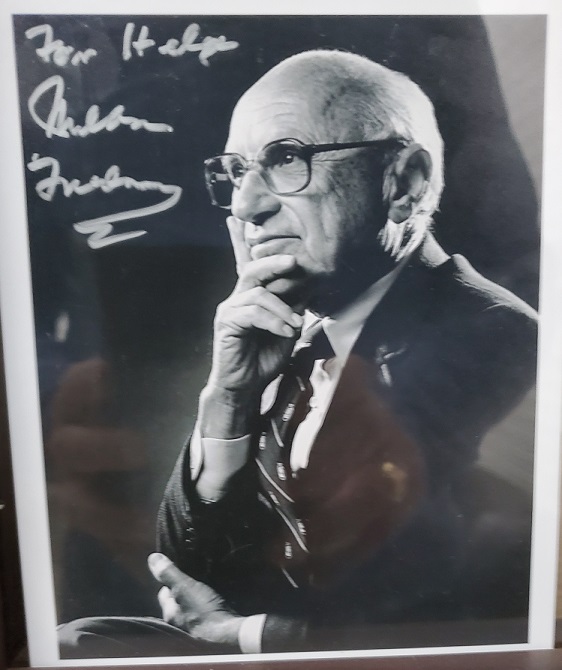
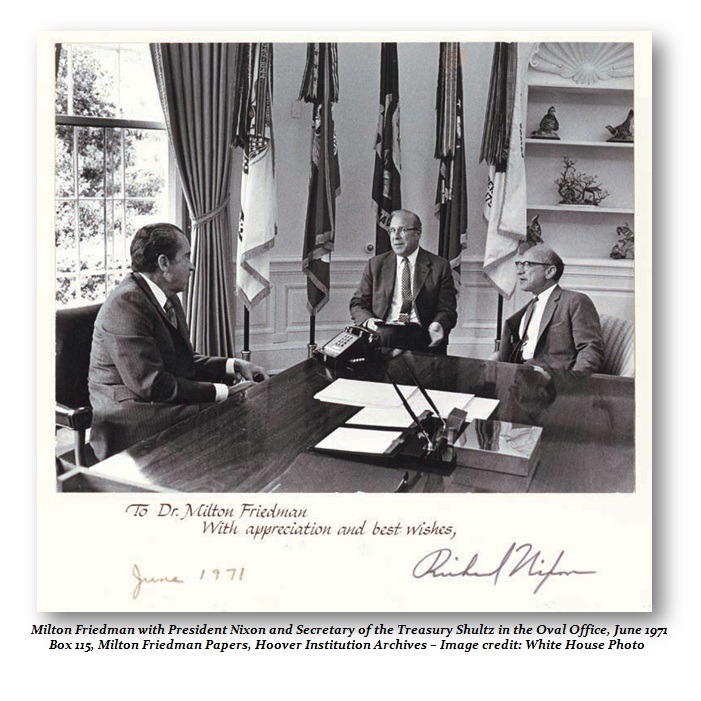
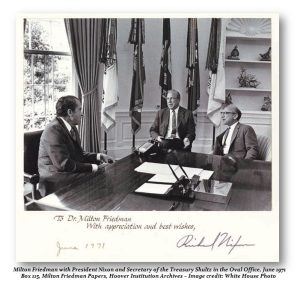
Then I was giving a lecture in Chicago on COMPUTRAC or Market Technicians. Milton Friedman came there to listen to me. When I was finished, he came up and introduced himself and said I was doing what he had only dreamed about when he first wrote about creating a floating exchange rate system in 1953. We became friends after that meeting.
When it came time to create the G5 in 1985, I was asked for my opinion. I was opposed to the manipulation of the dollar by announcing it would be lowered by 40% under the pretense that would reduce the trade deficit and create jobs. I expressed my objection to President Reagan and the White House was compelled to respond.
Video Player
00:00
04:18
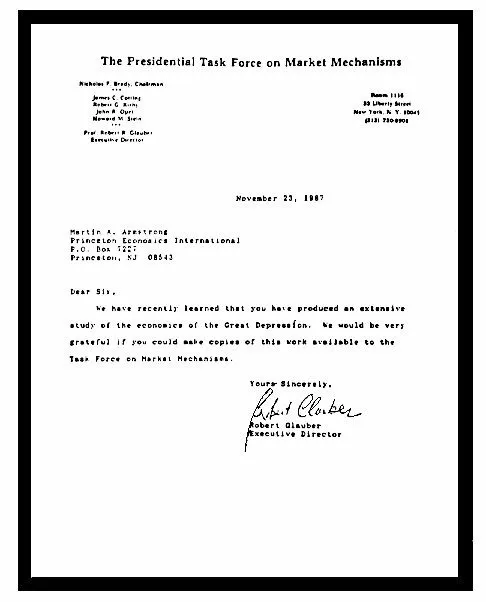
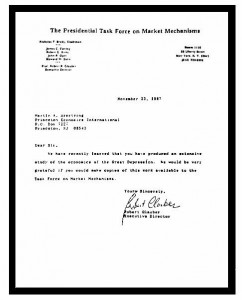
By the 1987 Crash, then the Presidential Task Force, known as the Brady Commission, was compelled to call me in because we ended up with a few clients on the Commission who insisted I be brought in because we had not only forecast the event due to foreign exchange, but that the day of the low we also said that was the low and new highs would be seen by 1989. When the 1989 Japanese Crash took place, I had two central banks on the phone simultaneously asking if they needed to intervene into the foreign exchange markets to stem it from spreading into a global contagion. I advised it was contained to Japan and they did not need to intervene.
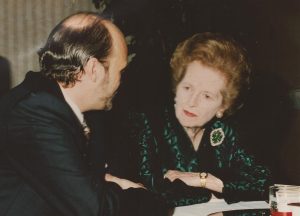
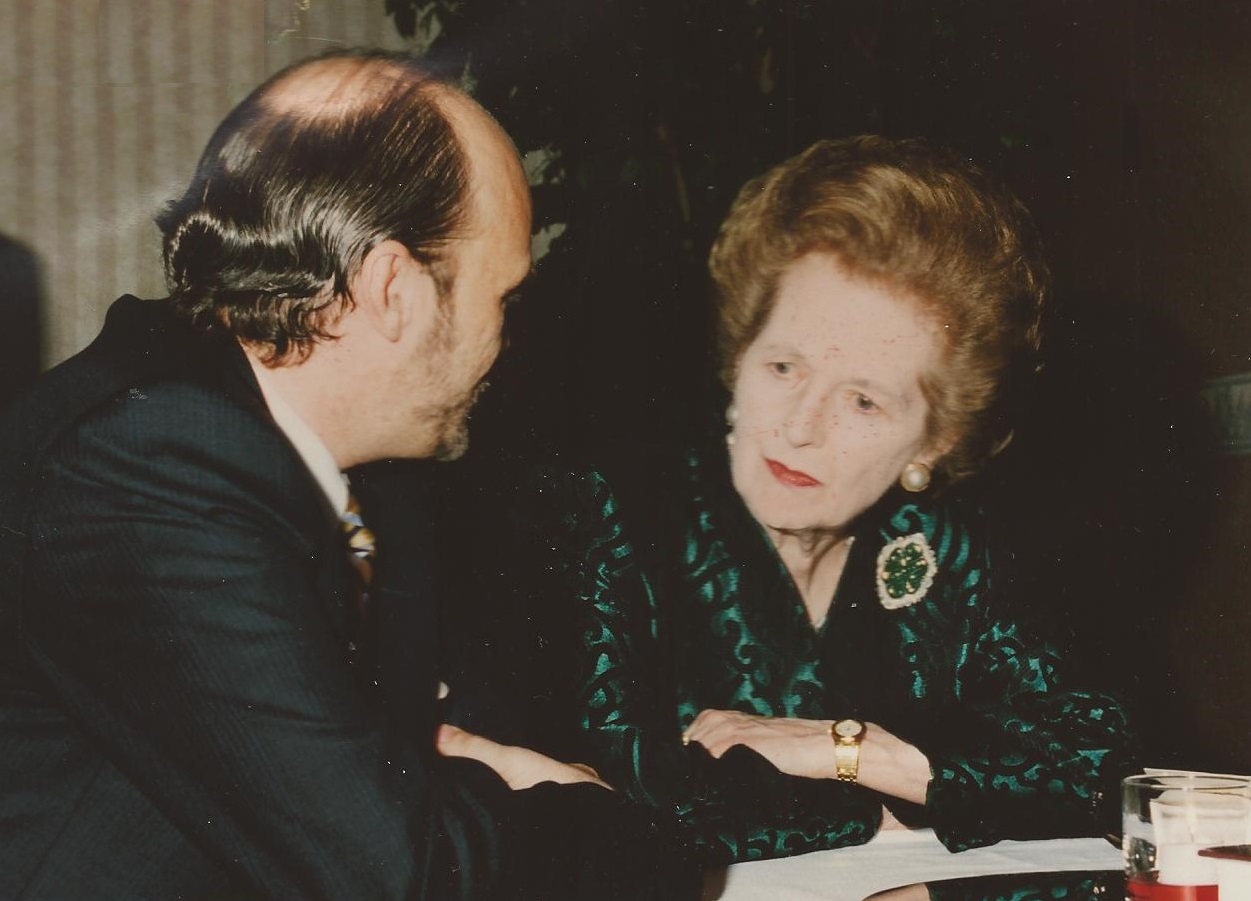
Because I became a forecaster of foreign exchange and helped companies do takeovers and reorganized them as to what countries to set up in, former Prime Minister Margaret Thatcher wanted to meet the guy who was restructuring companies and placing so much foreign business into Britain. We too became friends and she even spoke at our World Economic Conference.
When the British pound was being attacked by Soros, the administration of John Major called and asked how long was the attack of the pound going to last? I advised that they had to devalue the pound. I was told they could not because Prime Minister John Major said he would not devalue the pound and the goal was to join the euro. This became the ERM Crisis. My advice was to exit the ERM and allow the pound to seek its own level.
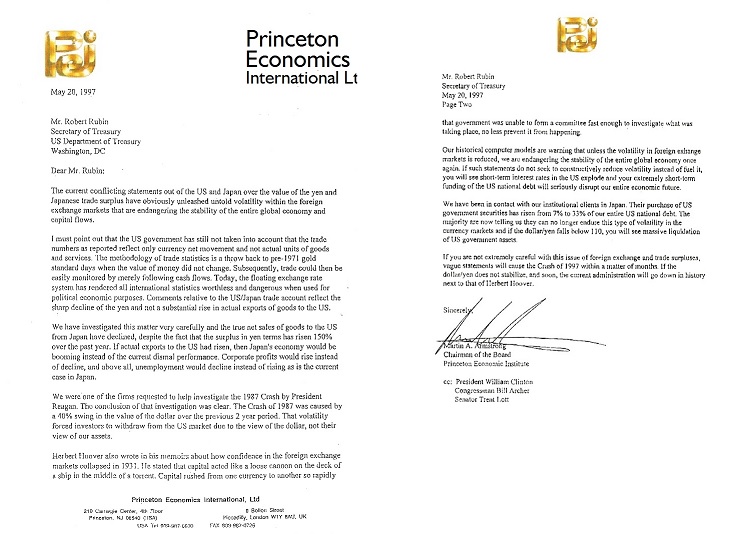
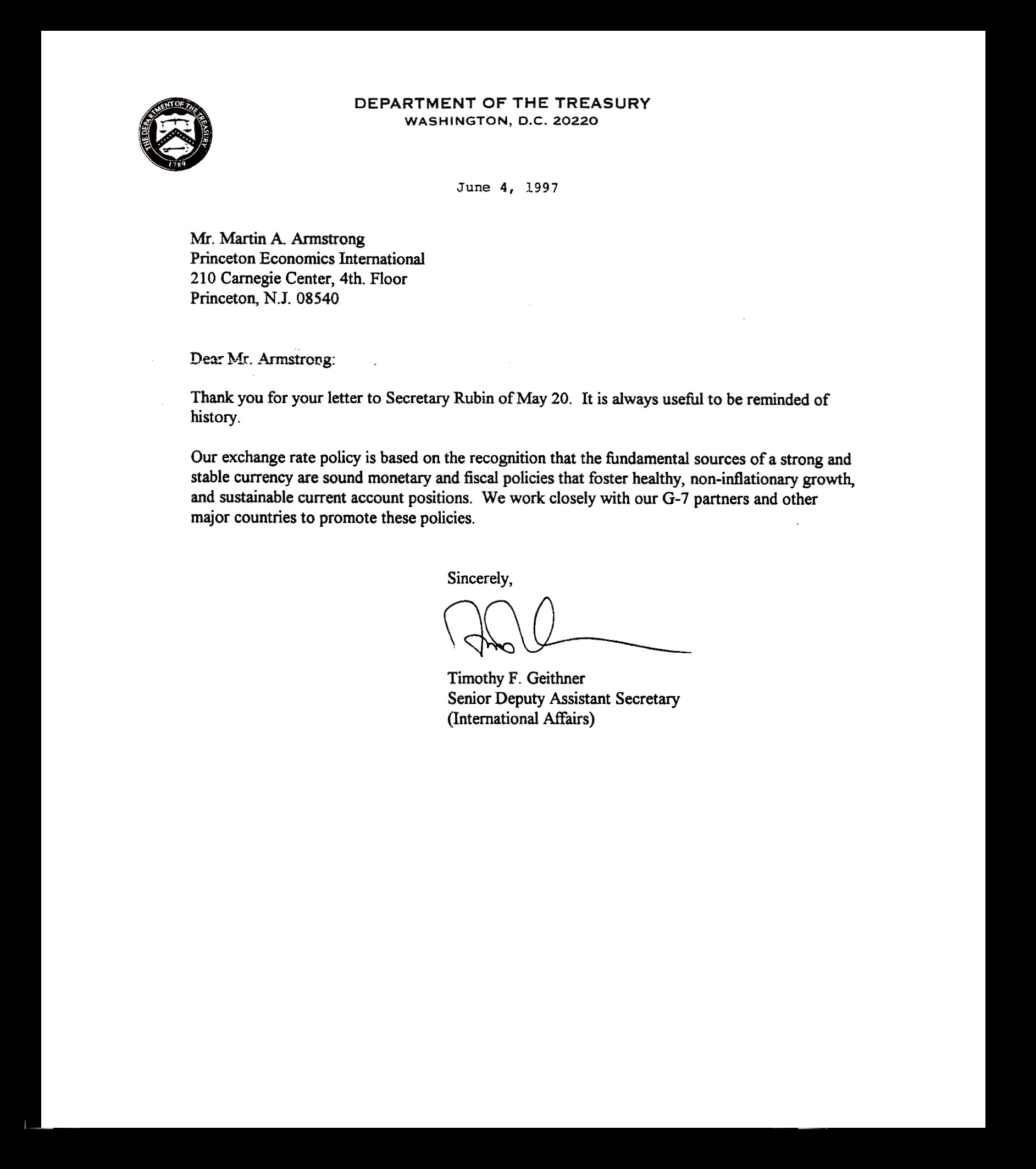
In 1997, I warned Treasurer Robert Rubin against trying to talk down the dollar for trade as they attempted back in 1987. Again, while I managed to to get them to stop that nonsense, the capital flows had nonetheless shifted from Asia back to Europe to get on board for the coming euro. This resulted in me being called in by the central bank of China as a result of the 1997 Asian Currency Crisis.
I have never sought to correlate my work with any others. I have been a trader, not an academic. I have been called the modern Hegel and compared to many others in philosophy as well as psychology. Because the floating exchange rate system was born out of necessity in 1971 as the Bretton Woods system was collapsing, I was often the only voice to be heard who actually had hands-on experience worldwide. When I was asked to testify before Congress in 1996, I was the largest adviser in the world with just over $3 trillion under contract which at that time was about 50% of the entire US national debt. No one had ever had such a role in world foreign exchange markets. I was fortunate to have a front row seat during the entire evolution of the floating exchange rate system. That was never a subject that could be taught in university since the last such floating exchange rate period predated the first course in economics which began at Cambridge University in 1902.
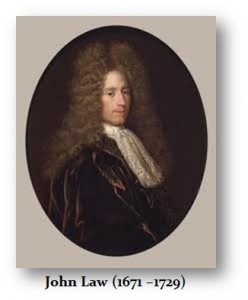
I have been trained, not by some university which could never teach anything to do with the Floating Exchange Rate System, but by the markets and my clients. The person who came up with the very concept of supply and demand was also a trader who had been in the trading room of Amsterdam — the first trading center post Dark Age. His name was John Law (1671-1729), who was also plagiarized by just about everyone else.
Some things can only be discovered by actually observing them from the trading floor. They do not appear out of thin air from a dream. What I learned about the world economy involving foreign exchange and observing capital flows between nations and currencies could only be accomplished by life experience. Likewise, John Law observed the basic human reactions and formed his idea of supply and demand with its impact upon price.
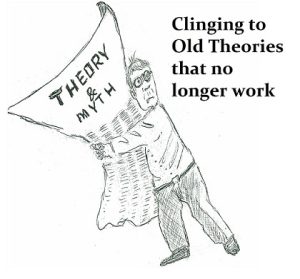
A trader does not have the luxury of clinging to old theories. If you are wrong, you must respond quickly. Knowledge is gained ONLY from making mistakes and surviving our own decisions.
Sunday, December 23, 2018

Timing is absolutely everything. DO NOT ANTICIPATE anything. Time is MORE important than price.


Dow & the Future

QUESTION: Mr. Armstrong; I understand at the WEC you told the audience the stock market would correct sharply into January/February. For those of us who could not afford to attend a WEC, are we to expect the slingshot you have been warning should take place?
Thank you;
HP
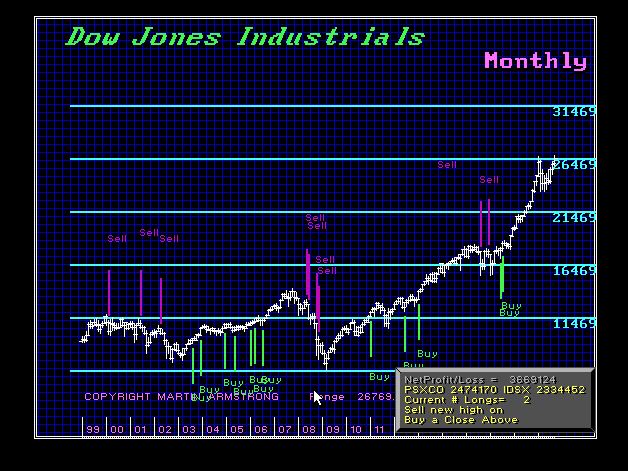
ANSWER: Yes. Timing is absolutely everything. DO NOT ANTICIPATE anything. Time is more important than price. But we also act on the reversals in conjunction with time. We have people already declaring this is a bear market. Many may not even be old enough to have traded a bear market. Let me explain one thing. We are NOT dealing with a bear market. We are dealing with a period where we must set up everything for what is to come. I have been warning that normally after an 8-year bull market, there is traditionally a correction.
The final prognosticate on time will arrive with this year’s closing. We need the year-end closings and the computer will then forecast what is to come between now and the end of this cycle wave in January 2020.
How we approach this will be critical. Nonetheless, we have a lot on the horizon. Besides BREXIT in March, we then have the May elections for the EU. The number of people who may be elected that are actually anti-EU is likely to rise. The European election will be as chaotic and we expect the Democrats to make the entire world economy unstable as they make a lot of noise in hopes of driving Trump from office in 2020.
The market will have to absorb a lot of political turmoil in 2019 and we are witnessing the rise of tensions on a grand scale.
We will have the 2019 Outlook Report out in January. We are trying to finalize the contracts for a European WEC in Rome during the first week of May. We will let everything know when that is confirmed.

Tuesday, October 9, 2018

You can use the Weekly to Exit after a long bullish run. But for now, just hang tight.


Is the Greatest Trade on the Century Knocking on the Door Yet ?


QUESTION: Hello Mr Armstrong
I have been following you now for a couple of years, since the movie the forcaster, it showed me exactly whats is happening in the world and how little I know about finaces and trading. I am a blue collar worker in Canada with a small pension, how can I or where should I go to learn how to trade? Better yet how to use Socrates or someone who can help me or invest for me?
Your work has opened my eyes and also scares the hell out of me for what is coming.
Please can you help me and the other little guys who not as educated?
Thank you
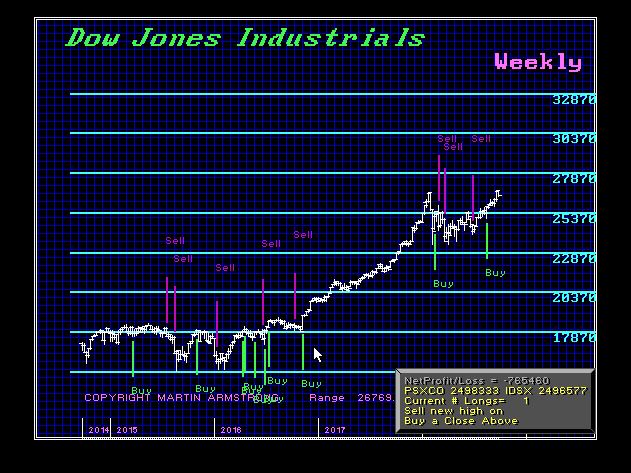
ANSWER: What you want is not to short-term TRADE but to be a position trader. People who try to trade back and forth usually get caught up in emotions and end up losing money. What you want is to POSITION TRADE for the long-haul.  Here is what happens just using the Long-term Reversals only – not even every single one. Sure, you leave some on the table. The important thing is to reduce the number of trades and your confidence will increase and you will actually make more at the end of the day.
Right now, we are still in this consolidation phase, yet this is still a cycle inversion. We have not elected any Monthly Bearish Reversals at all so you just stay with the trade. The exit point keeps rising as the market rises. You can use the Weekly to Exit after a long bullish run. But for now, just hang tight. We may have the greatest trade on the century knocking on the door very soon

Tuesday, June 5, 2018

Knee-Jerk v Reactions v Trends Changes


QUESTION: Hi Martin
Was curious if you could address what Socrates has popped up on the last report….of a “Knee Jerk Low” this quarter. Is this a possibility that we should be on guard for?
A very thankful follower of your work!!
C
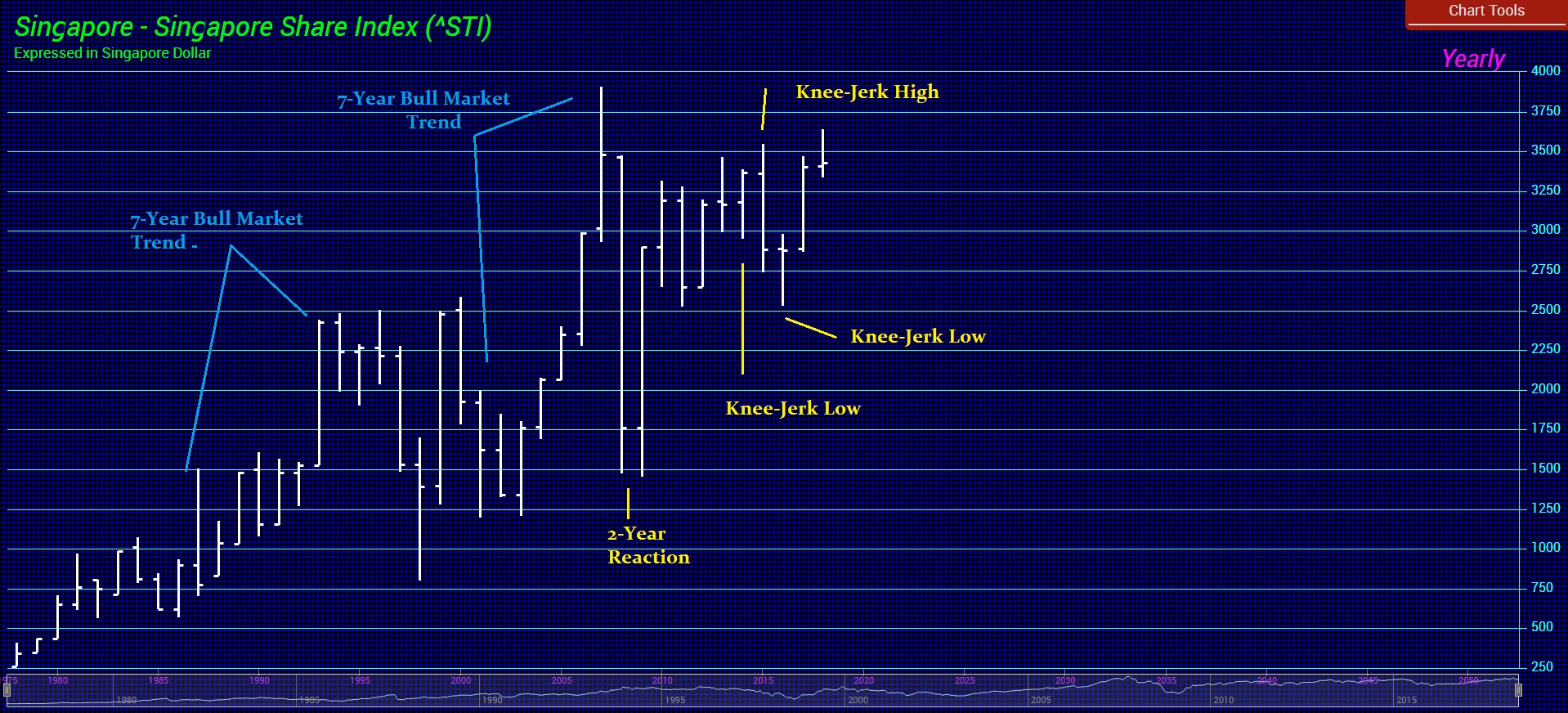
ANSWER: The terminology I have developed is unique and it comes from actually studying market behavior. I have explained that reaction is limited to the time period of three or less. Move beyond 3 years and you are changing trend. The Knee-Jerk events can be highs or lows. They refect choppy markets. They are confined to one unit of time. Here is Singapore share index. Note that there were three back-to-back Knee-Jerk reactions. This is what the Global Market Watch is forecasting. Not necessarily a change in trend, just a choppy move normally in the opposite direction.

Tuesday, April 17, 2018

Using the Global Market Watch - more reliable on the higher monthly time levels


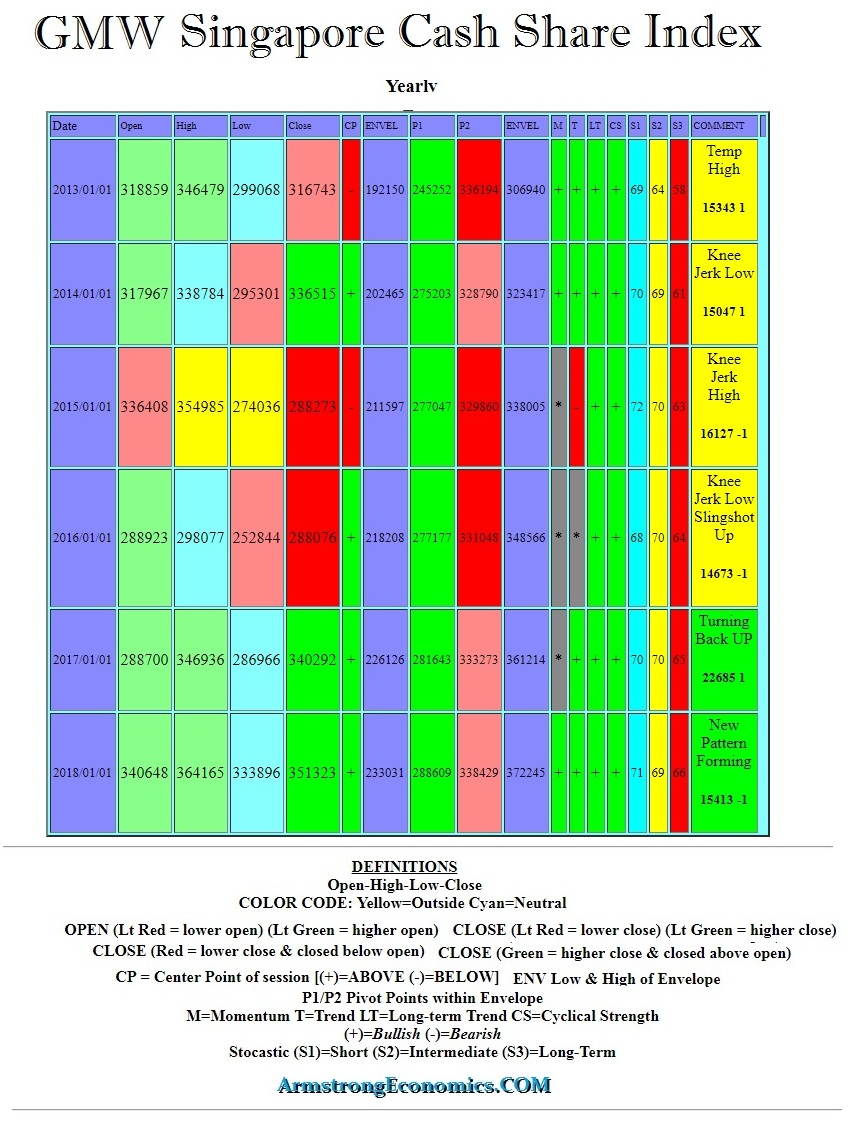
The Global Market Watch (GMW) is PURELY an alert system. It is not intended to be a trading tool. It is simply an alert to allow you to see the entire world collectively and is only a pattern recognition model EXCLUSIVELY The last entry is dynamic and it will change during the course of that period (weekly to yearly) until it is final with the close of that period. It merely reflects what the pattern wouldbe if the week to year had closed that day. We never buy or sell on this model since it is ONLY an alert and thus a confirming tool. Reversals and Arrays are the only forecasting methods that provide price and time. Th GMW is just an alert which is better on some more developed markets than less traded instruments. It is also more reliable on the higher monthly time levels up to yearly for there the patterns are less complicated. One the daily level, what is astonishing has been that this is an AI system which is constantly learning and has therefore identified more than 50,000 patterns so far. The mere fact that there are so many patterns that it has identified demonstrates the complexity of markets and how impossible it is for a human to actually forecast a market consistently. I have always found the long-term term easier to see than the short-term.

Friday, March 9, 2018

Interbank Market Collapsing - liquidity is extremely vulnerable, liquidity will simply vanish entirely, volatility will rise sharply


QUESTION: Mr. Armstrong; Has inter-bank lending collapse due to a lack of confidence concerning counter-party risk?
Thank you for being a rare source with experience
ER
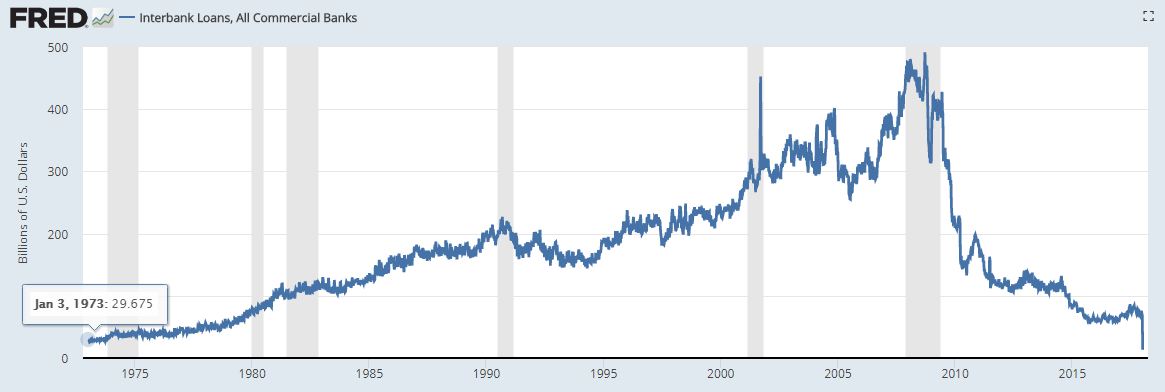
ANSWER: Yes that is a correct statement. The failure of Lehman and Bear Sterns was the result of inter-bank lending when they could not make good on the collateral they posted the day before in the REPO market. Then we had the collapse of MF Global, which was also a loss linked to the overnight markets. Now mix in the LIBOR scandal and banks were scrutinized for manipulating LIBOR rates in the inter-bank market.
The interbank lending market is a market in which banks extend loans to one another for a specified term, typically 24 hrs. Most interbank loans are for maturities of one week or less, the majority being overnight. Such loans are made at the interbank rate (also called the overnight rate if the term of the loan is overnight).
The collapse of this market is a clear warning that liquidity is extremely vulnerable. When crisis strikes, liquidity will simply vanish entirely. This warns that volatility will rise sharply and it appears to be predominantly focused in on the debt market.