Tuesday, October 22, 2019

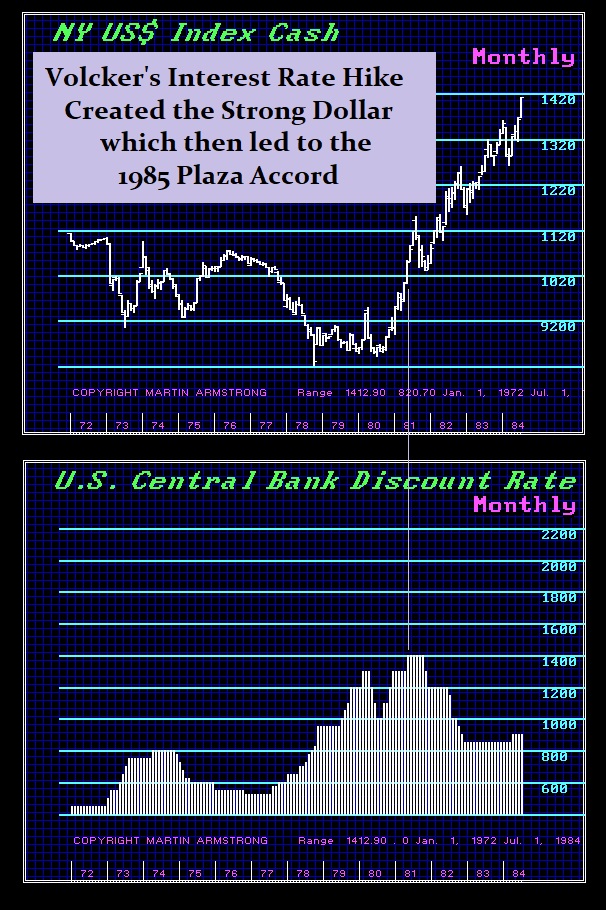
Paul Volcker raised interest rates insanely into 1981 to stop inflation, but he ignored the consequences.


Central Banks Pre & Post-1971

QUESTION: You commented that the central banks had a difficult position when they were on the gold standard compared to post-1971. Could you explain that difference?
Thank you for the education. Its better than any classroom.
EJ
ANSWER: The United States created the Federal Reserve in 1913. Prior to World War I, central banks were long-established in Europe like the Bank of England in 1694. What you have to understand is that BEFORE World War I, the central banks of Europe were faced with two duties because there was the gold standard.
    1.) The first was to defend their currency’s parity with gold and thereby the entire edifice of the international gold standard. This required raising interest rates and keeping the total volume of money and credit under control, often with contractionary effects.
    2.) The second responsibility was to act as a lender of last resort for their banking system by supplying emergency liquidity. This necessitated an expansion of credit and a lowering of interest rates.
Post-1971, the central banks were no longer required to intervene to maintain the exchange rate relative to the gold standard, which is more or less similar to Hong Kong managing the peg to the dollar today.
Paul Volcker raised interest rates insanely into 1981 to stop inflation, but he ignored the consequences that would have on the value of the dollar on world markets. This was the stone that hit the standing pool of water which then at the 1985 Plaza Accord suggested that Europe create a single currency. One mistake is never corrected and never acknowledged. They constantly create a new scheme to solve the last one they created.

Sunday, October 20, 2019

The French back in the 1960s had such a system where the central bank created the money and lent it to the government.


Who Earns the Money from Government Debt?


QUESTION: Would you please explain exactly what government debt is and who receives the interest payment that governments make on borrowings? I thought that Governments borrowed from their respective central banks and paid the central bank interest on the debt. I never understood why a government would have to pay any interest. My brother tells me that all government debt is made up of bonds and the interest payment goes to the bondholder
Thank you
MMcDH
ANSWER: The interest paid on debt is to the bondholders, which includes foreign governments, Social Security, and private investors/institutions. The holdings of the debt change. Under Quantitative Easing, the bonds held by the central banks mean they receive the interest payments.
The French back in the 1960s had such a system where the central bank created the money and lent it to the government. That is a far better system because then the government does not compete with the private sector to borrow money thereby reducing economic growth.

Friday, October 11, 2019

Europe – How Bad Can This Get ?


QUESTION: Hi Marty,
I’m based here in South of England, within the commuter belt into London. The ECM forecasts an economic downturn 18.01.2020, and Europe looks to be at the epicentre. My own research tells me the job cuts in the auto sector in Germany are quite severe.
How does all this play out after January? We have already witnessed companies collapsing, Thomas Cook, and many teetering on the very of edge of collapse. How bad is this going to be, and how does this compare to 2008?
Of course, the next 3 months of 2019 are going to be very volatile, what I’m trying to understand is how does all this look like to the average city worker within finance, law or professional services.
Within my own peer group most are clueless on what is going on and perhaps they should be thinking of income protection rather than going out and buying £60k Range Rovers. The apathy never ceases to amaze me.
I welcome your insight. Thanks for your great work which keeps us mere mortals informed.
Cheers IB
ANSWER: The answer is very bad. The structure of the Eurozone is an absolute disaster. It is promoted as a single country, but it lacks everything that stands behind a currency. Just look at the tariffs starting between the USA and the EU. It is IMPOSSIBLE to negotiate a trade deal with Europe because each country can veto any deal, proving this is not a single country, and thus there is no substance behind the single currency. This is why I say Brexit is the only way for Britain to survive. It cannot negotiate any trade deals with the USA, China, Canada, or whoever because any other state can veto it. They surrendered their sovereignty and it is undermining the European economy.
If the US had to seek the approval of all 50 states before it could do any national policy, nothing would ever get done. The French can block trade deals and the US will look at the EU as a single entity because that is the structure on the surface. So the US could impose tariffs on German cars because of something France refuses to yield on. It is a giant political mess.
The only way for Europe to survive is for the Eurozone to actually collapse. Then each country could negotiate for itself without a veto from another over something irrelevant to their economy.
If the Eurozone were to survive, each country must surrender all autonomy to Brussels on everything retaining only local culture and laws. Brussels is trying hard to make it the United States of Europe, but the first thing that must go is the refusal to consolidate the debts and end the bail-in policy. Anything shy of that is playing with fire.
While the ECM is turning in January 2020, that appears to be impacting more externally to Europe. Europe may see economic turmoil into 2021.

Wednesday, October 9, 2019

Cycle of Innovation


QUESTION: Hi Martin,
I am curious about Industry/Technology, is there a cycle for industry, the industrial revolution, internet, etc., is it linear or cyclical.  Should we expect self-driving cars and continued advances or some kind of reversion to industry/technology past?   It seems that it may be linear, but maybe only up to a point and then the fall of Rome?
Was there maybe a grand civilization before Rome?  When we went through a museum in Rome with a guide, there was a breastplate that had different metals fused onto it.  The thing is that “technology” didn’t exist through the Roman time – the metal couldn’t be heated that hot to weld the two different metals (I don’t remember exactly the issue, just no one knew how the different metals were welded).  That would be cyclical but on a larger time scale?
I know your recommendation for getting into robotics in the future and can’t argue with that, just curious overall.  Your post of China moving on and the US going to horses and buggies got me thinking about this.
Thanks for any insight.  I really enjoy your work,
Harry
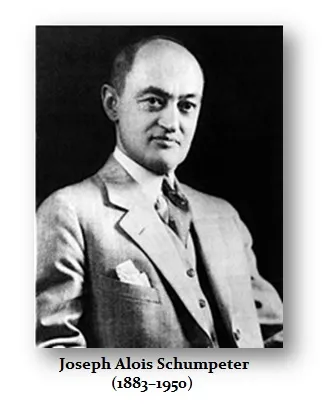
ANSWER: There has always been a cycle of innovation. That was one of Joseph Schumpeter’s main theories to explain the business cycle, which he called waves of innovation. For example, first there was the Canal Bubble that peaked during the Panic of 1825. There was the invention of the telegraph. The ancient Romans had invented the first version of the Pony Express and could get a letter from Britain to Rome in about 7 days.
This age of communication was followed by the invention of the steam engine, which then led to the railroad boom. That really peaked with the Panic of 1893, but the final rally in the railroads was 1907. Thereafter, the automobile took over and peaked in 1929.
On January 1, 1914, the world’s inaugural scheduled flight with a paying passenger hopped across the bay separating Tampa and St. Petersburg, Florida. Planes were used during World War I, but after the war there were thousands of unemployed pilots and a surplus of aircrafts along with an appreciation for the future significance of this new technology.
It was after World War I when civilian airliners began to emerge. The Fokker Trimotor built in Europe by the Dutch with a 8-12 passenger capacity was the most popular airliner in the 1920s. It had a range of about 600 miles. World War II was coming into play when the USA built Douglas DC-3 with a capacity of 28 passengers. It had a range of nearly 1500 miles. The DC-3 made its maiden commercial flight in 1936 between New York and Chicago and thus the airline stocks were the big innovation for the rally into 1937.
It was 1938 when televisions first began to be commercially available. It would be after World War II when this became the next real innovation boom. It was 1954 when color RCA TV systems were sold across America. By 1960, there were four debates between John F. Kennedy and Richard Nixon that were broadcast and changed the manner in which presidents would campaign. By 1969, Neil Armstrong walked on the moon for the first time as millions of American viewers watch live on network TV.
Of course, we have the internet, etc., but there is a clear cycle of innovation. There is a difference between when something is invented and when it becomes commercially viable. Based upon our database, the next one is in play which I believe is quantum computers. This will perhaps reach commercial viability by 2026. Artificial Intelligence may be the next immediate stock on the hotlist after 2020.
Europe could NEVER compete with the USA for they are EXTREMELY regulated. The #1 country in Europe to start a business is Great Britain.


Culture & Workforce Are Key to the Value of a Currency

QUESTION: Hi Martin – was reading your latest post where you say “All currency is backed by the total productive capacity of its people.” – if this is the case, wouldn’t the number of productive workforces indicate a stronger currency? I take the case of India with a young workforce, and compare that with the US, with an aging baby boomer generation. Yet, it seems the INR is getting weaker against the USD. Am I missing the meaning of what you said here, appreciate your clarification on this thought?
JPM
ANSWER: It is not the sheer number of people. It also requires (1) education, (2) skills, and (3) a non-restricted economy with the least government interference. Otherwise, you can go to some countries where people are still herding animals and living in the bush.
The example of the non-restricted economy is simply communism. That is why it collapsed due to central planning and the denial of people to act in a free manner. They needed someone to sweep streets and you were next in line.
I had a friend whose family owned property in East Germany before the wall. They were able to get back their property and moved to open up a plant there for manufacture. I warned him it would be a bad move. He said I didn’t understand, they were German with a good work ethic. I said he did not understand they had no work ethic. His operation failed in less than 2 years. He then understood what I said. It took 4 East Germans to do the work of 1 West German. They did not know how to work.
The element (4) is the culture. In some cultures, there is a work ethic. In others, there just is not. In Japan, you jumped in a cab and you paid what was on the meter. If you tried to give him a tip, he would hand it back to you. It was more of an insult. Go to Hong Kong and the meter will say $8 and you hand him a $10 and he keeps the rest and tells you to get out. In Rome, the cab driver will start talking with you about America to distract you so he does not turn on the meter and then when you get to your destination he tells you how much which is typically twice what the meter would have been.
When you travel the world, as I do all the time, you see the huge difference in cultures which will account for vast differences in economics. In Italy, they are the third-largest economy in Europe. Yet on the street, you quickly see that it is far more entrepreneurial than France or Germany. So why do the numbers put Italy as #3? They also have the biggest black market because Italians simply ignore the government as best they can.
In the case of India, they do a lot of outsourcing there for programming. But language has another element to it that is typically never understood. Language is the key to the thinking process of culture. For example, in the USA I would say, “Here is my business card.” In Japan, that would be an insult. To them, why do you have to say it is “my” business card when that is obvious? You are elevating yourself above the person so it is more like saying, “This is my business card, you little schmuck!”You simply say, “Business card”.
Language is the window to how different cultures THINK. Asian culture BELIEVE in cycles — it is part of their religion. Western culture believes in a linear progression. Just look at global warming. They argue that the weather should be the same and it is not so we must be to blame.
It is more of a complex issue with these four distinct elements. Europe could NEVER compete with the USA for they are EXTREMELY regulated. The #1 country in Europe to start a business is Great Britain. Germany is #10 on the list. This is why Britain remains the financial capital of Europe. Despite all the nonsense that the banks will leave London and go to Paris or Frankfurt — good luck! They will not just have their entrepreneurial wings clipped. The infrastructure in Continental Europe compared to London could NEVER handle international telecommunications. It’s a real joke.

Sunday, October 6, 2019

US versus Europe bailout


The Coming European Crisis
QUESTION: Hi Martin,
first of all thank you for being alive and bring your knowledge to the world. I am also worried for when you will not be here, wondering if there is or will be anyone like you there?
I have a question as I am worried about my parents. They live in Europe, Spain, and they do not have much economic knowledge. They somehow trust in what the bank says, and for now they have their money on a fund which of course is giving almost nothing or even losing. What would you recommend to this kind of people if they just want to leave the money in a place without worrying too much, have better returns than a bank and have money available any time? Would you also recommend a private (non standard bank related) passive fund?
I am worried for the coming system crash as we are in difficult times and there is no “easy investment” by the looks of it. I hope to provide an educate answer to them and try to convince them to not to trust banks.
I guess this is the situation for a lot of people in the 70s, 80s in Europe. Last years most of them has lost a lot of money because of the bad advice from the banks whom they used (and somehow still but they are seing a bit the reality) to trust.
Thank you in advance.
JS
ANSWER: The real liquidity crisis hit in Europe. When the 2008-2009 crisis hit, the US bailed out the banks by taking the bad assets off their books. In Europe, they would not do that because it would mean money might flow from the north to the south to bail out banks the north had no respect for. Instead, they left the European banks with all the toxic losses and cut rates to negative, hoping the banks would make money on their own to cover their losses. That never happened. So Europe has been unable to recover all because of that policy which refused to consolidate the debts.
I do not like to recommend private funds that would impose a duty on me to constantly monitor them. I don’t have the time for that, and I do not charge for what I do so it would require ongoing resources and that would mandate a fee.
I also do not sell advertising on here because someone might think I am endorsing a particular investment just by allowing them to advertise. So I am careful about this sort of thing and understand that people respect me for my independence. I like to keep it that way. I even had a first-time attendee to one of our conferences remark I didn’t try to sell him anything. If I am trying to sell somebody something, then you do free seminars to get as many people to attend to listen to the sales pitch. Sorry, I am not selling investments.
All of that said, the best I can do is to say move the bulk of the money out of Europe to a major name money market fund investing in AAA short-term paper in the USA exclusively. This would be the best thing to do probably into 2021 before we would need to review the trend. Stay liquid. The politics in Europe will prevent any bailout. This will only lead to more discontent in Europe and put greater pressure on the separatist movements

Monday, September 30, 2019

Japan’s Monetary System is a Warning to Modern Society


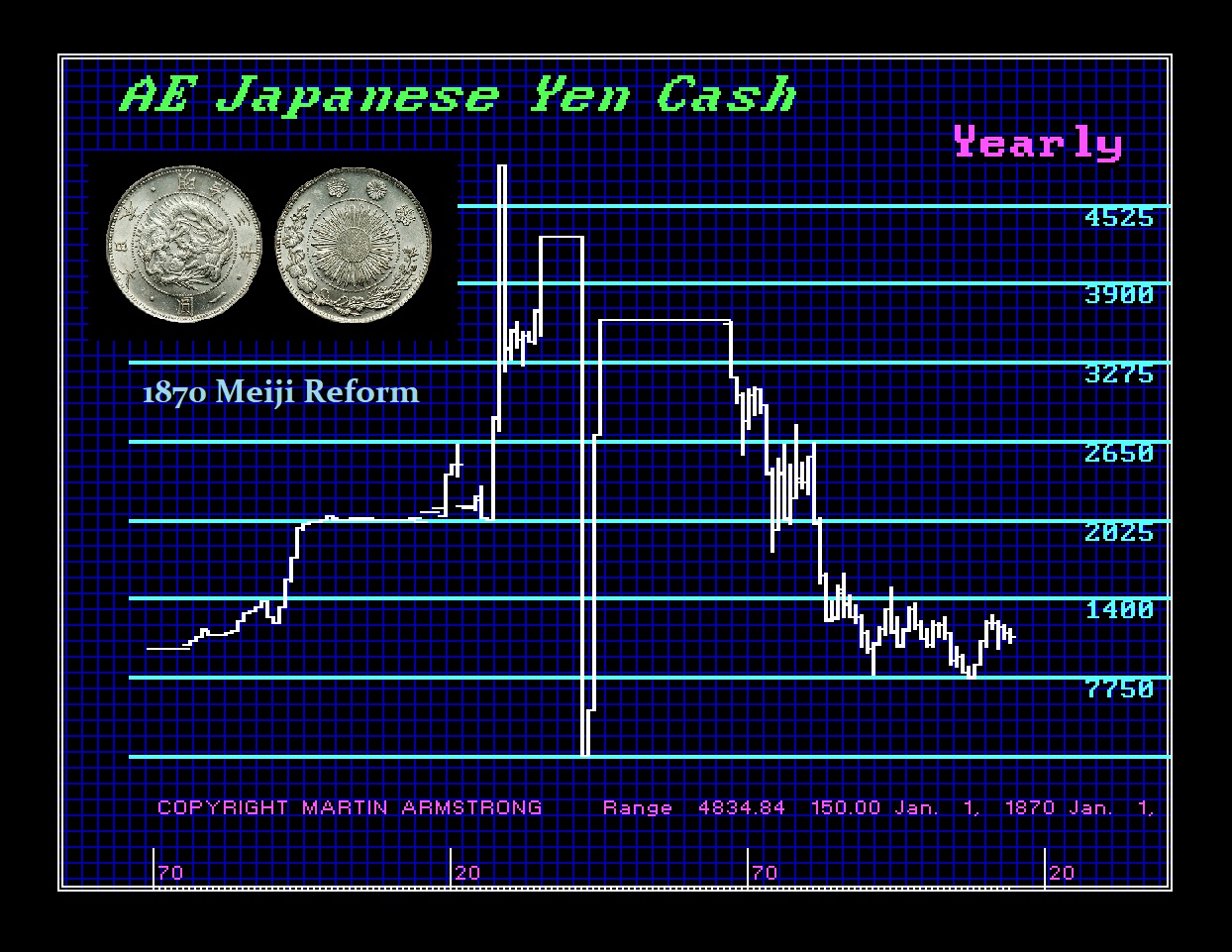
QUESTION: Mr. Armstrong; My friend who retired from the Bank of Japan told me you had recreated the monetary system of Japan and that was how you could predict the yen would go below par back in 1995 and again in 2011. Could you please publish the chart on the yen showing the full monetary system from the Meiji reform?
Thank you
AH
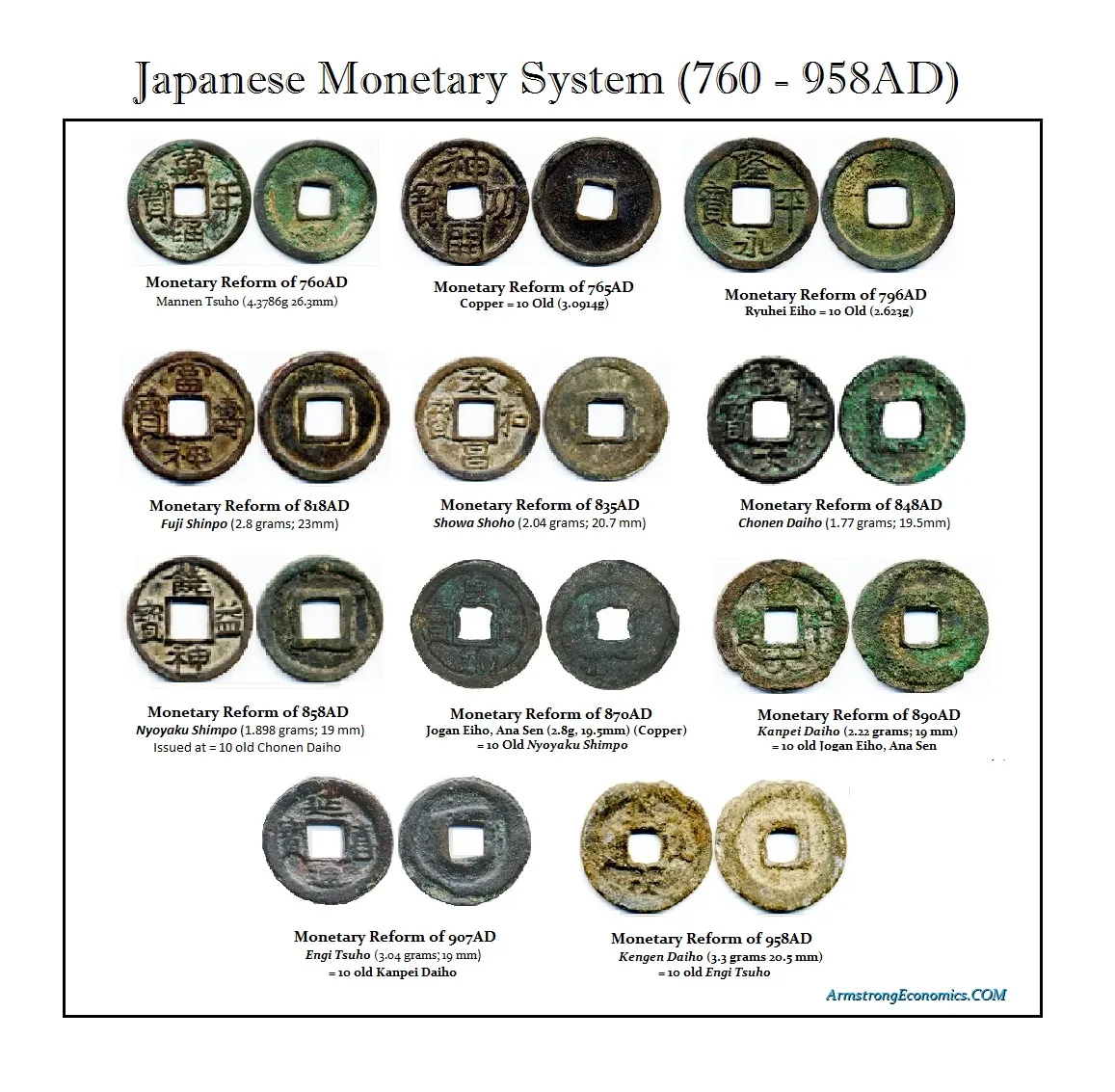
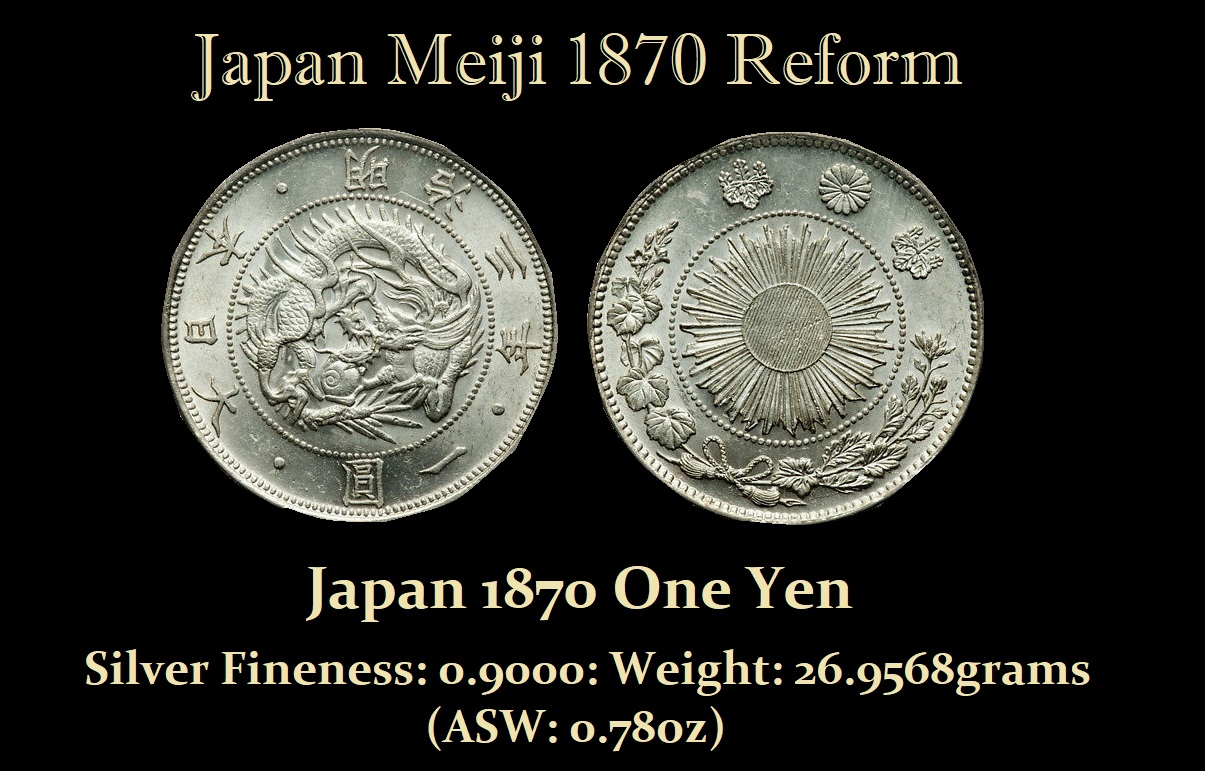
ANSWER: Japan has been through a truly wild ride when it comes to currency. The emperors would devalue the outstanding money supply when they came to the throne and reduce it to 10% of its former value. This allowed the new emperor to issue coins as if he were beginning anew. By the time the third emperor pulled this stunt, the people simply refused to accept the coins of the emperor ever again.
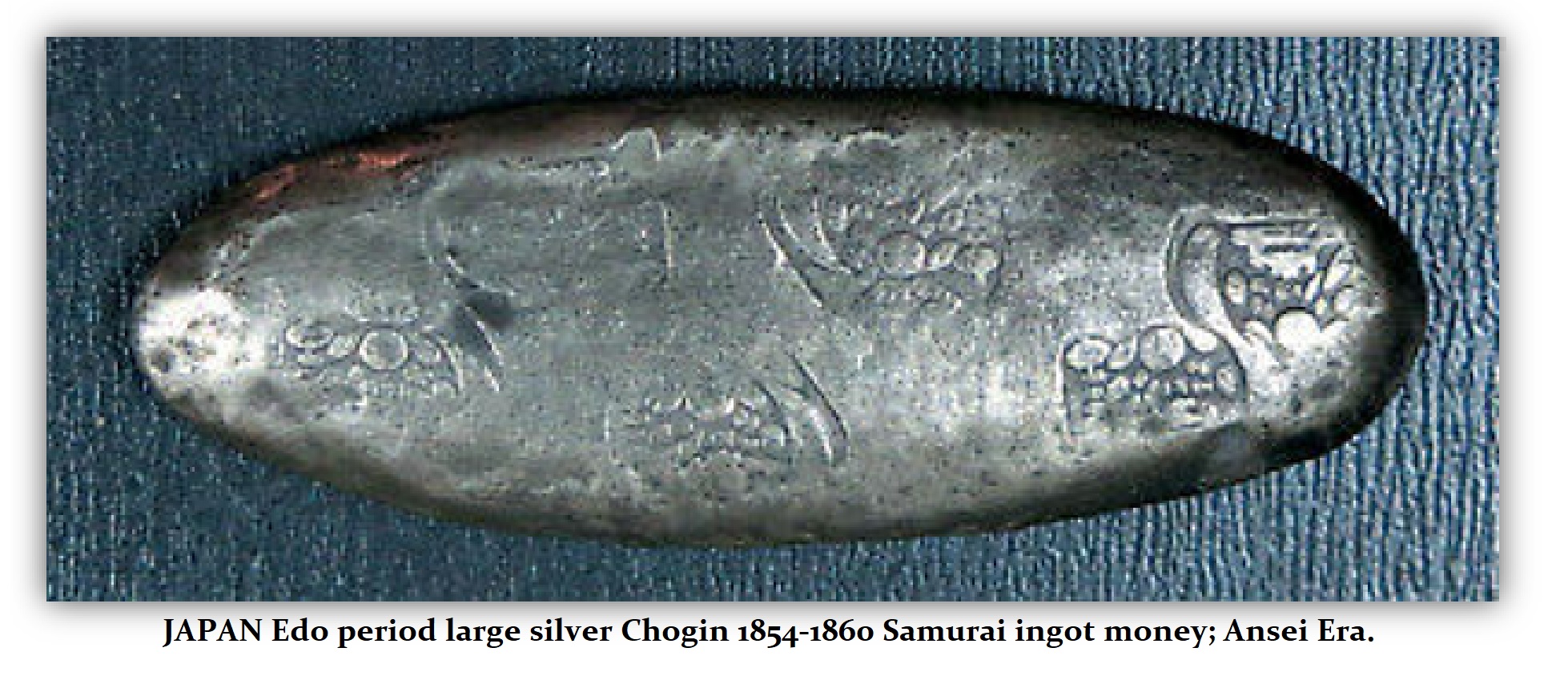
The Japanese resorted to using bags of rice as money and Chinese coins. Eventually, they also used ingots of silver or gold for larger transactions by the 18th to 19th century.
This is actually a very good reference point because Japan lost the ability to issue money for 600 years until the Meiji reform in 1870 when the yen was born. The last official Japanese coin issue was in 958 AD.

The Meiji Reform of 1870 set the yen at par with the US dollar based upon a silver yen which was the equivalent of the US silver dollar.
This is an important point because as governments today try to eliminate their currency in the hunt for taxes, people are hoarding US dollars exactly as the Japanese began to hoard Chinese coins. Governments should look well at what they are proposing for they can lose the confidence of the people and they will lose the right to issue money. They only way to prevent hoarding requires a universal abandonment of all currencies and their replacement with a single electronic one-world currency. But that system will fail like the Euro for a single currency imports and exports the inflation or deflation from the core economy. Not all nations are on the same side of the business cycle.