Showing posts with label Inflation. Show all posts

Thursday, March 27, 2025

American CFOs Believe Tariffs Will Cause Recession – Confidence is Dying

tarifftradewarmeme

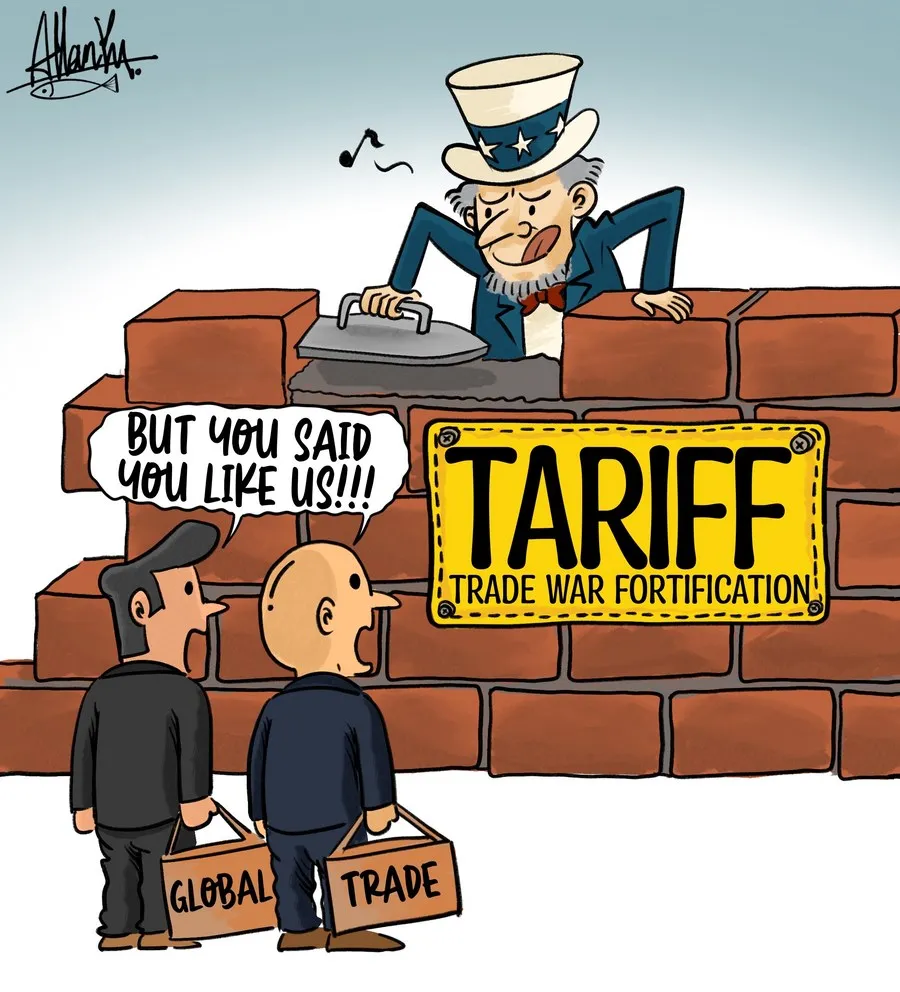
American businesses are losing confidence in the US economy under Trump due to the tariff wars. CNBC’s CFO Council quarterly survey for Q1 2025 learned that America’s top CFOs are increasingly pessimistic about the economy due to these “disruptive” and “aggressive” tariff policies.

Around 60% of respondents believe the US will fall into a recession by the second half of this year, with 15% believing the recession will come in 2026. When this survey was conducted last quarter, prior to the tariff wars and trade volatility, only 7% of CFOs believed the nation was heading into a recession. This figure is a glimpse at how heavily trade uncertainty is destroying confidence.

How do corporations plan ahead when trade restrictions are subject to change at a moment’s notice? It’s simply not possible, and what happens is corporations will err on the side of caution and prematurely raise prices regardless of whether the tariffs go into effect. Unsurprisingly, nearly all (95%) of respondents said ever-changing trade policies are impacting their ability to make business decisions. Will tariffs be implemented? When? At what rate? The uncertainty is causing complete chaos in boardrooms across America.

Another 30% cited inflation as the biggest business risk but that is currently directly tied to this tariff ordeal, as is the valid concern of consumer demand (20%) as the people are also losing confidence in the economy and therefore are less likely to spend. Everything is connected. Inflation rises and demand drops as the people are unwilling and/or unable to spend.

Then 90% believe tariffs will create “resurgent inflation,” and half do not believe the Fed will be able to meet the 2% inflation target until the second half of 2026, if not 2027. I explained in an earlier blog post how the Fed cannot control tariff inflation through rates as rates do not offset higher prices set by trade barriers.

I have repeatedly warned that this tariff fiasco could be the nail in the coffin for Trump’s legacy. Those advising Trump are idiots who do not understand how the world economy functions. America will not be “liberated” on April 2 when many of these tariffs are set to go into effect. America cannot have a boom when the rest of the world is contracting. The world economy and peace survive on free trade.

Wednesday, March 19, 2025

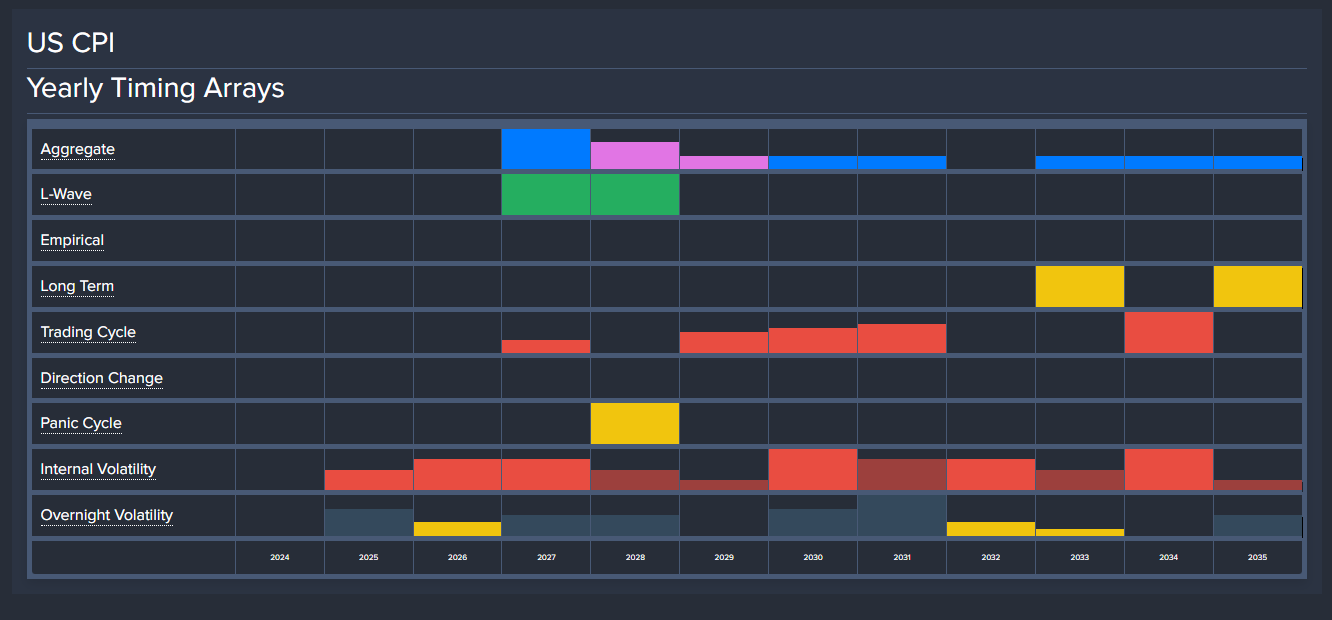
Inflation begin in 2025, rise stronger in 2026, but it will be the 2027-2028 becomes critical

Powell Jerome

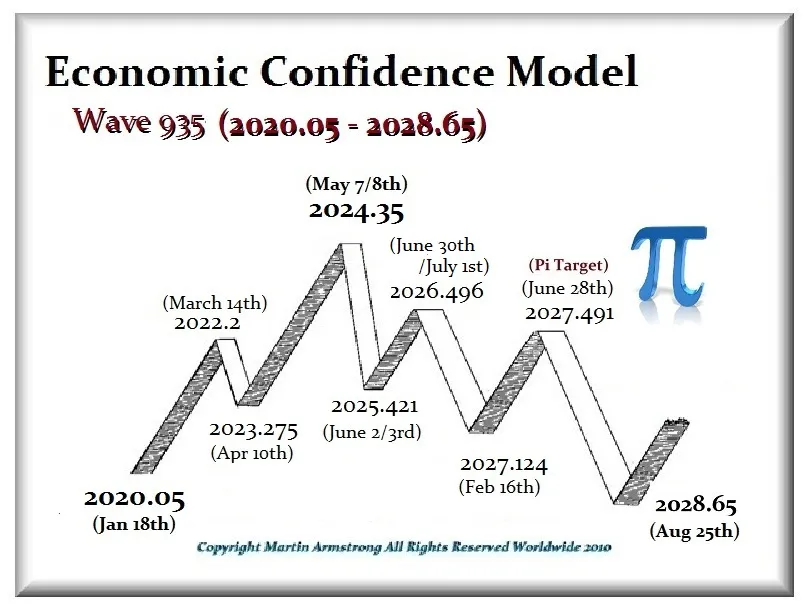
Jerome Powell kept rates unchanged as our computer was projecting. However, he did weigh in on the state of the US economy, pointing out that Donald Trump’s policies were one reason why inflation is turning back up. He also reduced the Fed’s 2025 growth projection, noting that uncertainty around the slowing economy is increasing. The Fed is well aware of the Economic Confidence Model. Both Canada and the Fed started to lower rates when the ECM was turned down last May.

935 ECM 2020 2028

Powell said, “Inflation has started to move up,” adding that “there may be a delay in further progress over the course of this year.” The confusion people have is that, as I have pointed out before, government employees are counted TWICE in GDP. First as total government spending and second as total personal income. So, firing government employees will have a large,r more exaggerated impact on GDP going forward.

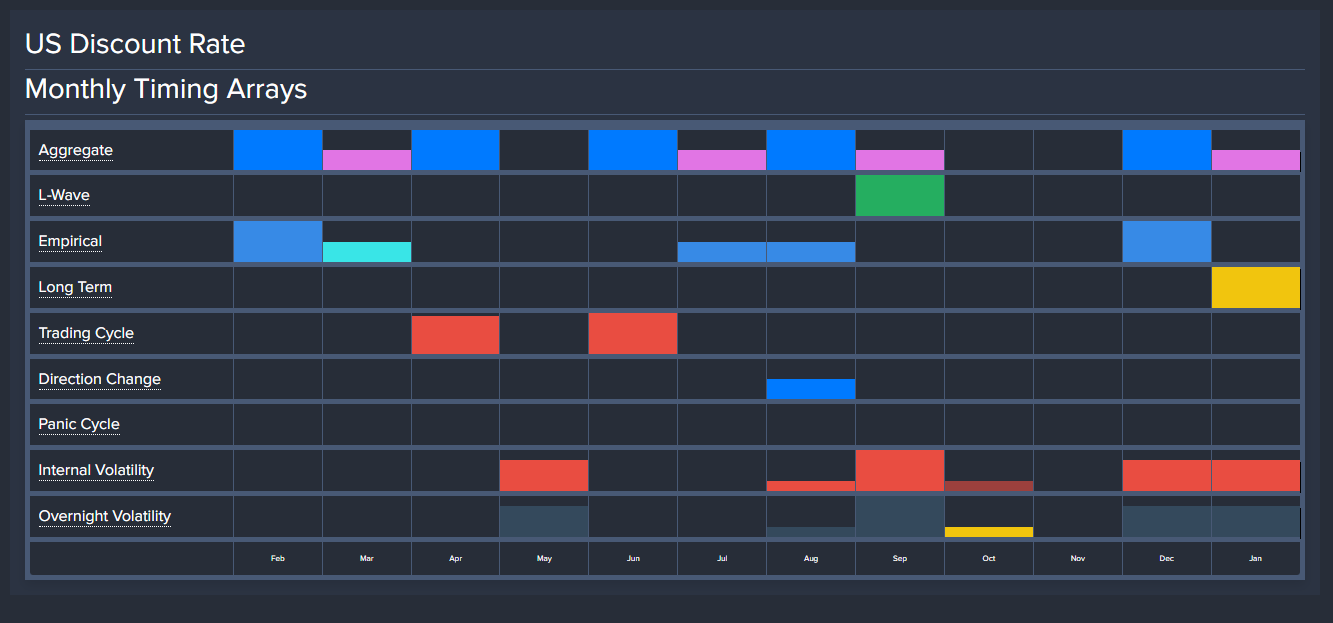
US_Discount_Rate M Array 3 19 25

Investors have reacted negatively to Trump’s global trade war and the mounting retaliation from abroad. What they fail to grasp is that the main reason companies left the USA was over worldwide taxation. American companies were always at a disadvantage when compared to Europeans competing in the world market. The S&P 500 fell nearly 10% from mid-February because of the failure to understand the real trade impact of the high tariffs. Trump, meanwhile, has perhaps promoted recession fears, with the Republican saying the economy faces a “period of transition” and that his tariffs will eventually mean more US jobs.

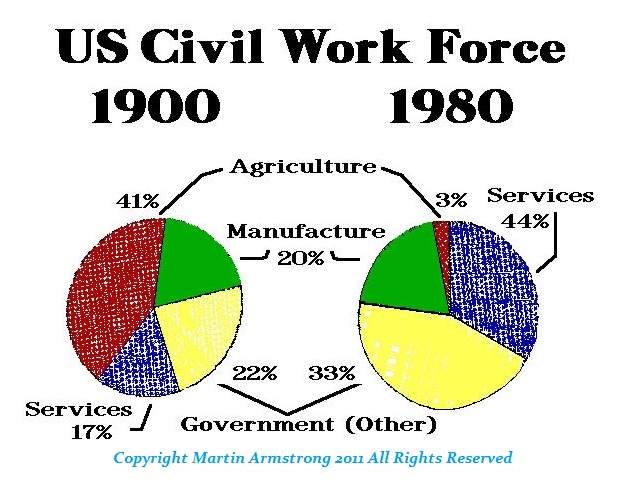
Civil Work Force

Socialist academic economists do not look beyond our shores and say that Trump’s tariffs will be a significant loss. They compare this to the Smoot-Hawley tariffs of the 1930s, blaming them for the Great Depression because they are incapable of thinking about two variables simultaneously. The tariffs were primarily on agriculture because the Dust Bowl reduced crops, and Europe offered them cheaper. The economy was 41% employed in agriculture, and that is why unemployment soared to 25%. No legislation could have made it rain.

US_CPI Y Array 3 19 25

Powell admitted that recession odds had moved up but weren’t high. He disagreed with the University of Michigan survey, which showed a sharp increase in long-term inflation expectations. We agree. Socrates is showing that volatility in inflation was to begin here in 2025 and rise stronger in 2026, but it will be the 2027-2028 period when it becomes critical that it is correlated with our war models.

Monday, March 10, 2025

Tariffs a One-Time Price Adjustment?


tariffsstamp

Treasury Secretary Scott Bessent is wrongly advising this administration by downplaying the role tariffs will have on overall inflation. Bessent told reporters not to be concerned over tariffs as they will simply be a “one-time price adjustment” when that is far from reality. These tariffs come with massive side effects that will ripple across the global economy.

“Look, can tariffs be a one-time price adjustment? Yes… I would hope that the failed team transitory could get back together and think that nothing is more transitory than tariffs if it’s a one-time price adjustment,” Bessent said in reference to Biden administration officials saying that the historic inflation of several years ago was “transitory.” He later added, “The economic program is a whole of government, holistic program, and I think that we could get a one-time price adjustment,” Bessent said, adding that “across the continuum, I’m not worried about inflation.”

Bessent and others who buy into the tariff myths argue that when a tariff is imposed, prices simply adjust once, and the market stabilizes. Instead, the artificially raised cost snowballs. The first hit is the tax on direct goods, the second hit comes when that cost is passed down to businesses who pass it down to consumers.

Take steel tariffs, for example. When tariffs are imposed on imported steel, domestic manufacturers don’t just absorb the cost; rather, they pass it on to maintain a profit. That means everything that uses steel, from cars, appliances, construction materials, etc., becomes more expensive. That price increase does not stop at the initial tariff application. It continues to cascade as higher input costs force further adjustments throughout the supply chain.

When tariffs raise prices, workers naturally demand higher wages to keep up with the rising cost of living. This leads to what economists call a wage-price spiral—higher wages push costs up even further, which forces businesses to raise prices again.

Reduced supply and higher prices can lead to stagnation, which is what we have been experiencing for the past few years. These tariffs will do more harm than good for the people who will be forced to cover the costs.

Wednesday, May 18, 2022

The Coming LIQUIDITY Crisis -decline in supply because of the regulations and war. Consequently, prices will rise even in a recession because it is a shortage of supply, not a decline in demand.


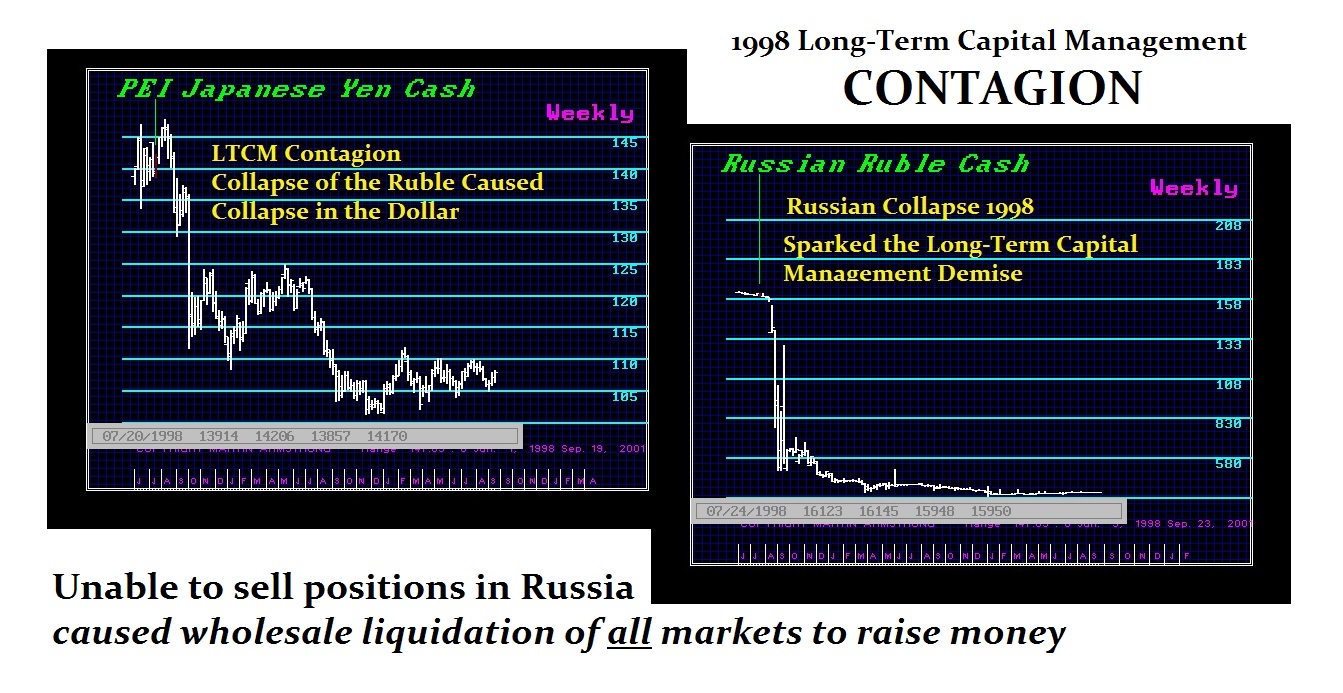
QUESTION: Marty, You were named hedge fund manager of the year in 1998 for producing the highest return during the Long Term Capital Management collapse over the Russian bond crisis. At the WEC in Orlando, you said in 2019 that we were facing a liquidity crisis that would be similar to that event. Well, the Federal Reserve has now warned of deteriorating liquidity conditions across key financial markets amid rising risks from the war in Ukraine, monetary tightening, and high inflation in their semi-annual report. It appears that the forecast of a liquidity crisis distinguishing this crisis from 2007 to 2009 is unfolding. Would you elaborate on this current crisis headed into 2023?

JF

PS, a short interim virtual WEC may be warranted. Just mentioning. People take what you say, call it their own, and pretend you never existed.
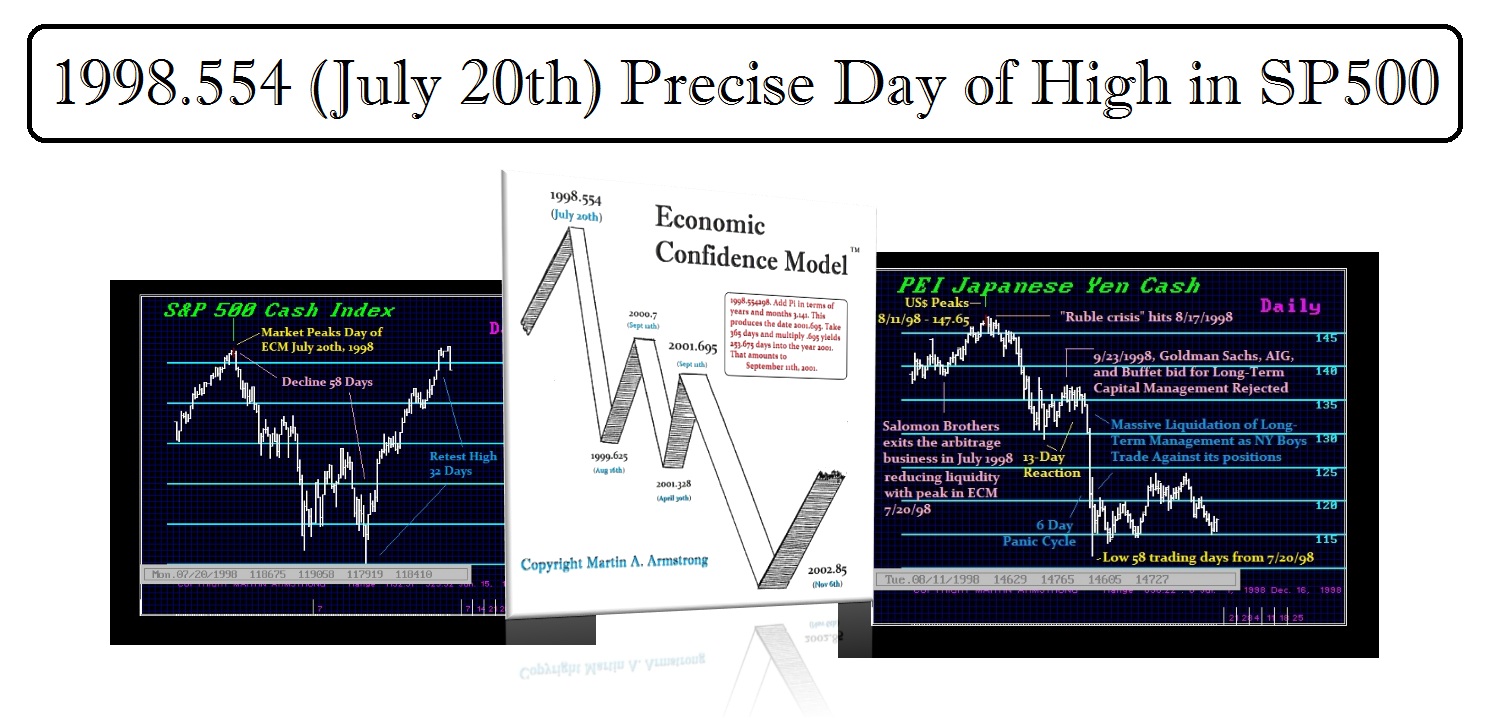
ANSWER: What distinguished that ’98 Liquidity Crisis was that the “Club” of bankers and hedge fund guys were all on the same trade as they always did. The capital flows began to sift in 1994 as SE Asia peaked. The bear market that unfolded went largely unnoticed until the Asian Currency Crisis where the “club” then attacked the currency pegs. But the capital had begun to move back in anticipation of the coming Euro.

The 99.9% of fund managers lost their shirts on that capital shift because they were too busy bribing politicians and people in the IMF to look at the markets. They completely misjudged the world economy thinking like Marx and Keynes that they could control it. The shift in capital and attacking the SE Asian currencies led to the idea that all emerging markets were risky. With the Euro coming, the herd of little investors shifts their capital away from the funds heavily trading emerging markets. They were not “traders” but people who were engaged in trying to rig the game.

What they failed to understand was that the world economy is a financial sea of capital. When there is a high tide and capital is flowing in, they expect it will never end. The tide changes and you then move to low tide and the capital retreats outward. This was the first part of the liquidity crisis that would look at Russia as they did SE Asia emerging markets.

Consequently, when it is low tide, capital is retreating on a global level and that is when the liquidity crisis emerges. Thus, were the serious investors and pension funds behind to lose money in SE Asia, and they began unloading emerging markets elsewhere as well. Because all the hedge funds and bankers who try to rig the markets because they are not traders because they were all on the same trade of Russian debt when they tried to sell, there was NO BID. They began selling every position elsewhere which included the Japanese yen. It was a LIQUIDITY CRISIS so they needed to raise money to cover their losses and if Russian bonds were unsalable, all they could do was sell everything else. Thus, a LIQUIDITY crisis defies fundamentals because they are selling this ONLY because they need the money elsewhere. So the fundamental analysis provides no security for everything is connected in the global see of capital.
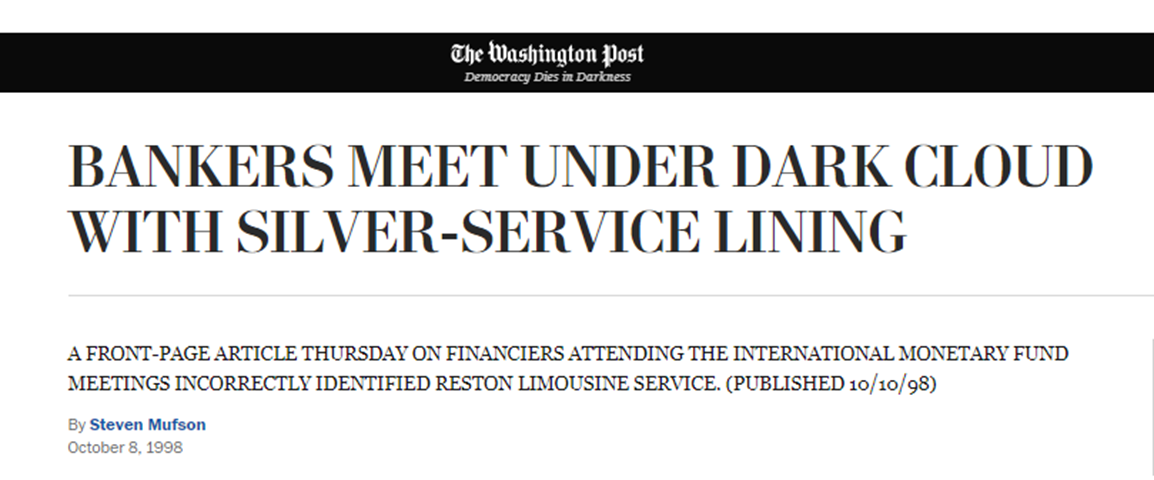
Edmon Safra of Republic National Bank put on a fancy dinner for the IMF. I was invited and it was all about trying to convince me that they had the IMF in their pocket and that would rescue the day. The pitch was Russia had all these nukes so no way would the IMF allow Russia to just collapse. This created a serious yet difficult situation for the Russian government. What was going on was that Russia had been running a huge budget deficit to pay for public services. They had borrowed $40 billion by issuing three-month ruble Treasury bills. This is what the “club” was bought for they were paying 30% interest to attract buyers. Bribing the IMF to prevent a default, they were all on this trade expecting free money. I refused to join and warned them that my computer projected this was going to collapse. They did not want to hear that. They were CONVINCED paying bribes would create that GUARANTEED TRADE.
The liquidity crisis this time is COMPLICATED. This time we do not have the traditional speculative boom which has produced inflation. This time we have shortages and there is NO WAY a central bank can prevent this type of inflation by raising interest rates. If anything, it will only propel the shortages so we have the ironic situation that economic decline is unfolding into 2023, but the shortages will get worse causing even higher inflation ahead.
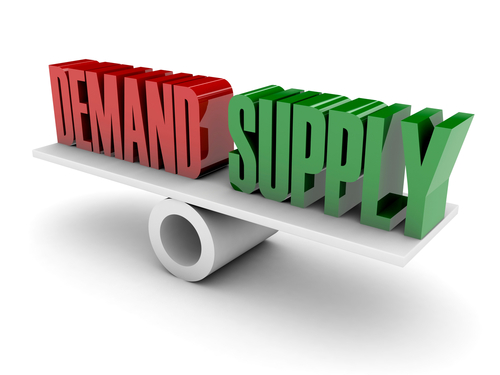
Hence, capital is retreating out of confusion creating a period of low tide. But the standard impact is DEFLATION but that means demand is declining relative to supply. Now we have a decline in supply because of the regulations and war. Consequently, prices will rise even in a recession because it is a shortage of supply, not a decline in demand. It is this lack of understanding that is creating the liquidity crisis.

As far as people taking my explanations, it is impossible to reach such conclusions unless you lived there and participated in those events.
Friday, February 11, 2022

Shrinkflation


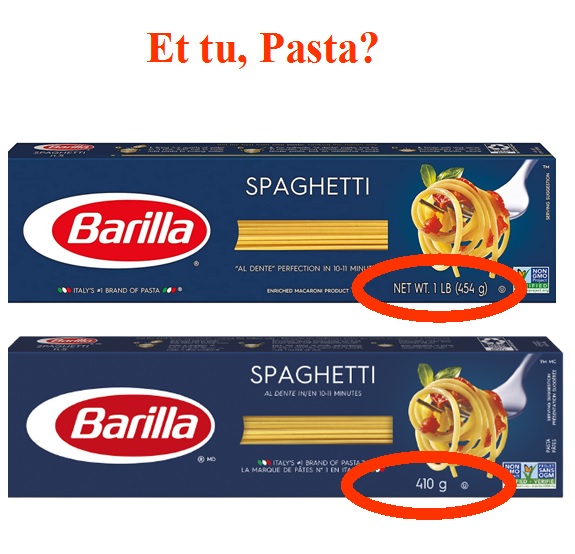
Shrinkflation is here to stay now that inflation has reached a 39-year high. It will be impossible for the Fed to tame the monster politicians have unleashed by COVID restrictions, not artificially lowering rates that have been in place for over a decade. Political governments could take immediate action to help the current supply chain crisis which they created, but they lack any competence to understand even what they have done. Shrinkflation, by the way, occurs when products remain the same price or rise, while the product size decreases.

“Portion sizes are shrinking. Prices are going up. It’s just insane what’s happening in the restaurant industry,” former McDonald’s USA CEO Ed Rensi told Fox News. “It’s also true of every other small business. They’re all suffering terribly from this federal inflation.” Yet, McDonald’s saw 7.5% growth in Q4 2021. Regardless, the fast-food giant is recommending that franchises raise their costs between 6% to 6.5% next year.

“The biggest single problem we’ve got is the…truckers shortage and a disruption of imports coming into this country,” Rensi added. “This truckers’ situation is enormous and is having a big impact.” So while the jobs situation is improving, with the US boasting a 4% unemployment rate, the mandates have devoured the supply chain.

As for other examples of shrinkflation, Chobani decreased its flip yogurt by 15% in size. Crest decreased its whitening toothpaste from 4.1 oz to 3.8 oz, while Gain decreased its laundry detergent from 165 FL OZ to 154 FL OZ. Inflation is so severe that products are increasing in price while shrinking in many instances. Barilla pasta formerly sold its spaghetti for under a dollar at 454 g, yet decreased the package to 410 9 and increased the price by nearly 100%. This level of inflation is completely unsustainable and consumers are suffering the consequences.

As former CEO Rensi said in his insightful interview, “Let’s lighten up a little bit, let our bodies handle it, instead of government handling it.” End the mandates to help boost the suffering supply chain that is contributing to inflation. This is one variable that the government has instant control over.

Thursday, October 14, 2021

Inflation to Rise into 2034?


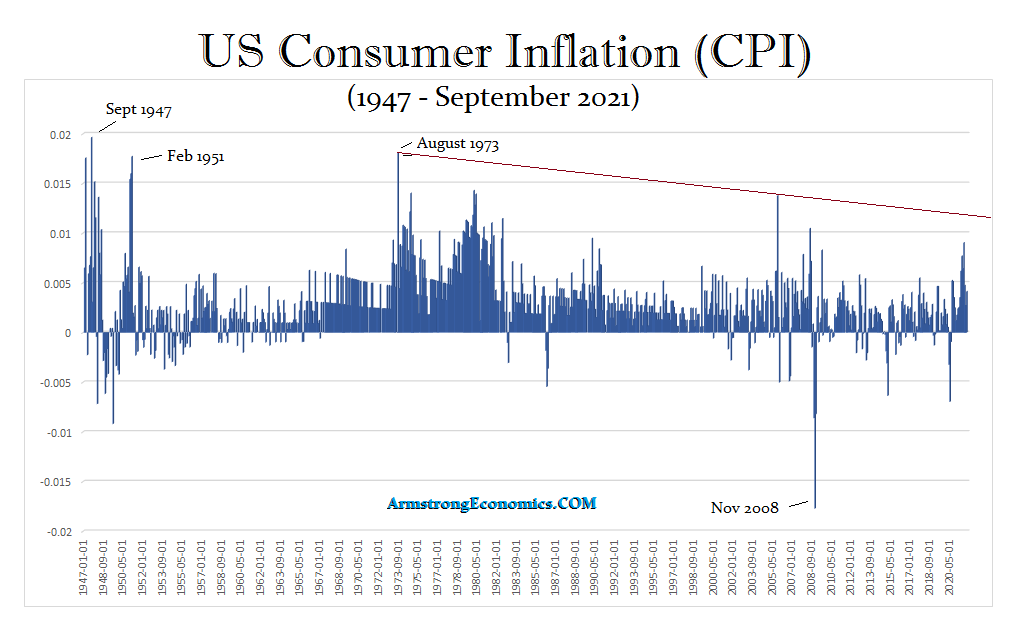
Inflation continued to surge, reaching 5.4% in September. Janet Yellen has never been right about anything and keeps calling this “transitory,” as if it will vanish in a few weeks. The Labor Department’s Consumer Price Index, which is supposed to measure a basket of goods and services as well as energy and food costs, came in at 5.4% in September from a year earlier, well beyond expectations. However, our model was projecting a rise in inflation into 2021 which is 13 years up from the November 2008 low. It is interesting how the COVID restrictions with lockdowns came in on target with our computer’s forecast. Curious how events seem to fulfill the forecast when it is done by a computer rather than human judgment.

Nevertheless, as you can see from the chart, inflation has bounced on a month/month basis, but it has not yet reached the Downtrend Line. The long-term forecast beyond a mere decade projects the historical high will be due in 2034, which should exceed all previous highs. A month/month number above 1.05% will signal that inflation is breaking out, and we will indeed make all-time record highs going into 2034.

Tuesday, October 22, 2019

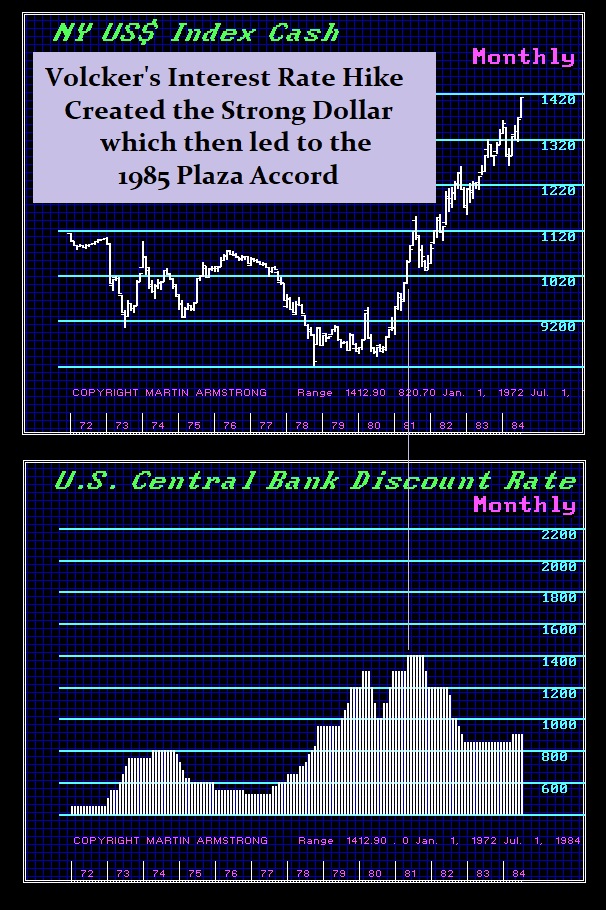
Paul Volcker raised interest rates insanely into 1981 to stop inflation, but he ignored the consequences.


Central Banks Pre & Post-1971

QUESTION: You commented that the central banks had a difficult position when they were on the gold standard compared to post-1971. Could you explain that difference?
Thank you for the education. Its better than any classroom.
EJ
ANSWER: The United States created the Federal Reserve in 1913. Prior to World War I, central banks were long-established in Europe like the Bank of England in 1694. What you have to understand is that BEFORE World War I, the central banks of Europe were faced with two duties because there was the gold standard.
    1.) The first was to defend their currency’s parity with gold and thereby the entire edifice of the international gold standard. This required raising interest rates and keeping the total volume of money and credit under control, often with contractionary effects.
    2.) The second responsibility was to act as a lender of last resort for their banking system by supplying emergency liquidity. This necessitated an expansion of credit and a lowering of interest rates.
Post-1971, the central banks were no longer required to intervene to maintain the exchange rate relative to the gold standard, which is more or less similar to Hong Kong managing the peg to the dollar today.
Paul Volcker raised interest rates insanely into 1981 to stop inflation, but he ignored the consequences that would have on the value of the dollar on world markets. This was the stone that hit the standing pool of water which then at the 1985 Plaza Accord suggested that Europe create a single currency. One mistake is never corrected and never acknowledged. They constantly create a new scheme to solve the last one they created.

Thursday, March 22, 2018

The Way to Survive Hyperinflation


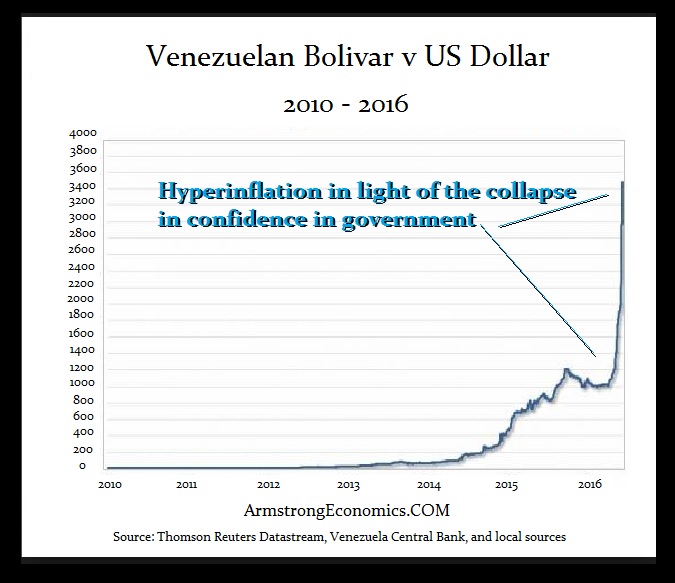
COMMENT: Mr. Armstrong; I just wanted to comment that I am from Venezuela. My father came here to visit me in Florida where I live with a Green Card. Everything he saved in life for his retirement is now worthless and it does not even pay to travel back to collect his pension. The hyperinflation is a collapse in the confidence of government as you have explained. Those who saved for their retirement and had pensions, lose everything. They will be paid the amount that they were promised, but it will not even buy a single night’s dinner and soon a beer.
Thank you for your contribution to society. I wish more people would listen to you. Experience is the root of knowledge. Opinion is the root of bias. You have proven that
JE
REPLY: To survive hyperinflation requires the holding of tangible assets and never cash or pensions. The way pensions can be devalued is through inflation over the course of time and circumstance. What I paid into Social Security will never come back to me in terms of real purchasing power and that is without hyperinflation. I have stated before, I met with the Treasury back during the Reagan Administration and said these insane levels of interest rates will triple the national debt in less than 10 years. They simply responded; Yes but we will be paying back with cheaper dollars.
All promises of government are simply eroded with inflation. That is why Southern Europe fell into such chaos. The currency doubled instead of declining when the joined the Euro. That is why Europe has been a failure under this political-economic philosophy. The Euro first crashed, and then doubled in value. Southern Europe was used to deflation always reducing their debts. Suddenly, their debts doubled. And people cannot figure out why the Euro is in such trouble?
I do like your saying though. It is spot on

Monday, March 19, 2018

The Unsound Theory of Inflation


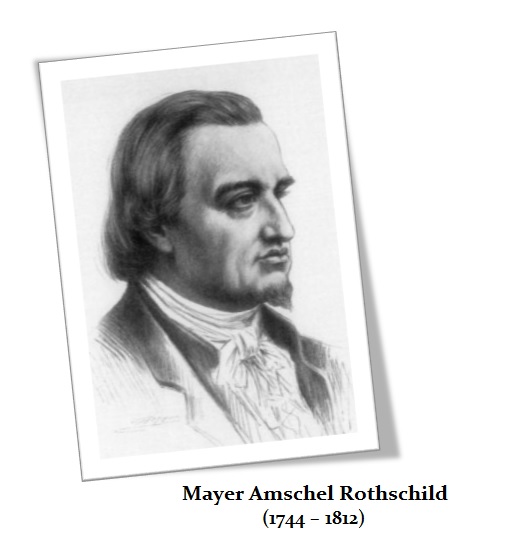
QUESTION: You defend central banks yet the Rothschilds when clearly Mayer Amschel Bauer Rothschild said: “Give me control of a nation’s money and I care not who makes it’s laws.”  Any comment?
SL
ANSWER: No problem. He never said any such thing it was completely made up. It was attributed to him in 1838 when he was already dead for 26 years. Besides that, what is very clear is that this is based on the assumption that money is fiat. The USA began to issue paper money in 1861. During the period that Mayer lived, the money supply was primarily coined.  The only plausible reference would be implied that he debased them. He was a banker and never produced the coinage.
It would be nice just for once that you bothered to actually understand the role of central banks as originally set forth. What they do today with Quantitative Easing has proven that the entire theory of an increase in money supply will be inflationary is outright BOGUS.
In every case of HYPERINFLATION, not even once did inflation ever begin by increasing the money supply. Inflation begins when PEOPLE lose CONFIDENCE in the government and they spend the currency as fast as they can or outright refuse to accept it. I have explained that the Japanese Emperor used a different approach. He DEVALUED all outstanding money to 10% of his new coinage. That led to the collapse in CONFIDENCE to the point that the people never trusted the government and as a result, the Japanese lost the ability to produce money for 600 years.
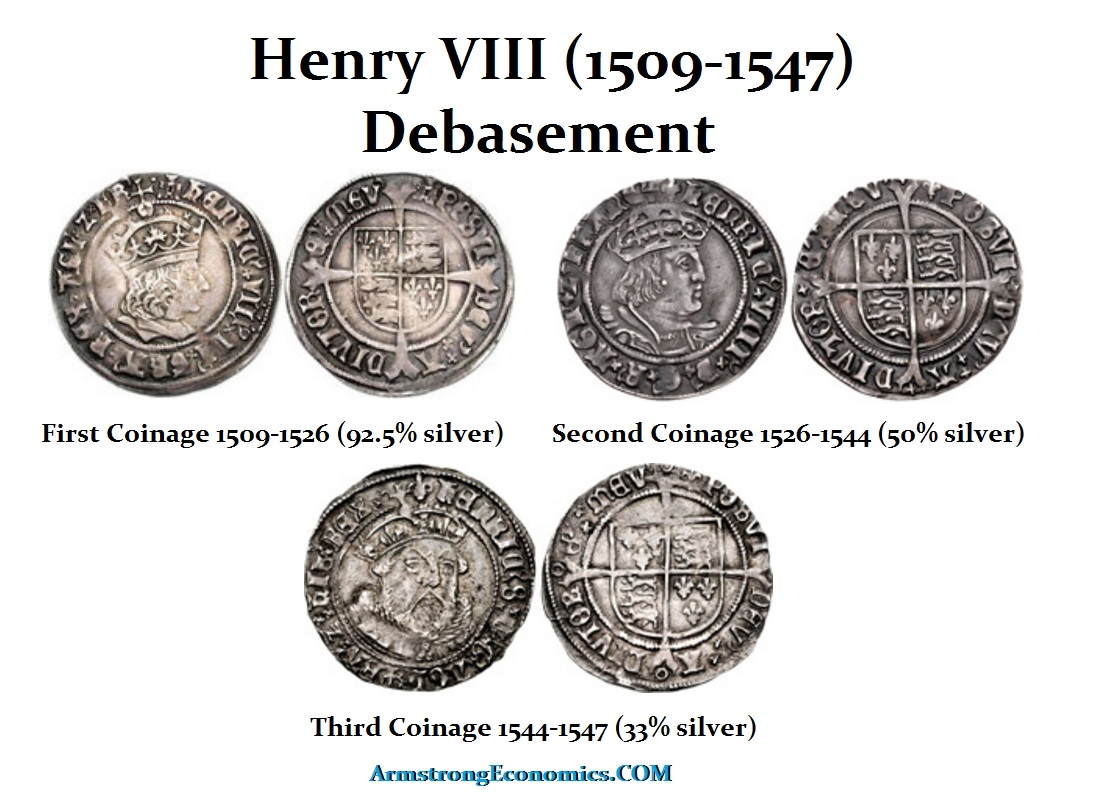
The definition of what creates inflation is entirely wrong. Even Gresham’s Law needs to be placed in context. Gresham worked in the foreign exchange markets in Amsterdam. Henry VIII debased the English coinage. But coinage traded on foreign exchange markets according to its metal content. The inflation Gresham referred to was experienced in the foreign exchange markets so what he truly observed was the decline in the British coinage value on international markets. Don’t forget, this predates the central Bank of England which was established in 1694.
The entire observation of inflation began with Gresham. However, it was extended by David Hume (1711-1776) who made observations BEFORE paper money began. This observation is not respected even today. David Hume showed why net exporting in exchange for gold currency, which then increased the domestic money supply and was hoarded by Britain, could not actually enhance wealth. Hume’s argument was essentially the monetarist quantity theory of money which would influence others over time. Prices in a country would change directly with changes in the money supply. Hume explained that as net exports increased and more gold flowed into a country to pay for them, the prices of goods in that country would rise with the economic boom. The USA saw this through the course of World War I and World War II ending up with 76% of the world’s official gold reserves. Consequently, an increased flow of gold into England would not necessarily increase England’s wealth substantially was Hume’s argument because the increase in domestic prices due to the gold inflow would discourage exports and encourage imports. Hence, this trend then counter-reacts with trade and automatically this will start limiting the amount by which exports would exceed imports. The more money that flowed into a country, like the USA, the higher the prices and this would then reduce exports. Adam Smith’s attack on mercantilism and argument for free trade, strangely ignored Hume’s argument. Hume’s view of capital flows can be verified throughout history and is really the underlying foundation of the balance-of-payments issues that Trump fails to understand. Hume also advanced the idea of “creeping inflation” that takes placed with a gradual increase in the money supply that would lead to economic growth. This is largely correct, but money supply growth must also keep place with population growth or you will produce deflation – more people and less money to go around.
With the introduction of paper money during the mid to late 18th century, the relationship between the over-supply of banknotes and a resulting depreciation in their value was noted by earlier classical economists such as David Ricardo (1772-1823). However, the issue of paper money during the American Colonial period must also take into consideration two factors: (1) England starved America and extracted money assuming they were using Spanish coinage, and (2) the American Revolution which was funded by creating paper money. There was again a lack of CONFIDENCE to the extent that when the American Revolution ended, the Constitution prohibited States from issuing money again and federally no paper money was issued again until the American Civil War in 1861.
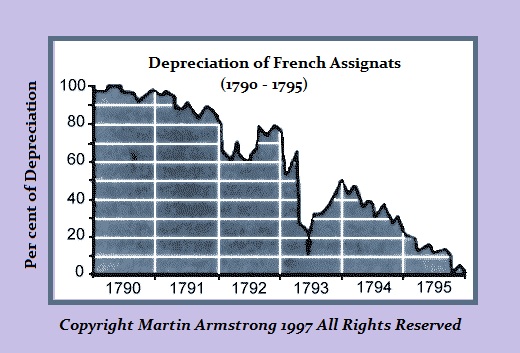
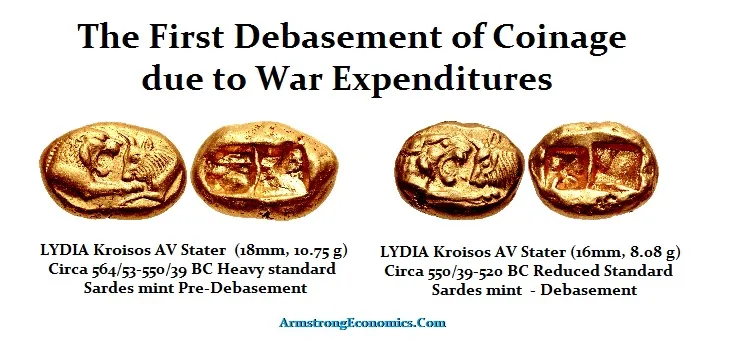
Therefore, most HYPERINFLATION periods are associated with war like the American and French experiences. However, in Lydia, the very first government to issue coins, we see the debasement unfold as a direct result of war. Therefore, there is no evidence of hyperinflation unfolding absent a collapse in the CONFIDENCE of the people in that government.
In the case of Venezuela, obviously there has been a collapse in CONFIDENCE. The same was true in Zimbabwe after it seized all the property of white farmers. Foreign investors refused to ever participate again.
The German HYPERINFLATION came with the Communist Revolution in 1918. That sent capital into hiding and fled overseas, primarily to the United States