Showing posts with label Middle East. Show all posts

Wednesday, May 11, 2016

Saudi Arabia - risks begin to build in June, October, and then next March

Trouble in Saudi Arabia


SAUDIA-M 5-9-2016


SAUDIA-FOR-M 5-9-2016
Political instability is rising in Saudi Arabia. The Saudi king has fired his long time Secretary of Energy and the head of the central bank has been replaced. The royal family is now fighting to sustain power.
The fall in the price of oil is having a political impact within the power structure of Saudi Arabia. Eventually, the rise in the dollar on world markets will force the peg to fail. As that develops, we should pay attention for this type of event may lead to a very serious political situation that could change the structure of government. The risks begin to build in June, October, and then next March.

Tuesday, November 17, 2015

Carving up the Middle East


Britain-France-WW1
QUESTION: Why did ISIS target France rather than Germany? Someone said it was France who created Syria. Is that really true?
ANSWER: Germany is not actually a target in this chess game. It is one reason we selected Berlin for our conferences even compared to London since we had Panic Cycles in November. Germany has less than 62,000 in its army and being in the army in Germany was perhaps worse than a tax collector. The joke was the German army does not shoot. Germany is not in the view of ISIS as is France, Britain, and USA. Germany may be the biggest economy in Europe, but the people blamed their own military for the nation’s suffering as did Japan.
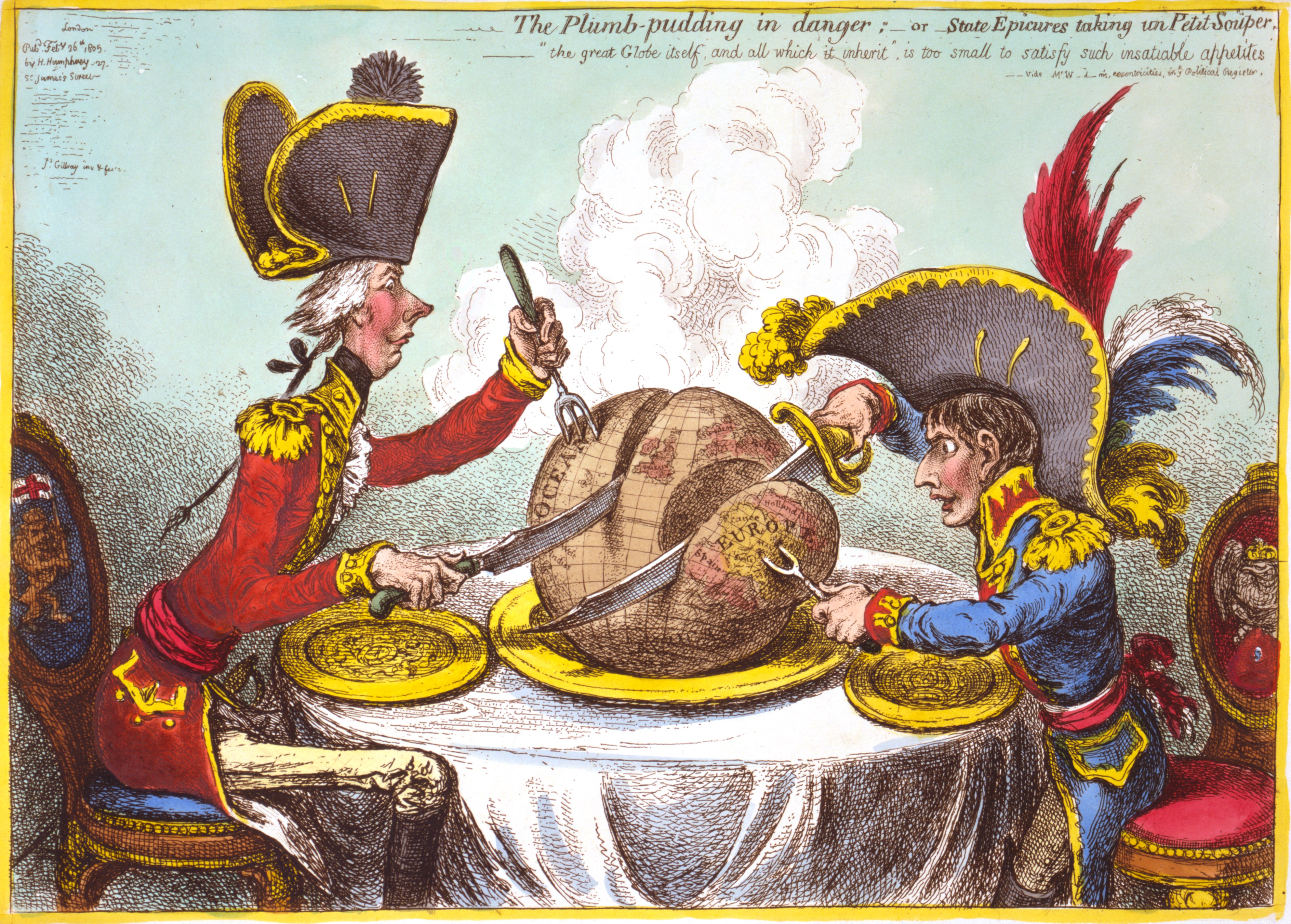
Partition-Middle EastIndeed, the Middle East, as we know it today, emerged from decisions made by the Allies during and after the World War I. It was Britain and France who took it upon themselves to transform what had been provinces of the old Ottoman Empire into the modern states we have come to know, This has created an international tinderbox that remains at the core of the current conflicts and politics in the Middle East.
The partitioning of the Middle East into the Arab provinces of the Ottoman Empire was set under the terms of a secret Sykes-Picot Agreement of April-May 1916. The agreement gave Mesopotamia (Iraq), the Gulf and the regions bordering Palestine to Britain, and Syria and most of the eastern part of the region to France.
War-Middle East

The Cairo Conference was a meeting of Britain’s Middle East experts which began formally on the morning of Saturday, March 12, 1921. The conference approved a plan for giving control over two large pieces of the former Turkish territories that Britain controlled to princes in the Hashemite family. It was agreed that Prince Feisal, with whom T.E. Lawrence had worked during and after World War I, would become king of a new country created from the Turkish Province of Mesopotamia; it would be called Iraq. His brother, Prince Abdullah, would rule a country made up of Palestine west of the Jordan River: Transjordan (now Jordan).
Britain’s interest in the provinces focused on safeguarding the trade route to India, to ensure cheap and accessible oil for the Britain’s requirements. Therefore, maintaining the balance of power in the Mediterranean was essential to its economic advantage.
France hoped to maintain its centuries-old ties with the Syrian Catholics. In so doing, France looked to establish a strategic and economic base in the eastern Mediterranean. It was not oil then, but maintaining a cheap supply of cotton and silk and prevent Arab nationalism from destabilizing France’s North African empire. Therefore, it was France who held Syria in the partition process. That is coming back to haunt them to this day.

Friday, October 2, 2015

Palestinian Flag Raised at UN on ECM 9/30/2015


Posted on by   

UN-Palestine Flag
 
The number of significant events that have unfolded precisely on 9/30/2015 (2015.75) is shocking. At the United Nations, they raised the Palestinian flag for the first time. This is truly a monumental political sea change involving the Middle East. Why are these turning points so precise? This has been a deep mystery to me personally. This is why I have stated that this was never my theory of how the world works; it was my discovery. With this turning point focused in government and our political economy rather than a specific market in the private sector, we really need to invest a lot more time to research this phenomenon.

Tuesday, August 4, 2015

In the UAE, local gasoline prices increased almost 25%

Oil & BIG BANG – the Government Funding Crisis on a Global Scale

OilRig
Saudi Arabia pumped a record 10.564 million barrels per day in June, showing that as prices decline, a record level of production is unfolding. Governments in the Middle East have budgets that are now in serious trouble. As oil prices decline, output is increasing beyond OPEC quotas because they need money to make up for lost revenue at higher prices. In the UAE, local gasoline prices increased almost 25% as well, which is opposite of the trend because it is effectively taxation.
Saudi Arabia is the world’s biggest exporter of oil, but now the desert kingdom is looking to conquer the refining sector as well, and will become the 4th largest refiner in the world. This will put further pricing pressure on oil companies as they are all now posting the sharpest decline in profits in more than 10 years.
Welcome to the age of DEFLATION. Whatever can go wrong, will go wrong for all governments everywhere. This is BIG BANG – the government funding crisis on a global scale.

Friday, February 6, 2015

Middle East guide for the confused


BY  · FEBRUARY 6, 2015 · NO COMMENTS
middle-east-map_wiki
0


9
 
 
0
 
 
0
 
 
0
 
 
0
 
Islamic State in Iraq and Syria (ISIS), also known as Islamic State in the Levant (ISL)
Aims to set up a Caliphate ruled by the ruthless application of its radical interpretation of Sharia, Islamic law.
ISIS/ISL is a Sunni Muslim movement making great progress against the Shiite-controlled government of Iraq,which is backed by the United States and against Syria, which is run by leaders from the Alawite sect and is allied to Shiite Iran.
The Obama administration in the US is exploring negotiations with Iran over its nuclear weapons program.
The US is also taking the lead in fighting the Sunni ISIS/ISIL forces in Iraq and Syria.
However the US also refuses to give any support to President Bashir Assad and his government in Syria, even though this has the result of further weakening Assad and strengthening ISIS/ISL
ISIS/ISL wants to topple the government of Saudi Arabia and destroy the state of Israel.
However the government of Saudi Arabia is giving it qualified support against Syria and Israel refuses to support Syria because they both oppose the Syrian government of President Bashir Assad more. That is because Syria is allied to Iran, which both Saudi Arabia and Israel see as their main enemy.
Israel and Saudi Arabia are conventionally seen as archenemies of each other. But in practice they have been co-operating against Iran, which they both fear, and against ISIS/ISIL and other radical Islamic movements such as al-Qaeda.
Israel wants ISIS/ISL to weaken Assad. But an ISIS/ISL victory would open a new border of danger and base for terror attacks against Israel. President Assad, like his father before him, President Hafez Assad, who died in 2000, has refused to allow any ISIS/ISL or other terror attacks against Israel from Syrian territory. But he works closely with and supports Hezbollah, the Shiite Party of God, the most dangerous terror group that Israel faces on its northern border.
Top: Two U.S. Air Force F-15E Strike Eagle aircraft flying over northern Iraq. Left: F-22 Raptor refueling before a strike in Syria. Right: Peshmerga special forces gathered near Syria. Middle: An American F/A-18C Hornet aboard USS George H.W. Bush prior to the launch of operations over Iraq. Bottom: Map of the situation in Iraq and Syria, as of 5 February 2015. (Wikipedia)
Top: Two U.S. Air Force F-15E Strike Eagle aircraft flying over northern Iraq. Left: F-22 Raptor refueling before a strike in Syria. Right: Peshmerga special forces gathered near Syria. Middle: An American F/A-18C Hornet aboard USS George H.W. Bush prior to the launch of operations over Iraq. (Wikipedia)
Abdel-Fattah el-Sisi has been president of Egypt since his military takeover in 2014. Western human rights activists loathe him for toppling democratically elected President Mohammed Morsi of the Muslim Brotherhood. However, Sisi enjoys broad popular support and is revered by Egypt’s six million Coptic Christians who fear they would have faced genocide under continued and intensified Muslim Brotherhood rule.
Map of the situation in Iraq and Syria, as of 5 February 2015. (Wikipedia)
Turkeydemocratic Muslim and stable nation state that has been a member of NATO and ally of the United States for almost 60 years.
However, today Turkey supports ISIS/ISL against Syria, its historic enemy. This also carries the risk that Iran may intervene against Turkey at some point to support Syria. Turkey is also increasingly hostile to Israel.
Free democratic elections – eagerly supported by the George W. Bush administration across the Middle East. However, they led to the democratic election of Hamas, the Islamic Resistance Movement, which is determined to destroy the State of Israel and to also topple moderate Muslim Arab governments as well.
Falling oil prices: They hurt Saudi Arabia more than anyone else. But with $800 billion in cash reserves the Saudis can ride out the storm. And the Saudis welcome falling oil prices as a way to put the squeeze on Iran and slow down the growth of fracking technology in the United States.
Saudi Arabia also opposes any deal between the United States and Iran over Tehran’s nuclear policy because it fears this will hugely strengthen Iran at Saudi expense and threaten its own security.
Do you find all this confusing, dear readers?
If you do, Congratulations:
You are finally starting to understand the Middle East.

- See more at: http://lapostexaminer.com/middle-east-guide-confused/2015/02/06#sthash.iM0qmbBk.dpuf

Wednesday, January 21, 2015

Expect the turmoil to pick up in the Middle East come 2016

 Martin Armstrong               

ISIS Demands Money for Hostages

ISIS-Ransom

ISIS now demand $200 million in ransom or they will behead two Japanese hostages. This seems to be retaliation for last week, Prime Minister Shinzo Abe pledged $200 million in non-military assistance to support countries affected by the campaign against ISIS during his six-day Middle East tour. This Islamic State has now released a video threatening to kill two Japanese hostages unless they receive a $200 million ransom in the next 72 hours.

Japan will not pay such a demand. The two will become heroes and ISIS now risks providing the very support needed in Japan to rekindle its military establishment. Concerns about China have been brewing. Nevertheless, all countries need a diversion from their fiscal mismanagement and historically there is nothing better than war to accomplish that.
ECM-Islamic-State Wave 10

We have to remain concerned about the target year 2017 on our war models. We already have seen a rise in tensions with the start of the trend in 2014. Civil Unrest has also risen sharply. It certainly appears these folks are begging for a religious war against fellow Muslims, Jews, Christians, Hindus, Buddhists, and Shinto.  They have not left out anyone so far. They are more-likely-than-not going to destabilize the Middle East for as oil prices fall and budgets are forced to be cut, we will even see a rise in tensions throughout the region. We should expect the turmoil to pick up in the Middle East come 2016.