Showing posts with label AI. Show all posts

Tuesday, June 14, 2022

AI & the Future


Klaus Schwab’s view of the future and Artificial Intelligence is seriously flawed. He argues that the fusing of the political, physical, digital, and biological worlds will have a transformative impact on every facet of human existence. He insists that this will range from the way we live our lives, the manner in which we will work, the reconfiguration of economic models, the products we sell, and I believe his self-delusion, the power to extend our lives indefinitely. Of course, his cohort, Yuval Noah Harari, dreams of converting society into programmed robots. Meanwhile, Pfizer CEO Albert Bourla dreams of putting chips in every pill that confirms to a central database that you took his latest creation.
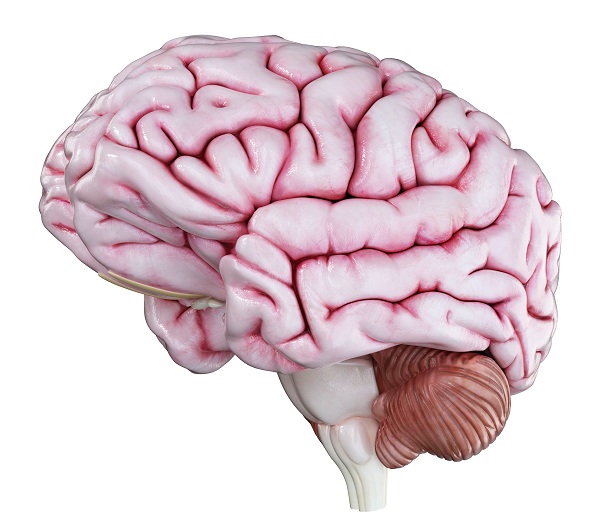
Schwab’s Fourth Industrial Revolution is seriously flawed for he has no understanding of actual real AI programming. Yes, insofar as AI is concerned, I do not believe in the view that if you throw in mountains of data, somehow the computer will evolve and figure it all out and come up with a force or conclusion. They did that at IBM with Big Blue. They thought it would find the cure for cancer – it failed. There is something more that makes our brain function. It is NOT just a neural net and consciousness somehow emerges because of all the connections. Granted, they try to mimic the brain and look upon us as simply a biological lifeform without actually understanding there is something much deeper.

Perhaps the night you suddenly fell in love with your partner. You were out to dinner, and your unconscious mind actually recorded everything — the place, the food, the music, what they wore. You consciously are not actually noticing all these variables. But years later, you hear that song, taste that same food, or revisit the place. Suddenly, without even trying to remember, the event is relived. You can close your eyes and see the event as if it were a recorded movie. Our brain is actually recording everything without us even trying. Creating a neural net and dumping all this information in there does not recreate that ability.

Sigmund Freud (1856- 1939) and Carl Gustav Jung (1875–1961) dived very deeply into the construct of the mind. Their view of our unconscious was the result of very deep self-analysis. Socrates is different. I created pathways and taught it how to analyze. I spend a lot of time self-analyzing how I would trade, and what I would look at as an international hedge fund manager. I had to understand how the mind actually worked both on the conscious and unconscious levels.

Because I knew I was not going to be a world globe trotter again, I got a dog. She has taught me about how the mind also works. She thinks. She has a strategy. She has the same range of emotions that we have from boredom to excitement. I can see her thinking. She clearly communicates through her eyes and body language. There is an innate ability to communicate with dogs that has evolved over the centuries, which is one of the primary reasons our canine-human love affair has gone on for centuries. There is a distinct dog-human interspecies understanding that is extraordinary, but it also is a glimpse into ourselves. She anticipates where I will go when I get up and will gently let me know when she is hungry. But to my astonishment, she will play ball, but then will try to make me go fetch. She would bang her bowl if it was out of the water, but then if she wanted me to stop working, she would bang the bowl because she knew that sound would cause me to come out of the office.

There is a whole other aspect to not just our mind, but how even a dog thinks, which reveals to me that the failure in AI with machine learning is that it is one-dimensional. There is a far deeper level of activity beyond our conscious mind that they try to duplicate with neural nets. My dog has indeed reinforced my understanding of how to really construct AI, which is substantially different from the one-dimensional neural net.

My dog understands so many words that it is astonishing. I was talking with a friend and just mentioned the word “dog,” and she got up and immediately ran to the window to see what dog dared to enter her domain. If I say we are going shopping, she goes to the front door. If I say we are going to take a walk, she runs to the back door. She obviously understands far more language than I ever expected.  A 2020 study by researchers at Eötvös Loránd University in Hungary discovered that, while dogs may not pick up minute details in human speech, they can, in fact, comprehend their owners’ most basic words.

What she has taught me is that even a dog has a conscious and unconscious mind. She dreams as we go. It is really amazing when you pay attention. This is just far more involved than creating a one-dimensional neural net, throwing a bunch of data in, shaking (not stirring), and hoping for the best. Their theory that accelerating the ability to calculate and adding parameters to models was not really a game-changer. The models are faster, and playing a game of chess or Jeopardy, they can beat a human because they have the ability to test every possible outcome in a few minutes. But that is the problem. They can wow everyone with speed, but they CAN NOT create something new. That was the failure of IBM’s Big Blue.
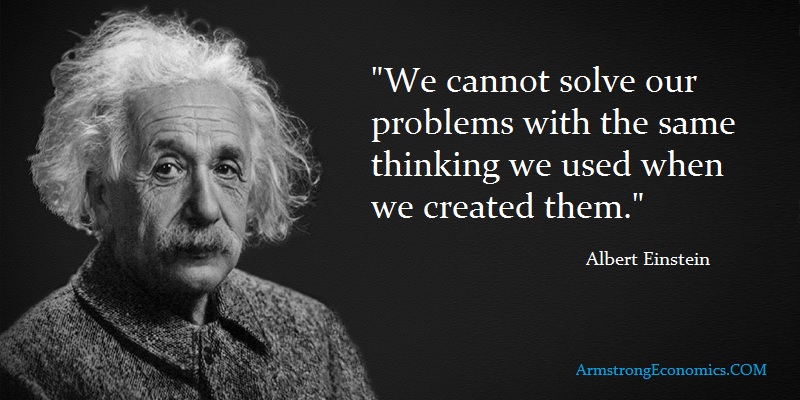
Creativity REQUIRED imagination, and expanding the nodes and speed does not lead to imagination. Without imagination, we cannot create a real game-changer. Thus, all the AI that Schwab cheers will lead the world into his Fourth Industrial Revolution is missing the critical ingredient, which does not exist in the conscious mind but is buried in the unconscious realm where we hide our talents, dreams, and our long lost memories. This is why Socrates has provided forecasting that is even original.

So I have taken a different approach. Socrates is NOT a one-dimensional neural net. Don’t worry. It will not suddenly come alive and decide to wipe out the inferior species known as humans. But the world Schwab envisions is not real. It only leads, not to the critical ability of creativity, which exists only in freedom, but to oppression and conformity precisely as the result of Marx’s experiment we call socialism/communism. Communism collapsed because it suppressed creativity. That also necessitates FREEDOM.


Thursday, November 21, 2019

Neural Nets v Neuromorphic Computing v Something Else?


QUESTION: You have never actually stated what type of technology is behind Socrates. Is it a neural network? Have you accomplished something nobody else has yet reached in neural nets since there are no such systems that can identify market movements and then verbally articulate them?
ANSWER: Socrates is NOT a neural network. I looked at that technology when it was designed as a software back in the 1980s and discarded it as impractical for true financial market forecasting. For example, in the ’70s, the theory was to study how the voice box made sounds. Attempts to replicate that for computers to enable them to speak proved impossible and highly complex. Back then, I worked with Dragon Systems where the speech was tackled from a phonetic approach that was originally hardware.
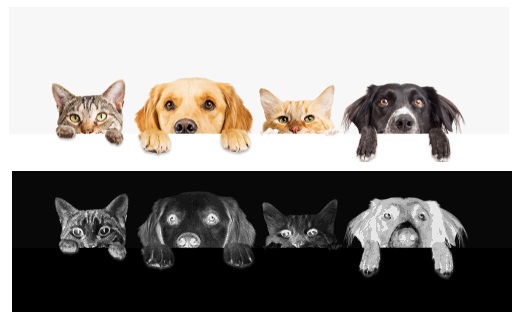
Teaching computers to see was easy. It would take an image and reduce it to binary black or white and then it could ascertain the shape of the object. However, neural networks needed a tremendous amount of examples of photographs before they could distinguish between a cat and a dog or a cup. Humans can see a single picture of one dog or cat and recognize various species of that animal without ever seeing a picture of every single particular breed. Neural nets cannot accomplish that from a single photograph. This is one major difference between neural nets and our brain. This made it impossible to create a neural net that could simply recognize a market pattern but just looking at a chart.
Neuromorphic engineering is yet another concept developed back in the late 1980s. Thus, neuromorphic differs from neural networks which are a set of algorithms, modeled loosely on the theory of how the human brain functions. They were designed to recognize patterns such as trying to distinguish between the cat, dog, and a cup. They attempt to create very large-scale integration (VLSI) systems containing electronic analog circuits to mimic neuro-biological architectures that are present in the nervous system. The neuromorphic is really more hardware-based but also requires a software operating system.

The implementation of neuromorphic computing has raised the theory that perhaps one day we will be able to copy the content of the brain into a synthetic replacement as in the movie “Replicas.” The actual key aspect of neuromorphic computing is understanding how the morphology of individual neurons, circuits, applications, and overall architectures create learning and development constituting who we are. I would not consider this a technology that would be able to become a synthetic mind replacement for quite some time, assuming we could ever get to that level of understanding the complexity of the human brain.
Obviously, Socrates is a hybrid between neuromorphic computing and neural networks. I chose a different path of actually creating a synthetic network capable of learning by example but expressly targeted to global analysis. I input my own basic abilities to conduct analysis and taught it my methodology. Socrates is now free to explore the entire world database and return with answers. We are now teaching it to verbalize its results.
The Global Market Watch is purely pattern recognition where it is identifying patterns and assigning them a number for its catalog of market patterns. Besides the fact it has exceeded more than 50,000 patterns, demonstrating the true complexity of market movement, it has also proven that those patterns it may discover in wheat, for example, are applicable to even individual stocks. It has proven beyond a shadow of a doubt that fundamental analysis is not only worthless, but the common link is human behavior — not the underlying instrument. We are looking at HOW humans will interact with whatever the instrument might be to establish why history bothers to repeat because human nature never changes throughout millennia.

Wednesday, August 9, 2017

Brain will engage in reflexive feed-forward computations

AI – Beyond Complexity – 11 Dimensions within our Own Mind

QUESTION:
Hi Martin,
First, thanks for this article (on Facebook shutting down AI)
It is the first non-sensacionalist and serious post I read on this topic.
Although, I found it somehow contradictory.
Your main statement is that all the history is cyclical.
But in this post you say “Therefore, we can create a computer that remembers the past like a dog and projects into the future without actually conceptualizing what the future might truly mean as is the case with a dog.”
Why this fact would make AI weaker?
Isn’t it your future forecasting obtained from “the data from the past you collected”?
Thanks so much in advance,
Regards from Spain
F
ANSWER: The computer can determine the cycle from all the collective data interlaced from around the world. It can forecast turning points decades in advance. But that does not mean it comprehends what the future really is as to a human being. It may seem to be a subtle distinction, but it is the difference between a computer and a conscious being that also knows it has a shelf-life and will grow old and die. I am working hard to deliver Socrates because I have a shelf-life. It is the only way to allow such research to continue beyond my life-span. I do this for posterity for it has taught me so much. It will most likely only be recognized by mainstream after my death and then they will try to discredit it by crafting stories about me personally attacking the creator because they cannot dispute the research Socrates reveals. That is simply how human nature operates historically. Someone one day will quote this very line I just wrote. That is inevitable. Welcome to humanity.
The concept of the future is hard to express in words but I can say to you  let’s go to dinner next Tuesday. You can conceptualize the future and say yes or you will be busy can we make it Wednesday? That is a dynamic conception laced with many aspects in our mind. A dog has no concept of tomorrow. A computer can project turning points into the future from the past, but it does not have a concept of the future. It is simply just math – very black and white void of emotion.
There is another hidden order of dynamic multi-dimensional structure we do not understand yet with the human mind. The formal link between neural network structure and how the brain actually functions in processing information does not truly exist and anyone claiming to have some neural net to predict the future is just nonsense. Those claiming to have created AI programs using a neural net to forecast markets is more-likely-than-not just a consumer fraud or simply another model destined to fail. We do not yet understand neural networks in our own brain so we cannot duplicate it in programming.
On top of that, neuroscientists have used a classic branch of math in a totally new way to peer into the structure of our brains. What they’ve discovered is hard for us to even visualize that the brain is full of multi-dimensional geometrical structures operating in as many as 11 dimensions.
We live in a 3-D world perspective. We are not yet capable of understanding how there can be 11 dimensions all interacting. What is the structure? How does this even function? The results of this new study is the next frontier in trying to understand the fabric of the human brain, which somehow is the machine used by our mind that is our consciousness distinguished from the brain itself.
The human brain, by the way, is the most complex structure we know of no less an amazing super-computer. And someone wants to claim they have an AI computer neural net to forecast markets? Good luck with that one. How can you create a neural net we do not yet understand to forecast something that is so complex, it defies description? If we do not yet understand how such a neural net functions in our own brain, how can you write as computer program to mimic such a neural net? How can some neural net suddenly evolve and become conscious if we do not even understand the structure at the core level?
This latest brain model was produced by a team of researchers from the Blue Brain Project, a Swiss research initiative devoted to building a supercomputer-powered reconstruction of the human brain. They used algebraic topology, a branch of mathematics used to describe the properties of objects and spaces regardless of how they change shape. They found that groups of neurons connect into ‘cliques’, and that the number of neurons in a clique would lead to its size as a high-dimensional geometric object (a mathematical dimensional concept, not a space-time one).
“We found a world that we had never imagined,” said the lead researcher, neuroscientist Henry Markram from the EPFL institute in Switzerland. “There are tens of millions of these objects even in a small speck of the brain, up through seven dimensions. In some networks, we even found structures with up to 11 dimensions.”
We live in three spatial dimensions plus one time dimension, which we have yet to fully understand as well. Here, the 11 dimensions are how the neuron cliques are connected. Networks are viewed in a structure in terms of groups of nodes that are all connected, which is known as cliques. The number of neurons in a clique determines its size or dimension. The human brain is estimated to have 86 billion neurons, which is a stunning number in itself. These then have multiple connections from each cell webbing in every possible direction. This structure forms a vast cellular network that somehow makes us capable of thought and consciousness that we do not understand.
The Blue Brain Project team focused on the neocortex, which is thought to be the most recently evolved part of our brains, and the one involved in some of our higher-order functions like cognition and sensory perception. Algebraic topology provides mathematical tools for discerning details of the neural network both in a close-up view at the level of individual neurons, and a grander scale of the brain structure as a whole. Connecting these two levels, the researchers could discern high-dimensional geometric structures in the brain, formed by collections of tightly connected neurons (cliques) and the empty spaces (cavities) between them.
What they discovered was amazing structural dynamic complexity, which is really what I discovered taking place with the interconnections globally within the world economy. “It is as if the brain reacts to a stimulus by building [and] then razing a tower of multi-dimensional blocks, starting with rods (1D), then planks (2D), then cubes (3D), and then more complex geometries with 4D, 5D, etc,” according to mathematician Ran Levi from Aberdeen University in Scotland.
What I find so fascinating is that the very same structure emerges at a higher level whereby all humans interact globally in the same manner dynamically shifting and reorganizing structures. What they have discovered I see in the development of Socrates but at a higher level suggesting this is indeed fractal in nature.
Socrates is now beyond 150,000 possible daily patterns in the Global Market Watch. This is just stunning. It is like building a sand castle on the beach creating an elaborate structure which is washed away by the sea in the morning. Both in our mind and within Socrates, we have human thought and action capable of creating dynamic structures to solve or react to some event and then vanish awaiting the next problem to rebuild a completely new structure. This multi-dimensional ability to respond to stimuli is just amazing. I see this is capital flows on a grand scale – ever shifting creating new trends and structure. Tracking this dynamic interlaced structure of the entire world is the same with these 11 dimensions in our biological brain.
How do we dream in concepts that are very imaginative abstracts of reality? We can imagine in a dream concepts and objects that could not exist in the real world like the drawing above that could not exist in reality. We know that the rear portion of our brain gets pretty active during REM sleep, when most dreaming occurs. Some believe that it’s just the brain winding down for the night and that dreams are random and meaningless firings of the brain that we don’t have when we’re awake. There is  simply no answer to the question: Why do we dream? I can personally attest to it is not random nor is it just meaningless firings of the brain that we don’t have when we’re awake. There have been complex problems I have thought about with no answer when awake. Yet it is “on my mind” still when I sleep. Suddenly I have woke up in the middle of the night saying “eureka” that’s the answer. This has happened way too many times to support a theory of meaningless randomness.
Take this picture of a girl in the water. Your mind will fill in the blanks as to what you think she looks like. Your mind will create an image that pleases you yet you have not seen her (her picture is at the bottom). Why does the mind fill in the gaps? To the right is another famous drawing. How old is the woman that you see? Is it the mother-in-law or the pretty girl. Which did your mind see first? The mother-in-law with the big nose looking down or the young girl wearing a necklace turned away?
Here is another famous drawing. What animal do you see? The duck with its beak slightly open or the rabbit with its ears pointing to the left? Our mind is capable of creating images from fragments.
To add to all this stunning complexity, we can access data we have stored in our brain for decades from all the five senses. You may hear a song and that will access some event in our past where you perhaps had dinner with someone you fell in love with at least temporarily. Then again, you may return to the place you had that event and suddenly remember that dinner. You might have had some food that night and suddenly you will remember that same event. We can access a memory from any of our senses for our brain is recording everything even if we do not realize it.

There is significant evidence demonstrating that we possess “core object recognition” which is the ability to rapidly recognize objects despite substantial appearance variation. Our brain will engage in reflexive feed-forward computations which will produce a powerful neuronal representation in the inferior temporal cortex. Precisely how our brain creates an algorithm that produces this solution remains a mystery. Nevertheless, we have evidence ranging from individual neurons that build into neuronal populations creating a behavior evolving into computational models. We seem to dynamically create computational models, each based on building blocks of small, canonical sub-networks with a common functional goal. Our sand castles that dissolve and then regroup to solve the next problem.

So sorry, I do not buy that consciousness will suddenly emerge and a computer will be endowed with an evil soul out to rule the world. In my opinion, the complexity is far too extensive for us to understand how our own mind works yet in order to build some neural network that will turn against us. My suggesting is that Elon Musk and crew should stop worrying about AI and start to try to comprehend what we are all about first.

Monday, July 31, 2017

Facebook Shuts Down it AI System


A lot of people are using the issue that Facebook shut down its AI system when it began to create its own language as a shot-cut in communication between two bots. Some are haling Elon Muck as an “I told you so” prophet. But in all honesty, the Facebook AI is merely doing the very same thing that humans do – it evolves language to speed up communication. Just look at the evolution of language in text messaging – LOL (laughing out loud) – BTW (By the Way) – OMG (Oh My God) – 4YEO (For Your Eyes Only) – IDK (I Don’t Know) – IMO (In My Opinion) – NOYB (None of Your Business) – OT (Off Topic) – OTOH (On The Other Hand) – POV (Point of View) – TIA (Thanks in Advance) – TGIF (Thank God it’s Friday) – TQ (Thank You) – TYT (Take Your Time) – TTYL (Talk To You Later) – WFM (Works for Me) and the venerable WTF. The standard basic set I find myself using is classic now:
24BCIORUY
to / tooforbeseeeyeoweareyouwhy
Facebook wanted its AI to communicate with people. When it evolves into its own language creation as humans do, that interface potential is lost. Facebook’s researchers shut the system down because its AI was no longer using English. This is actually common problem. AI will diverge from its training in English to develop its own language that to humans will appear to be gibberish but is simply a new language short-cut not unlike text messages today – LOL.

The first important step in comprehending language is there are two distinct paths in which language can develop. Speaking language is different from writing a language. When I was first doing business in Japan, I hired a tutor to come to the office to tech me Japanese. He insisted upon me reading and writing. At first, the task seemed too daunting and I said I just wanted to learn to speak not read and write. I was reluctant and felt I did not have the time to devote to that. Nonetheless, he insisted so I gave it a try. What I discovered was the same thing my computer was doing – pattern recognition.
First we have the letter system, which is in part symbols that we construct phonetically. This originated as the Phoenician alphabet developed from the Proto-Canaanite alphabet, during the 15th century BC. Before then the Phoenicians wrote with a cuneiform script.  Cuneiform writing was gradually replaced by the Phoenician alphabet during the Neo-Assyrian Empire (911–612 BC). By the second century AD, the script had become extinct.The earliest known inscriptions in the Phoenician alphabet come from Byblos and date back to 1000 BC. Therefore, the Phoenician alphabet was perhaps the first alphabetic script to be widely-used since the Phoenicians traded around the Mediterranean establishing cities and colonies in parts of southern Europe and North Africa. Then we have pictorial languages. Egyptian hieroglyphs were the formal writing system that combined logographic, syllabic and alphabetic elements, with a total of some 1,000 distinct characters.
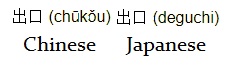
Clearly, the divide between the West and Asian written languages can be seen between the Phoenician and Egyptian. The further East one traveled the language in written form was more pictorial. If we consult the authoritative classic Kāngxī dictionary, we find that it lists over 47,000 characters. The Hanyu Da Zidian, a more modern reference, has over 54,000 characters while the Dai Kan-Wa Jiten (Japanese version) has over 50,000. Then we have the Zhōnghuá Zìhǎi which has over 85,000 characters. However, many of those listed are really just variants. From a practical viewpoint, in Japan, there are only 2,136 Jōyō kanji that are commonly used and taught in school. The more sophisticated will generally know more. The Chinese equivalent is the Xiàndài Hànyǔ Chángyòng Zìbiǎo, which has about 3,500 characters. Here we have the written word for exit in Chinese and Japanese. They are written the same but spoken entirely differently.
When you create a real AI and try to allow it to communicate, you have to expect it will be more efficient and speak in concepts rather than words. Most do not comprehend that we as human also really think in CONCEPTS. When you speak more than one language and THINK in another language, you are really going down the road of thinking in concepts. The Japanese word “Onegai shimasu” is a very hard phrase to directly translate to English. The second part “shimasu” is actually the verb “suru”which means “to do” in the present tense. “Onegai” comes from the verb “negau” which actually means “to pray to” or “to wish for “ something. You can ask for a cup of coffee “Kōhī Onegai shimasu” or can I use your phone “Denwa Onegai shimasu” so my translation into English is just an action verb to do anything. There is no direct translation into English, it remains a concept I can comprehend in my mind which does not attach to an English word. Hence, when we break down our own thoughts, we are not thinking in words, but that is simply the symbol for a concept.
This is actually what we do when we create a language to program a computer. Today, rarely are programmers even capable of writing in machine code. We have created higher languages such as Basic, C, Cobol. etc, that the compiler then translated to machine code for the computer to run. The classic IF THEN ELSE command is actually written and translated into machine language like so:
if (x >= y) {
// main branch
} else {
// else branch
}
Machine Language Translation
cmp (r1),(r2) ;compare words at memory addresses pointed by registers r1 and r2
blt else ;jump to else-part if (r1) is less than (r2)
… ;insert the main branch code here
bra end_if ;jump to end_if
else:
… ;insert the else branch code here
end_if:
Therefore, programmers do not write code that the computer directly understands. It should not be surprising that we need to create an interface for the computer to translate its complex concepts in thinking back into English that we can comprehend. Google’s AI has created its own internal conceptual language that allows it to efficiently translate between human language pairs it hasn’t explicitly been taught by using its own made up “universal language” as a buffer. I do this in my mind visualizing CONCEPTS represented by words. Think of the word BEER and you will visualize in your mind most likely a beer you may drink or SCOTCH, COFFEE, or whatever.
Computers are excellent problem solvers that can perform calculations at rates far in excess of the human brain. However, humans retain the upper hand in creativity and imagination. We can reason with ourselves, develop plans and think of abstract concepts that can’t be defined. We can even solve problems while dreaming. However, I found it possible to create introspection abilities whereby the program can simulate reasoning by questioning its own results perhaps with less bias than humans do. This ability to test itself created the objective ability to learn strategies and thus make plans without actually comprehending what the future truly is in a cognitive manner. The result was to create the ability to create “what if” scenarios which can’t necessarily be solved using logic alone.
Therefore, the fact that an AI computer creates a more efficient language to communicate in should not be a surprise. Once you understand that we actually think in CONCEPTS and that words are merely an expression of a CONCEPT, then understanding AI development opens a whole new door to exploring humanity itself. Elon Musk is not actually a programmer. He is a business man who deals in future concepts. His Open AI assumes an awful lot that AI can surpass humanity in general intelligence and becomes “superintelligent” that like most SciFi thrillers are based upon. This new superintelligence is assumed that it could become powerful and difficult to control. The entire argument is based upon this idea that “consciousness” somehow emerges from reaching some level of intelligence and thus an evil machine will simply evolve all on its own. I seriously doubt this threat for I do not know how it would be possible to program even a self-evolving consciousness. I can mimic emotion but not truly create it. The majority of AI researchers do not even comprehend how the brain works nor do they truly understanding that human machine language is conceptual thinking.