Showing posts with label Law Basics. Show all posts

Tuesday, March 26, 2019

Our Flawed Monetary System & Why it is Doomed


QUESTION: You mentioned that Rome had no national debt and no central bank. Exactly how did it function for 1,000 years?
JY
ANSWER: In addition to not having a national debt or a central bank, Rome had no police force or agency charged with enforcing the law. There were specific crimes against the state that would be prosecuted such as arson and treason. But the prosecution of a murder would be carried out by the family. The responsibility for enforcing the law thereby fell on the kin, tribe, gens and patron of the offended individual. 

It was the King of England after Magna Carta who began to prosecute people for what was private crimes all so he could make money. By the time of the American Revolution, there were 240 felonies all of which carried the death penalty. So the king got to confiscate all your property and throw your family out on the street.

As far as finances, the government simply minted coins to pay its expenses. As I have said, if we just created the money to fund the government rather than borrow, it would be far less inflationary. Because we borrow, with no intention of paying anything off, we must keep paying interest to roll the debt. That suppresses the economy, for it is competing with the private sector. It is a contributing factor as to why 70% of small business get turned down for loans that would expand the economy.
As shown here, the accumulative interest expenditures eventually exceed 70% of the total debt so the money never went to anything such as schools, roads, or social programs. If the government simply created the money, as did Rome, then the economy is segregated between public and private.
Today, the Fed raises interest rates to slow our spending yet it increases the spending of government. It is impossible for the economic theories of Keynes and Marx to ever function when the government is the single greatest borrower. Our current economic system is doomed. No rational person would EVER create such a completely flawed monetary system as this.

Tuesday, April 4, 2017

The Conflict of Law – USA/England v Europe


Vattel Emer de (1714 – 1767)
COMMENT: I believe you are wrong about the meaning of natural born citizen in you blog Does it Matter If You Are Born Outside USA to be President? You are a natural born citizen only if BOTH parents are citizens.
REPLY: The site you refer to notes the definition which comes from Emer de Vattel (1714 – 1767) who was a Swiss philosopher, diplomat. Those who were trying to make arguments against Obama were relying upon Vattel because it suited their desired result. Vattel’s definition was in his 1758 “the Law of Nations”:
Book I, Chapter 19, section 212, is “Of the citizens and naturals”
“The citizens are the members of the civil society; bound to this society by certain duties, and subject to its authority, they equally participate in its advantages. The natives, or natural-born citizens, are those born in the country, of parents who are citizens. As the society cannot exist and perpetuate itself otherwise than by the children of the citizens, those children naturally follow the condition of their fathers, and succeed to all their rights. The society is supposed to desire this, in consequence of what it owes to its own preservation; and it is presumed, as matter of course, that each citizen, on entering into society, reserves to his children the right of becoming members of it. The country of the fathers is therefore that of the children; and these become true citizens merely by their tacit consent. We shall soon see whether, on their coming to the years of discretion, they may renounce their right, and what they owe to the society in which they were born. I say, that, in order to be of the country, it is necessary that a person be born of a father who is a citizen; for, if he is born there of a foreigner, it will be only the place of his birth, and not his country.”
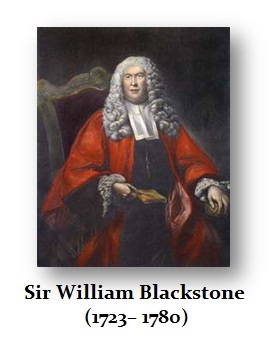
blackstone-2
This is all fine and good. However, there is a conflict of law between the English “Common Law” and the law of Continental Europe. This is taught in the very first semester of law.  Emer de Vattel wasNOT any real influence in establishing the US Constitution. That distinction goes to William Blackstone (1723-1780).  Blackstone wrote the Commentaries On The Laws Of England. This is what the framers of the Constitution relied upon for here is the interpretation that the Supreme Court will turn to – Blackstone not Vattel.
…
When I say, that an alien is one who is born out of the king’s dominions, or allegiance, this also must be understood with some restrictions. The common law indeed stood absolutely so; with only a very few exceptions: so that a particular act of parliament became necessary after the restoration, for the naturalization of children of his majesty’s English subjects, born in foreign countries during the late troubles. And this maxim of the law proceeded upon a general principle, that every man owes natural allegiance where he is born, and cannot owe two such allegiances, or serve two masters, at once. Yet the children of the king’s ambassadors born abroad were always held to be natural subjects: for as the father, though in a foreign country, owes not even a local allegiance to the prince to whom he is sent; so, with regard to the son also, he was held (by a kind of postliminium) to be born under the king of England’s allegiance, represented by his father, the ambassador. To encourage also foreign commerce, it was enacted by statute 25 Edw. III. st. 2. that all children born abroad, provided both their parents were at the time of the birth in allegiance to the king, and the mother had passed the seas by her husband’s consent, might inherit as if born in England: and accordingly it hath been so adjudged in behalf of merchants. But by several more modern statutes these restrictions are still farther taken off: so that all children, born out of the king’s ligeance, whose fathers were natural-born subjects, are now natural-born subjects themselves, to all intents and purposes, without any exception; unless their said fathers were attainted, or banished beyond sea, for high treason; or were then in the service of a prince at enmity with Great Britain.
The children of aliens, born here in England, are, generally speaking, natural-born subjects, and entitled to all the privileges of such. In which the constitution of France differs from ours; for there, by their jus albinatus, if a child be born of foreign parents, it is an alien.
Those who relied upon Vattel to support their argument that Obama was not a natural born citizen simply were looking for someone to agree with them. Then McCain would not qualify either or anyone born to an ambassador while posted overseas or a child of someone in the military stationed overseas. Even in the tax code, Canadians with one single American parent born in Canada were all being sent notices from the IRS that they owed taxes in Washington because they were citizens. I had a friend in Switzerland who married an American girl and they had a son. When he was 13, they took him to the bank to open his first account. The bank refused to allow the child to open an account because he was an American and they would have to report under FATCA to the USA everything he did.
The definition is clearly different from that of Continental Europe. You could have applied for an EU passport even as an American if your grandfather was born in Europe. If your grandmother was born there instead of your grandfather, you were not eligible. The right to citizenship only followed the maleline – not the mother.
There is a huge conflict of laws between USA/UK and that of European which is based upon Canon Law from the Catholic Church. Under the Common Law (USA/UK), the only privilege is that a wife cannot testify against her husband. They can force your children to testify against you. Under Continental Law, nobody in your family can testify against you even a brother or sister-in-law –NOBODY. There are those who argue it is time to change that as well.

Thursday, June 11, 2015

Why Jury Decisions Reflect the View of Government. Sixth Amendment


Trial William Penn
Wm Penn Trial
The most famous trial where a jury stood up refusing to find the defendant guilty in the face of a corrupt government, was that of William Penn, the founder of Pennsylvania. Penn was the leader of the Quakers in London. The sect was not recognized by the government and was forbidden to meet in any building for the purpose of worship. In 1670, William Penn held a worship service on a quiet street, which was attended by a peaceful group of fellow Quakers. Penn and another Quaker, William Mead, were arrested on a charge of disturbing the king’s peace and summoned to stand trial.
As the two men entered the courtroom, a bailiff ordered them to place their hats, which they had removed, back on their heads. When they complied, they were called forward and held in contempt of court for being in the courtroom with their hats on. Penn discovered contempt of court is a personal prerogative of the judge and is an infliction of punishment by a judge who becomes the legislator, jury, and the sentencing judge.
Penn demanded to know upon what crime he was being charged for preaching. The judge refused to supply any information as to his crime and instead referred vaguely to the common law. When Penn protested that he was entitled to a specific indictment (NOTICE), he was removed from the presence of the judge and jury, and confined in an enclosed corner of the room known as the bale-dock.
Penn could neither confront the witnesses who accused him of preaching to the Quakers nor ask them questions about their charges against him. Several witnesses testified that Penn had preached to a gathering, which included Mead, but one showed some hesitancy as to whether Mead had been present. The judge turned to Mead and questioned him directly. In effect, the judge became the prosecutor, as he asked Mead if he was guilty. Mead invoked the common-law privilege against self-incrimination, which provoked hostile comments from the judge. The court then sent Mead to join Penn in the bale-dock out of the sight of the jury and witnesses.
Finally, after the testimony the court concluded, the judge instructed the jury to find the defendants guilty as charged, dictating what verdict he expected. Penn tried to protest, but was silenced and again sent out of the courtroom. The jury, for its part, proved sympathetic to the two defendants and refused the judge’s command to find the defendants guilty.
The judge at this point became enraged and sent the jury back to reconsider their verdict. When they returned with the same verdict, the court criticized the jury’s leader, Bushnell, and demanded “a verdict that the court will accept, and you shall be locked up without meat, drink, fire, and tobacco…We will have a verdict by the help of God or you will starve for it.”
Thereafter, the jury was sent back three more times, but returned with the same verdict. Finally, the jury refused to reconsider. The judge then fined each member of the jury forty marks and ordered them imprisoned until the fine was paid. Penn and Mead went to prison anyway, held in contempt for obeying the bailiff’s order that they put on their hats.
Later, the members of the jury won a writ of habeas corpus and were released from prison. Penn and Mead left England after their release from prison, having a taste of justice, and sailed to America. (Earl Warren, “A Republic, If You Can Keep It”, p. 113-115)
Bastille-DAY
This is a famous case for it illustrated that at some point, the faith of the people in government collapses so much that finally juries stand up in protest against corrupt and biased prosecutions. In France, it became the Revolution with Bastille Day freeing the prisoners from jail.
Because American juries were rising up against the false prosecution of the king, the Sixth Amendment states that you are entitled to an impartial jury and a trial in the “district wherein the crime shall have been committed.” Why? Because the king would put you on a ship in chains and put you on trial in England where the jury would rule against an American. That had the effect of denying you the right to even call upon any witness in your favor.
In all criminal prosecutions, the accused shall enjoy the right to a speedy and public trial, by an impartial jury of the State and district wherein the crime shall have been committed, which district shall have been previously ascertained by law, and to be informed of the nature and cause of the accusation; to be confronted with the witnesses against him; to have compulsory process for obtaining witnesses in his favor, and to have the Assistance of Counsel for his defense. – The Sixth Amendment of the U.S. Constitution
Juries do not take their constitutional role seriously and judges today disagree that they have the right to reject whatever he tells them the law should mean. In 1895 in the case of Sparf v. United States written by Justice John Marshall Harlan, the United States Supreme Court held 5 to 4 that a trial judge has no responsibility to inform the jury of the right to nullify laws. This decision, often cited, has led to a common practice by United States judges to penalize anyone who attempts to present a nullification argument to jurors and to declare a mistrial if such argument has been presented to them. In some states, jurors are likely to be struck from the panel during voir dire if they will not agree to accept as correct the rulings and instructions of the law as provided by the judge. This illustrates that the very same powers of the judge in the case against William Penn are alive and well.
In recent rulings, the courts have continued to prohibit informing juries about jury their CONSTITUTIONAL right to nullification. In a 1969, Fourth Circuit decision, U.S. v. Moylan (417 F.2d 1002), the Court affirmed the concept of jury nullification, but upheld the power of a court to refuse to permit an instruction to the jury to this effect. The Moylan court wrote:
“If the jury feels the law is unjust, we recognize the undisputed power of the jury to acquit.” — 4th Circuit Court of Appeals United States v. Moylan 1969
So how can the government refuse to explain the right of the jury? This is what it always comes down to: Justice = Just US.
In 1988, the Sixth Circuit upheld a jury instruction: “There is no such thing as valid jury nullification.” In ‘United States v. Thomas (1997), the Second Circuit ruled that jurors can be removed if there is evidence that they intend to nullify the law. History repeats because the passions of man never change. Judges enjoy the power and do not want juries to refuse their commands. This is totally UNCONSTITUTIONAL and demonstrates how and why the cycle of how nations collapse always returns.

US budget amounts to $8.5 trillion that is not accountable since 1996

Defense Department Exempt From Providing Any Accounting

Rumsfeld-Testifying
Part of the 9/11 conspiracy, exposed on September 10, 2001, is an unexplained $2.3 trillion missing from the Defense Budget. The plane that struck the Pentagon (if it was a plane) hit the room with all the records. That ended the investigation exposed the day before and Donald Rumsfeld promised to investigate.
Well 9/11 certainly stopped that investigation, but not the fraud. Now the budget amounts to $8.5 trillion that is not accountable since 1996. The way to deal with it this time, instead of attacking a city to place blame on someone else, is to just exempt it from accounting for anything. Because of its persistent inability to tally its accounts, the Pentagon is the only federal agency that has not complied with a law that requires annual audits of all government departments, as reported by Reuters. That total sum now exceeds the value of China’s economic output last year. We are just supposed to accept that the NSA needs to track and listen to everyone, and we should just trust them. This is simply absurd.
Of course, this is totally unconstitutional. This violated Article I, known to include the Appropriation Clause.
No Money shall be drawn from the Treasury, but in Consequence of Appropriations made by Law; and a regular Statement and Account of the Receipts and Expenditures of all public Money shall be published from time to time. (ARTICLE I, SECTION 9, CLAUSE 7)
The Constitution was NEGATIVE and its purpose was to RESTRAIN government. It is simply ignored, but it is TREASON for those in Congress to even create an exception for the Department of Defense to account for all this money. Yet they want to hunt us down to account for every dime we find in a parking lot or your sofa.

The Constitution – A Lawyer’s Perspective. Second Amendment


1-We The People
COMMENT:
Martin,
Excellent, refreshing review of the enactment and enforcement of legislation under the Constitution; your blog entry should be taught in grammar schools across the country.
I graduated Columbia Law school and have been practicing for 30 years.  No exaggeration, your straightforward exegeses of the plain wording of the Constitution beats hands down what one reads in Supreme Court, Courts of Appeal and US District Court opinions, and what you read and hear in prestigious law journals and in Constitutional Law class.  It seems that these writers and speakers always selectively interpret this magnificent document with one eye on maintaining the power structure of which they are a part — and which reserves the right to itself to kill, steal and lie (contrary to the Ten Commandments, as you have noted) — oh, and to squash anyone who points out that they kill, steal and lie.
Keep up the great work Martin.  I swear people will be writing folk songs about you one day!
REPLY:  Thank you. I probably studied Constitutional law more intensely than any school would dare to teach. I traced the reasoning back for each element. You have to take something back to the seed from which it sprouts in order to understand what it really means. Those who write about law often have an agenda interpreted through the lens in which they see the world.
A classic example of this bias is the gun issue. Even the whole Second Amendment about the right to bear arms was not just to protect the people; it was also intended to eliminate standing armies to PREVENT war, which was seen as evil. Kings were paying for armies, so why not get your money’s worth.
savoy-Eugene
The Second Amendment comes about from a meeting in Vienna. Charles-Louis de Secondat Montesquieu, baron de La Brede et de (1689–1755) met the political leader and soldier, the Prince Eugene of Savoy (1663–1736), whose political discussions helped spark ideas within Montesquieu expanding his understanding of government. It was this encounter between Montesquieu and the Prince of Savoy that shaped the right to bear arms. Prince of Savoy explained that having standing armies led to an easier declaration of war than having to raise an army. In this light, nuclear weapons have helped to deter war because the devastation would be too great. The U.S. only invades nations who do not have nukes, which actually creates an incentive to get them.
Taxes were never a right of the king. Taxes required consent by the people and the reason was for war. Create a war that never ends, like the 100 year war, and you create the incentive to tax.
Just follow the money and you will arrive at the proper interpretation more often than not.

The Right to Notice, Ignored by Government


Law-Gavel
You cannot be found guilty unless you KNOWINGLY violated the law. The way they get around this is they PRESUME you KNOW the law. The millions of laws they enact each year, you are supposed to know, so Congress just has to write a law and you are PRESUMED to know what they wrote.
One of the greatest tyrannies of government is the enactment of so many laws, and then they simply left it to private printers, as they still do today to publish books, which declare the laws a man could lose his property and life for violating. In the 1640s and 1650s, pamphlets published in London regularly demanded that Parliament compile and distribute an official publication of existing statutory law, for government could pass a law, arrest you, despite you having no idea such a law had been passed. At the time, the official collection of Parliamentary acts was kept in the Tower of London, and it was left to private printers to issue printed editions of English law.
Finally, in 1647 a pamphlet entitled The Lawyers Bane urged members of Parliament to summarize and publish the corpus of statutory law enacted over the centuries because men should “understand those laws and ordinances by which their rights, privileges, interests, and estates are secured.” This tyranny is also prohibited in the U.S. Constitution, known as the Ex Post Facto Clause, whereby no one shall be held criminally for a crime enacted retroactively. Of course, pro-government judges have declared that does not apply to property, only one’s life and person. When it comes to money, there is no notice requirement.
Today, you can be prosecuted for some law that is not even applied as it was intended. Khairullozhon Matanov is a 24-year-old former cab driver from Quincy, Massachusetts. The night of the Boston Marathon bombings, he had dinner with Tamerlan and Dhzokhar Tsarnaev at a kebob restaurant in Somerville. Four days later, Matanov saw photographs of his friends listed as suspects in the bombings on the CNN and FBI websites. Later that day, he went to the local police. He told them that he knew the Tsarnaev brothers and that they’d had dinner together that week. However, he lied about whose idea it was to have dinner, lied about exactly when he had looked at the Tsarnaevs’ photos on the internet, lied about whether Tamerlan lived with his wife and daughter, and lied about when he and Tamerlan had last prayed together. Matanov likely lied to distance himself from the brothers or to cover up his own jihadist sympathies — or maybe he was just confused.
The government never alleged that Matanov was involved in the bombings or that he knew about them beforehand. Nevertheless, Matanov’s case demonstrates that (1) you do not have to know you violated any law to be criminally imprisoned, and (2) you are better off never contacting the government about anything, for they will prosecute you even for being a good citizen.
The government charged Matanov with four counts of obstruction of justice; three counts for making false statements based on the aforementioned lies (that were irrelevant to the case); one count for destroying “any record, document or tangible object” with intent to obstruct a federal investigation.
This last charge of obstructing justice was for deleting videos on his computer they argue might have demonstrated his own terrorist sympathies for clearing his browser history. So just knowing these guys and going to the government should have demonstrated he did not have terrorist sympathies, but that was their reason for charging him, for they might have had a case but do not know. So the new standard would mean that using anything incognito becomes a chargeable crime.
They can pass a law like destroying records under the Sarbanes-Oxley Act, a law enacted by Congress in the wake of the Enron scandal, and if federal prosecutors can make it fit anything else, they will. In the case of John Yates, he was charged with throwing overboard three undersized fish and the government charged him with destroying evidence. The Supreme Court ruled in favor of Yates. But at what cost? If you do not have the money for lawyers, there is no right to equal justice.
So you do not even need to know the law. They can write a law because of Enron and it will be creatively applied to throwing fish overboard or erasing your browser. This is the problem with law – we have no idea what law is or could be.